
Irish Harp History: From Gaelic Patronage to Living Tradition
How the Irish harp moved from Gaelic patronage through Bunting's collections and Egan's Dublin workshop to UNESCO recognition, with archive routes in Dublin.
On this page
The Irish harp is best understood as a tradition that was played, lost ground, was written down and was revived, rather than as a decorative emblem on a coin or a label. In December 2019 the Department of Culture, Communications and Sport announced that Irish Harping had been inscribed on the UNESCO Representative List of the Intangible Cultural Heritage of Humanity, describing the harp as Ireland's national symbol and noting that it has been played in Ireland for more than a thousand years. Treat that long span as the department's framing of a national tradition, not as a dated archaeological claim.
This guide follows the instrument through five usable vantage points: the old harping world, Bunting's collecting, Egan's remaking of the harp in Dublin, Patrick O'Neill's manuscripts, and the modern revival. Each leaves something a traveller or researcher can examine, from a museum object to a reading-room collection. For the wider instrument family, see the companion guide to Irish Musical Instruments.
The Old Harping World and Its Collapse
For centuries harpers worked within a system of Gaelic patronage, attached to courts and chiefly households rather than to concert halls. The harper and researcher Kathleen Loughnane, writing in Cruit Éireann | Harp Ireland's online journal, describes that patronage system as the base that eventually collapsed through the political and social upheavals of the seventeenth and eighteenth centuries. Her account places the harp's decline in a longer social history, not in a single moment of neglect.
The wider setting matters for understanding why so much harping music survives only indirectly. Loughnane links the old harpers' loss of institutional support to the confiscations and settlements that reshaped landownership in Ireland, and to the eventual replacement of the harp by the fiddle, the uilleann pipes and dance music in popular practice. That shift helps explain why a modern listener encounters old harp tunes through collections and arrangements rather than through an unbroken line of court harpers.
The Connellans, Carolan and the Limits of the Record
Two seventeenth-century harper-composers, Thomas and William Connellan, illustrate how thin the documentary record can be. Loughnane notes that only about eleven tunes in Edward Bunting's three volumes are associated with the Connellans, compared with the far larger number linked to Turlough O'Carolan, and that Bunting does not always distinguish between the brothers or keep his attributions consistent. This is a warning against treating any single collection as a complete census of what was composed.
The stories attached to the Connellans also show why you should read early sources slowly. Loughnane records that Arthur O'Neill's memoirs repeat a tradition that Thomas Connellan passed off a tune composed by another harper as his own, while Hardiman and Bunting give differing details of the brothers' births, deaths and travels. Present these as attributed traditions and conflicting claims, not as settled biography. What the sources agree on is the regard in which the brothers' playing and compositions were held.
For a visitor, the practical lesson is to separate the person from the place. Biographical detail about the Connellans or Carolan does not by itself identify a site you can enter; it identifies a body of music to look for in collections. Read the tunes through published arrangements and manuscript facsimiles first, and treat named castles or houses as historical context unless an operator independently publishes access information.

Bunting at the 1792 Belfast Harp Festival
Edward Bunting's work at the Belfast Harp Festival in July 1792 is the hinge between oral harping and the written record. Loughnane explains that Bunting recorded tunes played at the festival and published them in three volumes in 1797, 1809 and 1840, adding historical notes on Irish harps and harp music and a section on distinguished harpers of the preceding two centuries. His timing was critical: Loughnane observes that of the ten Irish harpers who attended, all but two had died by the time the second volume appeared in 1809.
What Bunting did not capture is as important as what he did. Loughnane describes his volumes as a timely intervention in a tradition already near its end, and quotes a later letter to Bunting from a Belfast harp society official lamenting the loss of patronage for itinerant harpers. The lesson for a researcher is to use Bunting as a starting point and then compare his attributions with other manuscript and printed sources rather than treating the three volumes as definitive.
The collecting impulse was not confined to Ulster. Nicholas Carolan's facsimile edition of the 1724 Neal collection, discussed in Loughnane's essay, shows that urban Dublin printers were already publishing traditional harp tunes and song airs long before 1792. Reading the wider story of Irish Dance History alongside this material helps explain how tune repertoires crossed between social settings.
Reinvention in Dublin: John Egan's Harp
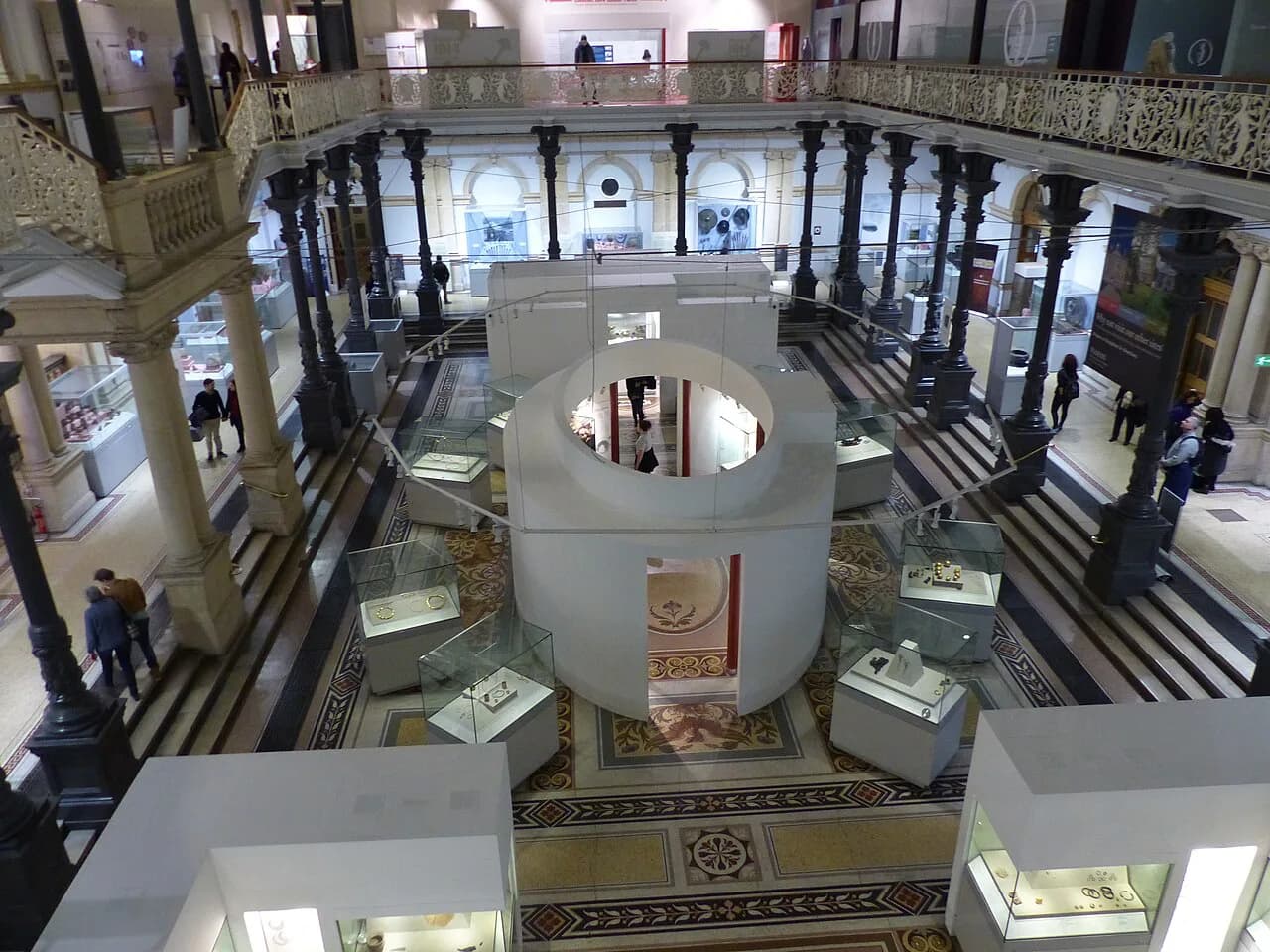
By the early nineteenth century the older wire-strung harp no longer suited prevailing musical taste, and Dublin makers adapted the instrument. A National Museum of Ireland collection publication describes John Egan, active in Dublin from 1801 to 1841, as replacing wire strings with flexible cat gut and adding tuning forks to widen the harp's tonal range while keeping the shape of its older predecessor. An Egan harp of 1825 is recorded in that publication as part of the national collection.
The museum publication goes on to explain that Egan's work helped crystallise the harp as a symbol of Irish identity, and that the 1825 instrument carries gilded shamrocks against a deep green ground. That decorative scheme is the point where a musical instrument becomes a statement of nationhood. Note, though, that the publication is an object description, not a display guarantee; if you want to see an Egan harp, check the National Museum of Ireland's current displays before travelling rather than assuming a particular room.
Patrick O'Neill's Manuscripts and Tunes That Travelled
Manuscript collectors extended the record beyond Bunting. Loughnane describes Patrick O'Neill of Owning, County Kilkenny, a farmer and miller who played uilleann pipes and fiddle and began collecting songs and airs as a young man, compiling manuscript volumes now in the National Library of Ireland. His collection is eclectic, taking in Irish, Scottish and English material as well as continental dances. The manuscripts are a research resource rather than a public exhibit.
O'Neill's eclectic volumes also demonstrate that tunes moved between instruments. Loughnane gives the example of a harp tune by the Connellans surviving in a variant played as a hornpipe by fiddlers and pipers, a process she calls preservation by adoption rather than loss. That is a useful frame for listening: the same melody may appear as a slow air on the harp and as dance music on other instruments. For the pipes side of that exchange, see the guide to Irish uilleann pipes.
A further check on repertoire roles comes from an educational reading-room page on Irish traditional instruments. It notes that the harp has never been much used for dance music, and that dance music was shaped largely in the eighteenth and nineteenth centuries on pipes and fiddle. Use that as background context rather than as a detailed harp history; it clarifies why harp repertoire and dance repertoire are not interchangeable.
Revival into the Present
The modern revival is a story of organisations, arrangers and recorded editions rather than a single rediscovery. The Department of Culture's December 2019 announcement confirms that Irish Harping was inscribed on the UNESCO Representative List that year, and describes it as a key element of Ireland's living heritage to be safeguarded. Loughnane's essay places that milestone within a period in which harping flourished in performance, research, composition and education, and frames the harp as having taken an inclusive place alongside other traditional instruments rather than remaining a specialist curiosity.
Arrangement and recording have been central to that revival. Loughnane describes her own work making harp arrangements of Connellan tunes and of a selection from Patrick O'Neill's manuscripts, published with accompanying books and recordings. Those editions are useful entry points for a listener who wants to hear the repertoire before meeting the manuscripts. They also show how a living tradition absorbs scholarly research rather than being replaced by it.
Seen this way, Irish music history is less about objects than about transmission. A visitor can trace the same tune through manuscript, printed collection, arrangement and performance, and each stage changes what can be heard. Use the instrument guides on this site as a listening map, then go to the archives for the paper trail.
Practical Archive Visit: The ITMA Reading Room
The most concrete way to pursue Irish harp history in Dublin is to use the Irish Traditional Music Archive at 73 Merrion Square, Dublin 2. The archive's own visit page states that its main reading room is open to the public five days a week and that you do not need an appointment to access the archive, unless you have special requirements, are part of a small group, or want to speak to a particular member of staff. In those cases, phone before travelling. The same square is home to Georgian Dublin at its most intact, so the Merrion Square, Dublin: Georgian Square and Park Guide sets the streetscape around the archive in context.
The published opening hours are Monday to Friday, 10am to 1pm and 2pm to 5pm, with a lunchtime closure between 1pm and 2pm. The archive lists annual closures that include the October bank holiday and the period from 23 December to the first working day of the new year, so a late-October visit in 2026 should allow for the bank holiday closure. Wheelchair access is available at the rear of the building through the Fitzwilliam Place entrance, with a member of staff assisting with access to the carpark, and service animals are welcome with a permit.
Set expectations before you go. The ITMA page describes reading-room access to catalogues and main collections on the ground floor, not concerts, classes or instrument demonstrations. If you are tracing harp material, arrive with specific tune names, collectors or publications to search, and plan around the short opening day. The reading room is a working archive, so the quality of a visit depends on the preparation you bring.
How to Read a Harp Collection
Treat object, manuscript and living practice as three different kinds of evidence. A museum object such as an Egan harp shows how the instrument was redesigned and decorated; a manuscript volume shows what a collector heard and wrote down; a modern arrangement shows how a musician makes the old repertoire playable today. Each answers a different question, and none substitutes for the others.
There are trade-offs for a short visit. A museum highlights an object's physical character but cannot tell you how a tune was played; an archive lets you read a collection but offers no performance; a recording gives you the sound but not the source manuscript. If time is limited, choose one thread and follow it with named sources rather than trying to cover the whole tradition in a day.
A useful exercise is to compare Bunting's attributions with later manuscript collections and with published arrangements, noting where a tune is described as traditional rather than credited to a named composer. That habit keeps you honest about what the record actually says. The companion guide to ancient sites in Ireland is a reminder that landscape and settlement history form the backdrop to this music, not a substitute for archival evidence.
Plan Your Visit
Build your visit around what each place actually offers. Use the National Museum of Ireland to study an Egan harp as an object, if current displays allow, and the Irish Traditional Music Archive to read collections in a working reading room. Between them, and with published arrangements and recordings, you can follow the harp from its old patronage world into a living tradition without pretending the gaps in the record do not exist.
Before travelling, verify opening hours and closures on the operator's own page, and bring specific search terms for archival material. If your interest is broader than the harp, the guide to castles in County Galway offers a different kind of heritage route for the same trip.
Explore more Ireland guides
Frequently Asked Questions
What is the Irish harp's historical significance?
The harp was played within Gaelic patronage systems for centuries and became Ireland's national symbol. Irish Harping was inscribed on the UNESCO Representative List of the Intangible Cultural Heritage of Humanity in 2019, and the government describes it as an element of living heritage to be safeguarded for future generations.
Who was Edward Bunting and why do his collections matter?
Bunting recorded tunes at the Belfast Harp Festival in 1792 and published collections in 1797, 1809 and 1840. Because the old harping world was already declining when he worked, his volumes preserve material that might otherwise have been lost, though his attributions are not always consistent and should be checked against other sources.
What changed about the Irish harp in the early nineteenth century?
Dublin maker John Egan, active from 1801 to 1841, replaced wire strings with gut and added tuning forks to widen the harp's tonal range while keeping the older instrument shape. An 1825 Egan harp in the National Museum of Ireland collection carries gilded shamrocks on a deep green ground, tying the instrument to Irish identity.
Can I study Irish harp history in Dublin today?
Yes. The Irish Traditional Music Archive at 73 Merrion Square opens its reading room to the public on weekdays and generally does not require an appointment. Check current hours and annual closures on the archive's visit page before travelling, and telephone ahead if you need to speak to a particular staff member.
What happened to the old harping tradition?
The patronage system that supported harpers collapsed through the political and social upheavals of the seventeenth and eighteenth centuries, and other instruments took over dance music. Collectors such as Bunting and Patrick O'Neill wrote down tunes, and later arrangers and harpers made them playable again, so the tradition continued in changed form rather than ending outright.
Sources
You might also like



Continue reading
More guides you'll find useful



