
Irish Music History: Instruments, Harp, Pipes and Dance
A heritage guide to Irish traditional music: how harp, pipes, fiddle and dance shaped the tradition, and how to use the Dublin archive that documents it.
On this page
Irish music history, in the traditional sense, is less a parade of composers than a story of instruments, players and dancers passing tunes along by ear. The sound of the tradition was largely shaped on a compact set of instruments whose strengths and limits steered the music itself, as the Ask About Ireland reading room explains. This guide follows those instruments, the collectors who wrote the music down, and one Dublin archive where the record is open to anyone.
What Counts as Irish Traditional Music
Start by narrowing the field. The history covered here is that of Irish traditional music and its dance, not every genre written or recorded on the island. The tradition is fundamentally a heard art rather than a printed one: the sound, not the notation, is what carries the music, and that sound developed on particular instruments. Keep that distinction in mind when reading claims about "Irish music" in general, because much of what is performed, composed and recorded in Ireland belongs to other lineages.
The Core Sound: Pipes, Fiddle, Flute and Whistle
The dance music at the heart of the repertoire was largely formed in the 18th and 19th centuries, when the uilleann pipes and the fiddle were the instruments of choice, according to the Ask About Ireland overview. Flute and whistle sit alongside them as core melody instruments. The reason this matters for listeners is that tunes were made to exploit specific instruments: a piper's regulator work or a fiddler's bowing shapes detail a fixed notation can only hint at. When you hear a tune played twice with different ornaments, you are hearing the instrument helping to shape the music.
The uilleann pipes deserve a separate note on naming, because their older label confuses visitors. The Irish Traditional Music Archive publishes a detailed study by Nicholas Carolan on how the term union pipes entered the record; the phrase first appears in print in a London newspaper advertisement of 1788 for a concert by the Irish piper Denis Courtney. The essay traces the history of that label rather than offering a definitive account of who invented the instrument, and the archive flags its own findings as a work in progress subject to revision. For the practical visitor, remembering both names is enough: the same bellows-blown Irish pipes were once widely called union pipes.
The archive essay explains that piping was once a low-status, largely outdoor practice, and that bellows-blown pipes with refined chanters helped make indoor, gentler playing possible. That shift is a useful lens on why the music sounds as it does, and it is worth keeping in mind when you hear the pipes described as ancient without qualification.
Pipers and fiddlers also preserved material that began on other instruments, which is why the uilleann pipes repertoire deserves a guide of its own alongside this overview.
Accordion, Concertina and the Physical Limits of Tunes
The accordion and concertina are relative newcomers to the core lineup, yet they have become standard. The Ask About Ireland guide counts them with pipes, fiddle, flute and whistle as the instruments on which the tradition rests. Their arrival is a reminder that the tradition absorbs new tools rather than guarding a fixed list. A visitor listening for the difference will notice that the same tune can sit and sound quite differently on box and on fiddle, and that good players adapt their ornament to the instrument rather than transplanting it.
That mechanical point has a practical consequence for listeners. Because the dance music was shaped on instruments with particular ranges and ornaments, a tune often sits differently on box than on fiddle, and good players adjust rather than transplant. Comparing versions across instruments is one of the easiest ways for a newcomer to hear the tradition thinking.
Banjo, Bouzouki and the Bodhrán's Late Entry
Plucked strings were not historically part of the Irish musician's equipment apart from the harp, which was rarely used for dance music, the same overview notes. During the 20th century the tenor banjo took hold as a melody instrument. Guitar and bouzouki arrived as accompaniment, and although accompaniment is not essential, it has become widespread; some players argue it can obscure the music rather than enrich it. That is a genuine debate within the tradition, not a settled fact, and it is worth hearing both a bare melody and an accompanied version before deciding where you stand.
The bodhrán's story is the clearest example of a 20th-century arrival becoming tradition. Seán Ó Riada used the single-sided drum in his ensembles in the 1960s, and its popularity and manufacturing techniques expanded enormously over the following half-century. The source also notes that percussion had not been generally used in Irish music beyond obscure regional practices, and that the drum, like accompaniment, can be dispensed with. Hearing an unaccompanied singer or a solo fiddler is a good corrective if you have only encountered fully arranged bands.
The Harp: Festival, Collector and Printed Volumes
The harp holds a longer and more complicated place in the tradition than any other instrument here. Writing in Harp Perspectives for Cruit Éireann | Harp Ireland, harper Kathleen Loughnane describes a tradition whose old professional patronage collapsed through the 17th and 18th centuries. Edward Bunting recorded tunes played at the Belfast Harp Festival in July 1792 and published them in three volumes dated 1797, 1809 and 1840. Loughnane notes that of the ten Irish harpers who attended, all but two were dead by the time the second volume appeared. That single fact explains why the printed collection matters so much, and why it is an imperfect but indispensable witness.
Loughnane also traces how the harp moved from near-disuse into a revival, and she records that UNESCO inscribed Irish harping on its Representative List of Intangible Cultural Heritage in 2019. She is careful, too, about attribution: the Connellan brothers of 17th-century Sligo and the Kerry manuscripts of Patrick O'Neill are treated as areas where facts are scarce and contradictory, even though the quality of the music is not in doubt. For readers chasing irish harp history, the honest starting point is that the surviving record is thin and that name attributions vary between collections.
The broader history of how the instrument was made, taught and performed deserves more space than this overview allows, and it is worth following separately.
Dance: A Contested London Origin
Dance belongs to the same story, and it is where visitors should be most cautious about tidy origin stories. In a historical paper for the Irish Traditional Music Archive, Nicholas Carolan traces the early céilí to the London Gaelic League in the 1890s, whose first céilí took place on 30 October 1897 in the Bloomsbury Hall. The dances at that event were quadrilles, waltzes, polkas and schottisches rather than what are now called céilí dances. A Kerry-born dancing master, Patrick Reidy, then supplied group figure dances that League members took up eagerly. Even so, Carolan treats the deeper origins as uncertain, noting that some figure dances may have been modelled on quadrilles while others are older or later.
The reception back in Ireland was not smooth. Carolan records bitter disputes at the Oireachtas and at feiseanna, where critics saw the four-hand and eight-hand reels as modified quadrilles rather than true Irish dances. The commission that examined the matter in 1903 excluded those reels from competition from 1904, and they were re-admitted in 1913 after a fall in competitor numbers. That sequence is a good reminder that traditions are negotiated rather than handed down intact. The paper is a historical study from 1990, not a snapshot of today's dance scene, and irish dance history sets it in a longer view.
Understanding the set of group figure dances is a separate exercise from tracing their origin, and the individual forms have their own guide.
Objects as Evidence: Egan, Gibson and the Museum Collection
Two objects in the National Museum of Ireland's collection show instrument-making as craft and identity rather than abstraction. A harp made by John Egan in Dublin in 1825 replaced the traditional wire strings with gut and added tuning forks to widen the tonal range while keeping the shape of the older instrument, finished with gilded shamrocks on a deep green ground. A guitar by W. Gibson of Dublin, dated 1778, has a round body, string posts for ten strings and a brass sound-hole cover showing a cherub among instruments. Together they show Dublin workshops both experimenting with sound and shaping Irish identity in their materials.
A note of caution: the published object notes record these instruments in the national collection, and current display is another matter. Check the museum's own visit information before travelling to see them, and treat them as makers' evidence whether or not you find them on view. The point is not the display case but the fact that people in Dublin were solving problems of sound and symbol with these materials.
The Archive Visit: A Reading Room, Not a Concert
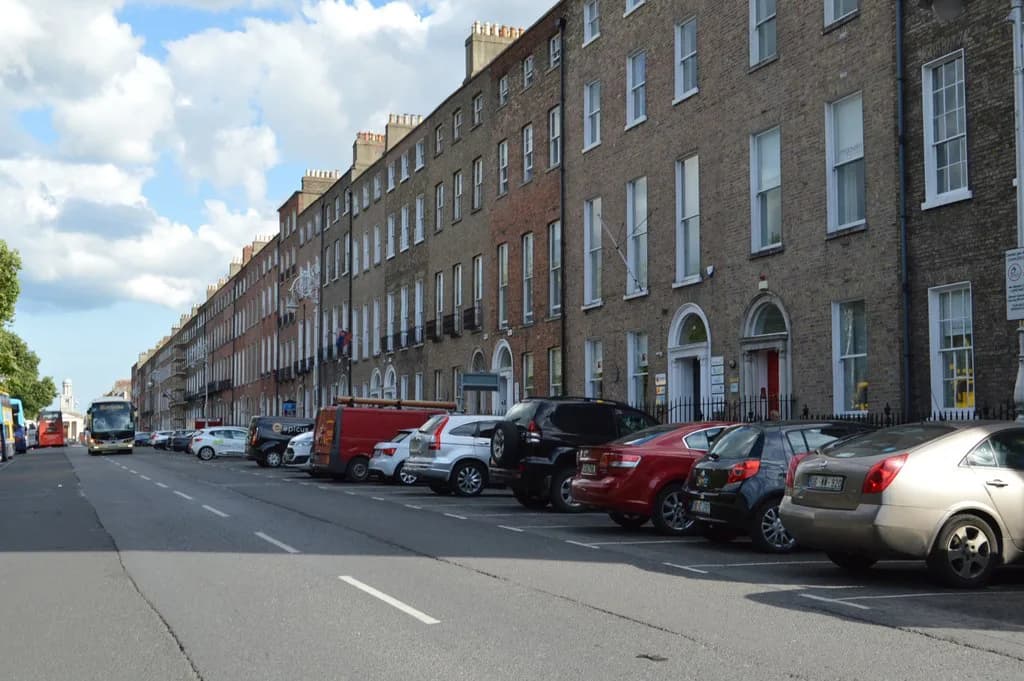
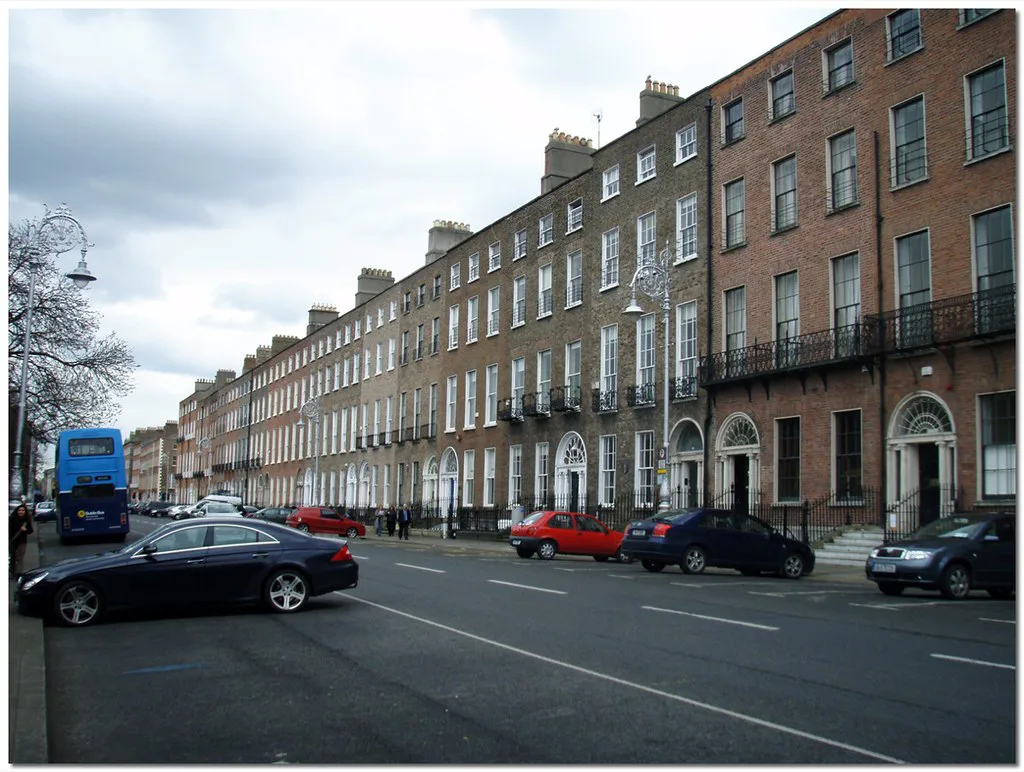
The Irish Traditional Music Archive keeps the documentary side of this tradition in a public reading room at 73 Merrion Square, Dublin 2. The archive states that ordinary visits do not require an appointment, and its main reading room is open to the public five days a week; groups or anyone wanting a particular member of staff should ring ahead before travelling. This is a place to read and to work with catalogues and information resources, not a performance venue. No concert, class or hands-on instrument session is listed as part of a visit. Since the archive sits on one of the city's great Georgian squares, it pairs naturally with a Merrion Square, Dublin: Georgian Square and Park Guide before or after your reading-room session.
The hours trip up casual visitors. The archive lists Monday to Friday, 10am to 1pm and 2pm to 5pm, with the reading room closed over lunch from 1pm to 2pm. It closes for annual state holidays including St Patrick's Day, Good Friday, Easter Monday, and the May, June, August and October bank holidays, and over Christmas from 23 December until the first working day of the new year. Wheelchair access is via the Fitzwilliam Place entrance at the back of the building, and service animals are welcome with a permit. Check the current details on the visit page before setting off, since holiday arrangements can shift.
What does a visit deliver? Catalogues and collections on the ground floor, and a quiet room to work in. It is best for travellers who want the printed and recorded record behind the music, not a live night out. Pair it with the museum objects and online essays above, and the history becomes concrete rather than a list of names.
Why the Tradition Keeps Changing
Read together, these sources describe a tradition that has never stood still. Instruments arrived and some were argued over, the harp declined and was revived, a drum became standard within a single half-century, and the standard name of the pipes shifted from union to uilleann. Collectors like Edward Bunting preserved what was already fading, but their work also fixed versions of tunes that players had varied freely. That tension between preservation and change is the motor of the music. A visitor who learns the dates of 1792, 1788, 1897 and 1960s is better equipped to hear what each of them changed.
A Weekday in Dublin
For a self-directed study of this history, read the Harp Ireland and archive essays online first, then plan a weekday visit around the ITMA lunchtime closure at 73 Merrion Square. Add a museum visit for the instruments, checking display information beforehand, and listen to both accompanied and unaccompanied recordings so the arguments you read about are audible. No single place tells the whole story, but Dublin allows you to see and study several strands on the same day. For another heritage guide, read about Irish Musical Instruments.
Explore more Ireland guides
Frequently Asked Questions
What instruments define Irish traditional music?
The core melody instruments are the uilleann pipes, fiddle, flute and whistle, with the accordion and concertina now treated as standard. The harp has a much longer history but was rarely used for dance music. Plucked strings beyond the harp, plus guitar and bouzouki accompaniment, are later additions, and the bodhrán entered through Seán Ó Riada's ensembles in the 1960s.
Can anyone visit the Irish Traditional Music Archive reading room?
Yes. The archive states that no appointment is needed for ordinary visits, and the main reading room is open to the public five days a week. Ring ahead if you are part of a small group or want to speak to a particular staff member. It is a reading room for catalogues and collections, not a performance venue.
What are the ITMA reading room opening hours?
The published hours are Monday to Friday, 10am to 1pm and 2pm to 5pm, with the room closed over lunch from 1pm to 2pm. It closes for listed state holidays and from 23 December to the first working day of the new year. Confirm on the visit page before travelling, as holiday arrangements can change.
Sources
You might also like



Continue reading
More guides you'll find useful



