
Irish Holy Wells: What They Are and How to Visit Respectfully
Irish holy wells are sacred springs tied to saints, pattern days and rounds. Learn what they are, how pilgrims use them, and how to visit with care.
On this page
An Irish holy well is a spring or small pool treated as a sacred place, usually tied to a saint and still visited for prayer and, some believe, healing. The Heritage Council, which publishes the national overview, calls them sacred places steeped in long-held traditions and counts more than 3,000 across the country. That is the figure to hold loosely: it is an approximation, not a register, and many wells sit on private land.
For a visitor, the wells matter less as monuments than as living devotional places, sometimes tidy and signposted, often overgrown and unmarked. Some are in churchyards, some on mountains, some in towns, and a few are only visible when tide or season allows.
What an Irish Holy Well Is
The Irish term often used is tobar beannaithe, a blessed well, and the sites are found right across the island rather than in one region. The Heritage Council describes them as places of personal devotion and prayer, and notes that they are not unique to Ireland even though the Irish distribution is unusually dense.
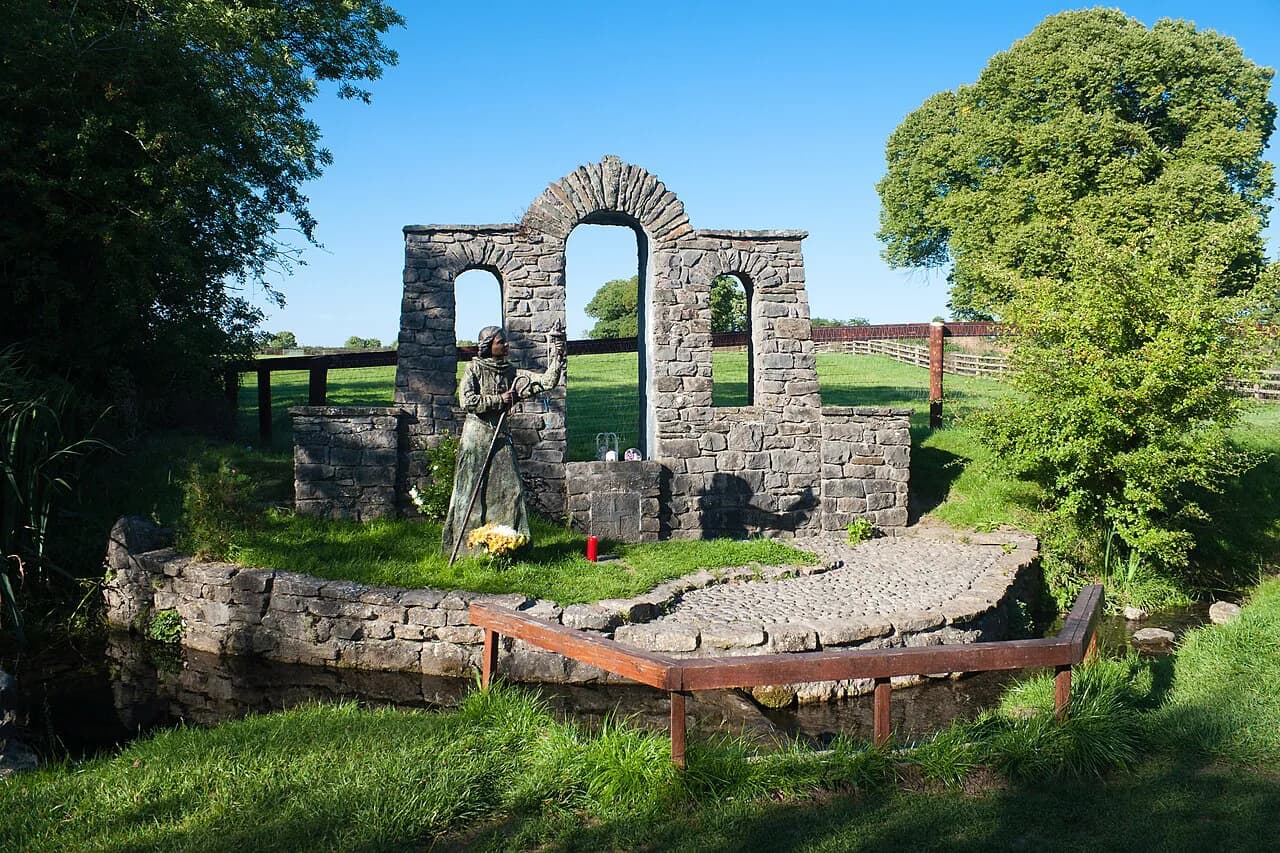
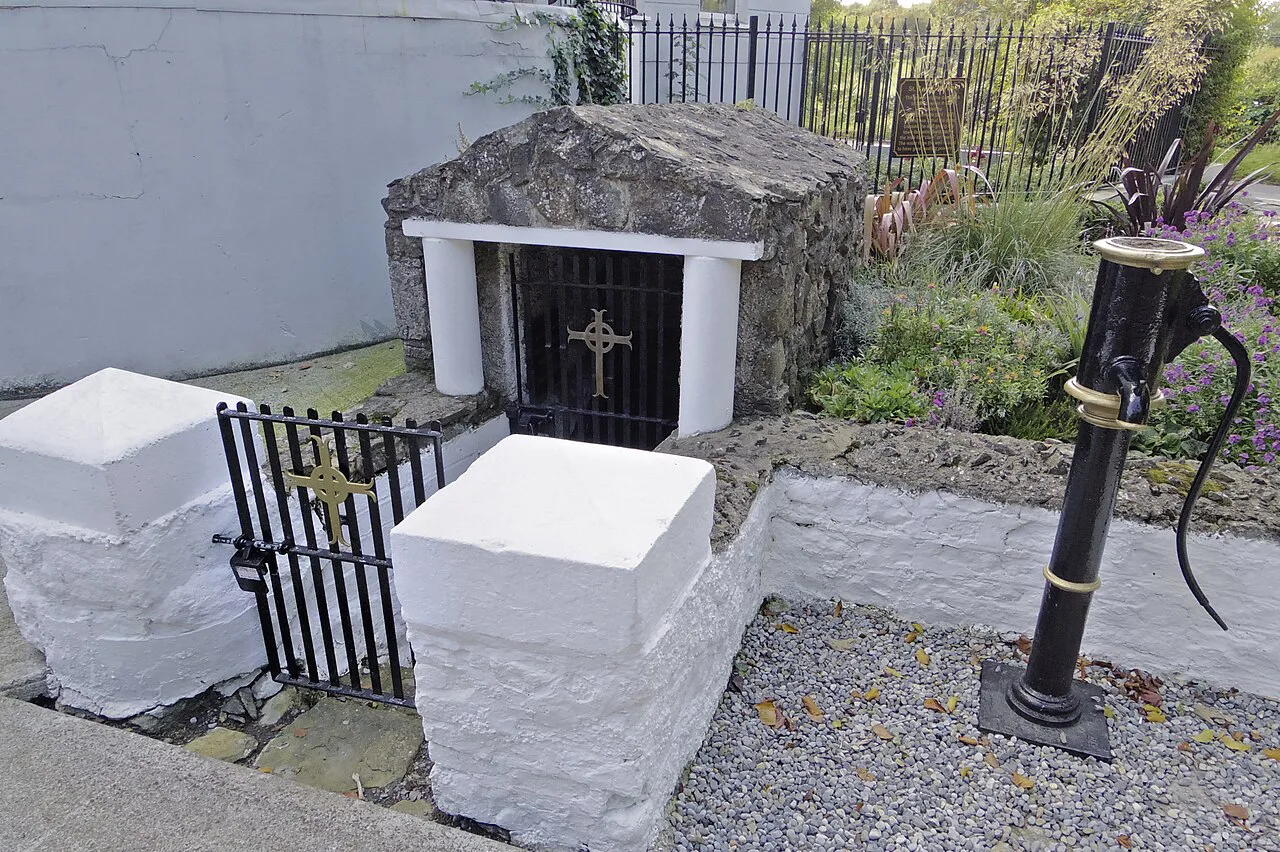
Most wells are small in scale: a spring, a stone-lined basin, sometimes a roofed well house built like a miniature oratory. Others have been landscaped with statues, paving and seating. Because the form varies so widely, there is no single template for what you will find at the end of a lane.
Wells are recorded archaeological monuments, and the Heritage Council notes they are protected under National Monuments legislation, with proposed works requiring advance notification to the National Monuments Service. That legal status is a useful signal: these are not casual garden features, and alterations are regulated.
Why the Origins Are Debated
No founding date can be attached to holy wells as a class. The Heritage Council states that origins are unknown and long argued over, with the likelihood that different wells began at different times; some may carry pre-Christian associations, others are clearly tied to early Irish saints, and others became important in the later medieval period.
What is firmly documented is the Christian devotional framework: wells were well established by the 17th century and declined in use by the mid-19th. Treat claims of unbroken pagan continuity as interpretation, not settled fact.
The saints attached to wells are often local figures as well as national ones, and St Brigid and St Patrick are among the commonest dedications. For the wider set of saint traditions, the site's dedicated pages on Irish saints give context on how these figures are remembered at monastic sites around the country.
Where Wells Sit in the Landscape
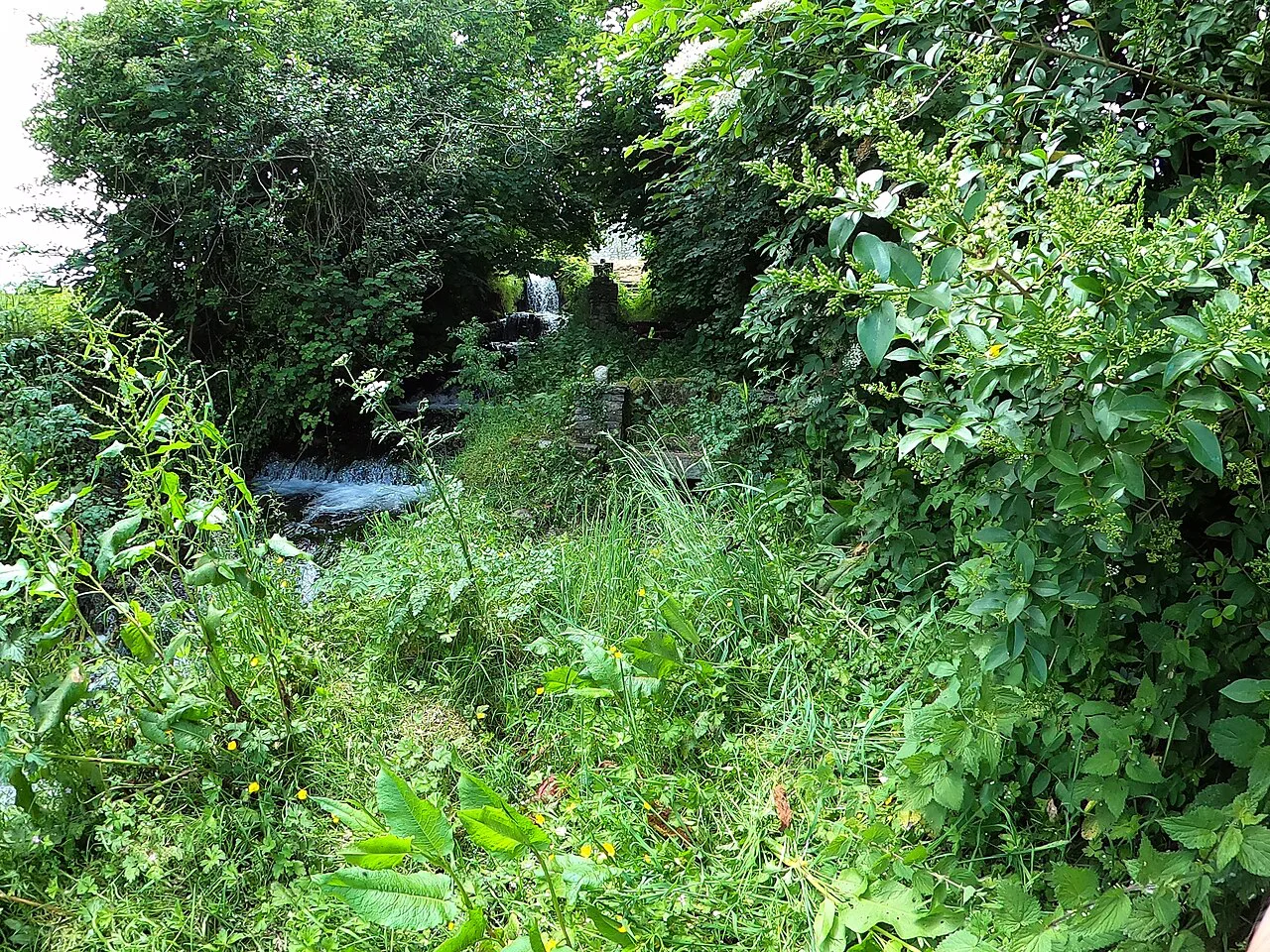
Holy wells turn up on seashores and sea caves, mountain tops and passes, bogs, islands and lake shores, and many sit near old church sites or graveyards. The Heritage Council notes that the majority sit outside the church wall in a nearby field, which explains why so many are glimpsed across a boundary rather than from a path.
They are not exclusively rural. The same survey records wells in villages, towns and cities, and cites a city well in Cork that was removed during road widening in 1946. That urban history is worth keeping in mind when a well is described as lost rather than merely hidden.
A few examples show how demanding the setting can be. The Heritage Council describes Colmcille's Well at Doonierin in County Sligo, named for the saint linked to nearby Drumcliffe monastery, which sits on the seabed and is visible only at low tide, and a cave well near Portrane in County Dublin that is inaccessible at high tide. These are documented examples of tidal access constraints, not suggestions to plan a visit around.
What You Actually See at a Well
The physical repertoire is broad: a simple spring, a pond, a pool in a waterfall, or a hollow in a tree that holds rainwater. Many wells are contained in drystone structures with steps or kneeling stones, while others resemble small roofed buildings.
Associated features often matter as much as the water. The Heritage Council lists penitential cairns, bullaun stones with hollows, pillar stones, ogham stones and cross-inscribed stones, and notes that some wells are signposted while many require local knowledge to find.
Reading a site before you approach is practical. Look for a marked path, a gate, livestock, or a notice; a well in a working field is a different proposition from one at a roadside. If there is any doubt about ownership, ask locally rather than assuming access.
Names and Dedications as Clues
Well names frequently encode the saint or the cure associated with the site. The Heritage Council gives examples such as Tobar na Súl, the Well of the Eyes, and notes that many wells are named for St Brigid or St Patrick, while Lady's Well or Tobar Mhuire signals a Marian dedication.
A name is a research clue, not proof. A dedication tells you what the well was called in a particular record, often an Ordnance Survey map of the early 19th century, but it does not confirm that a cure was ever effective or that the current name is the oldest one.
Local priests occasionally gave wells their names, as with Father Moore's Well in County Kildare, associated with a priest who blessed the well before his death in 1826. Biographical associations like this are historical context rather than a guarantee of what you will find on site.
When People Visit: Feast Days and Pattern Days
Wells were visited throughout the year, but the saint's feast day was the most popular occasion, with St Patrick's Day and the Feast of the Assumption (15 August) among the busiest. The Heritage Council also records visits on the seasonal markers of Imbolc, Bealtaine and Lughnasa, and the last Sunday in July, Garland Sunday, as a particularly enduring date.
The gathering is called a pattern day, from patrún or patron saint, and it combined pilgrimage with social life. Twentieth-century clergy and commentators disapproved of the drinking, dancing and faction fighting that could accompany patterns, and several were suppressed in the 19th century.
Some observances continue and some are being revived. Wicklow County Tourism, writing with a citizen heritage project, reports that a pattern day at Lady's Well on the wooded slopes of Carrick is being revived on 15 August, though the page is a tourism description rather than a site operator's notice, so confirm locally before travelling for a specific date.
Doing the Rounds: Customs and Offerings
Pilgrimage practice is called doing the rounds or the turas, and the route, number of stations, prayers and circuits were traditionally prescribed. Rounds were performed sunwise, often in threes or sevens, with prayers counted on beads or small stones, and the well water drunk or applied during the ritual.
Offerings are the most visible trace for a visitor: coins, medals, rags on a hawthorn or ash, personal items and memorial cards. The Heritage Council notes that modern objects such as inhalers or pens have joined older votive gifts, reflecting the ongoing use of wells as places of petition.
The rags are part of a living tradition, not litter to be tidied away, and the Heritage Council advises that any offerings left should be biodegradable. If you wish to leave something, keep it simple and avoid plastic or anything that could harm grazing animals.
Healing Traditions and Folklore
Many wells carry reputations for curing particular ailments, from sore eyes to backache to whooping cough, and these are traditions recorded in folklore rather than medical claims. The Heritage Council puts it plainly: a well's reputation for miraculous cures was one of the main reasons people visited, and belief in the saint's power was part of the practice.
Some of the cures may have had botanical associations. The Heritage Council notes that willow trees, a long-standing source of aspirin, are linked with wells known as headache wells, and that stitchwort, speedwell and comfrey appear in traditions about coughs, eyes and joint pain. That is cultural history, not a recommendation to drink or apply well water.
Folklore also supplies legends of sacred fish, wells that move when disrespected, and stones with the imprint of a saint. These should be labelled as legends, as they are stories told about places rather than recorded events, and they are often the most memorable part of a well's local identity.
Access, Permission and Care
The single most important practical fact is that many holy wells are on private land or working farms, and the Heritage Council states that permission must be sought from the landowner before accessing them. Treat any well without a clear public path as someone's property until you have asked.
Because wells are recorded monuments, damaging or altering one is not a casual matter, and the Heritage Council advises consulting the National Monuments Service before any works. For visitors, the equivalent restraint is simple: do not move stones, carve marks, or take water from a well you do not understand.
Some wells sit inside larger ecclesiastical landscapes, where the well is one feature among church ruins, graveyards and carved stone. The broader context of Irish pilgrimage sites across the country helps explain how these places fitted into routes and devotions over time.
Community Recording: Leitrim's 2026 Project
A good deal of what is known about wells rests on local memory, and much of it has never been written down. Leitrim County Council describes a 2026 community heritage project to collect and catalogue existing information on the county's holy wells and to gather oral histories, with volunteers trained for the work and the project co-ordinated by Archaeology Plan and overseen by the county heritage officer.
That is a research and oral-history initiative, not a visitor trail or an access scheme, and it does not confer entry to any site. Its value to travellers is indirect: county inventories and community projects are how a well gets documented, and a local heritage officer or heritage office is often the best starting point for a serious enquiry.
The national Schools' Folklore Collection, gathered from schoolchildren from 1937, is another route into well traditions and is available online through Dúchas. It records customs, cures and stories attached to named wells, which can be more informative than a brief roadside description.
Two Named Wells in the Wicklow Mountains
Wicklow County Tourism describes more than 100 holy wells in the county, many of them difficult to find. Two named examples are Lady's Well, a shallow pool just off-trail on the wooded slopes of Carrick with coins, trinkets and ribbons on a nearby hawthorn, and Fraughan's Well on Trooperstown Hill, associated with a nearby Mass rock from the penal era.
The tourism page is a county-level description produced with a citizen heritage project, not an operator notice, so it does not establish public access, parking, or the current condition of either well. Treat the named wells as leads to verify with local heritage sources rather than as confirmed stops on a route.
If your interest is early Christian landscape more broadly, the wider context of Irish pilgrimage sites across the country places wells alongside churches, crosses, round towers and burial grounds. That broader frame helps explain how these places fitted into routes and devotions over time.
How to Behave at a Well
Approach quietly and read the site first. If there are fresh flowers, candles or ribbons, people are actively using the well, and a visitor should give way rather than treat it as a photo opportunity. The Heritage Council notes that holy wells may hold different meanings for different members of a community.
Do not drink the water. The sources describe drinking as part of devotional tradition, but they do not vouch for water quality at any well, and a spring beside a farm or graveyard is not a tested supply.
Leave no plastic offerings and take nothing away, including stones that look portable. If you want to record a visit, photographs and notes are the low-impact option, and they help document a tradition that is still changing.
Plan a Thoughtful Visit
Irish holy wells reward a slower kind of travel: fewer stops, more attention, and a willingness to ask before crossing a field. Start with a documented well near a church or graveyard you already plan to visit, check ownership and local advice, and keep your expectations modest about signage and facilities. If you are combining wells with other heritage stops, our Cork heritage guide shows how city and county collections fit into a wider itinerary.
Whether you meet a well as a pilgrim, a historian or a curious walker, the respectful approach is the same: treat it as a living place of devotion, follow the permission rule, and let the folklore remain labelled as folklore.
Explore more Ireland guides
Frequently Asked Questions
What is an Irish holy well?
A holy well is a spring or small pool treated as sacred, usually associated with a saint and visited for prayer and, in tradition, healing. The Irish term is tobar beannaithe. Many are near old church sites or graveyards, and some are in towns rather than the countryside.
How many holy wells are there in Ireland?
The Heritage Council gives an approximate figure of more than 3,000, spread across almost every parish. That is a broad estimate rather than an exact register, and many wells are on private land, overgrown, or recorded only in local surveys rather than signs.
Can you visit Irish holy wells?
Some can be visited, but there is no general right of access. Many wells stand on private land or working farms, and the Heritage Council states that permission must be sought from the landowner before entering. Ask locally and respect a refusal.
What happens on a pattern day at a holy well?
A pattern, from patrún or patron saint, is a pilgrimage held usually on the saint's feast day. It traditionally involved rounds of the well with prayers, drinking or applying the water, and social celebrations that clergy later tried to suppress. Some observances continue today.
Is the water at Irish holy wells safe to drink?
There is no evidence that it is safe. The sources describe drinking as a devotional custom without vouching for water quality, and a spring near a farm, graveyard or road may be contaminated. Treat the water as a cultural feature, not a drink.
Why are so many Irish holy wells hard to find?
Many are unmarked and sit in fields, on farms or under vegetation, and some are tidal or seasonal. The Heritage Council notes that some wells are signposted while many require local knowledge, which is why county surveys and oral history projects matter.
What should I leave at a holy well?
If you leave an offering, keep it biodegradable and modest. The Heritage Council advises against non-degradable items, and plastic or food waste can harm grazing animals. Fresh flowers or a small natural object are safer than foil, plastic or coins in a field.
Sources
You might also like



Continue reading
More guides you'll find useful





