
High Crosses in Ireland: Carvings, Sites and What's Open
High crosses in Ireland explained through named monuments, from Killamery's carved panels to Clonmacnoise's originals kept indoors. Check access before you plan.
On this page
A high cross in Ireland is a tall stone cross, typically ringed, carved with scriptural scenes and ornament, and erected at an early monastic settlement. The named monuments below let you read one closely: Killamery in County Kilkenny and Drumcliff in County Sligo carry the most fully described carving programmes, while Glendalough, Kilmacduagh and St Canice's in Kilkenny supply the monastic and round-tower settings crosses were made for. Start with the access news, because one of the country's most important cross collections cannot currently be reached on site.
Before You Plan: Clonmacnoise Is Fully Closed
Clonmacnoise is fully closed to visitors from 19 October until January 2027, because the car park must close for contractor works and there is no safe access to the site. That means its high crosses cannot be seen on site during this period, whatever else you have read about the monastery. Check the operator's own notice before building a journey around it.
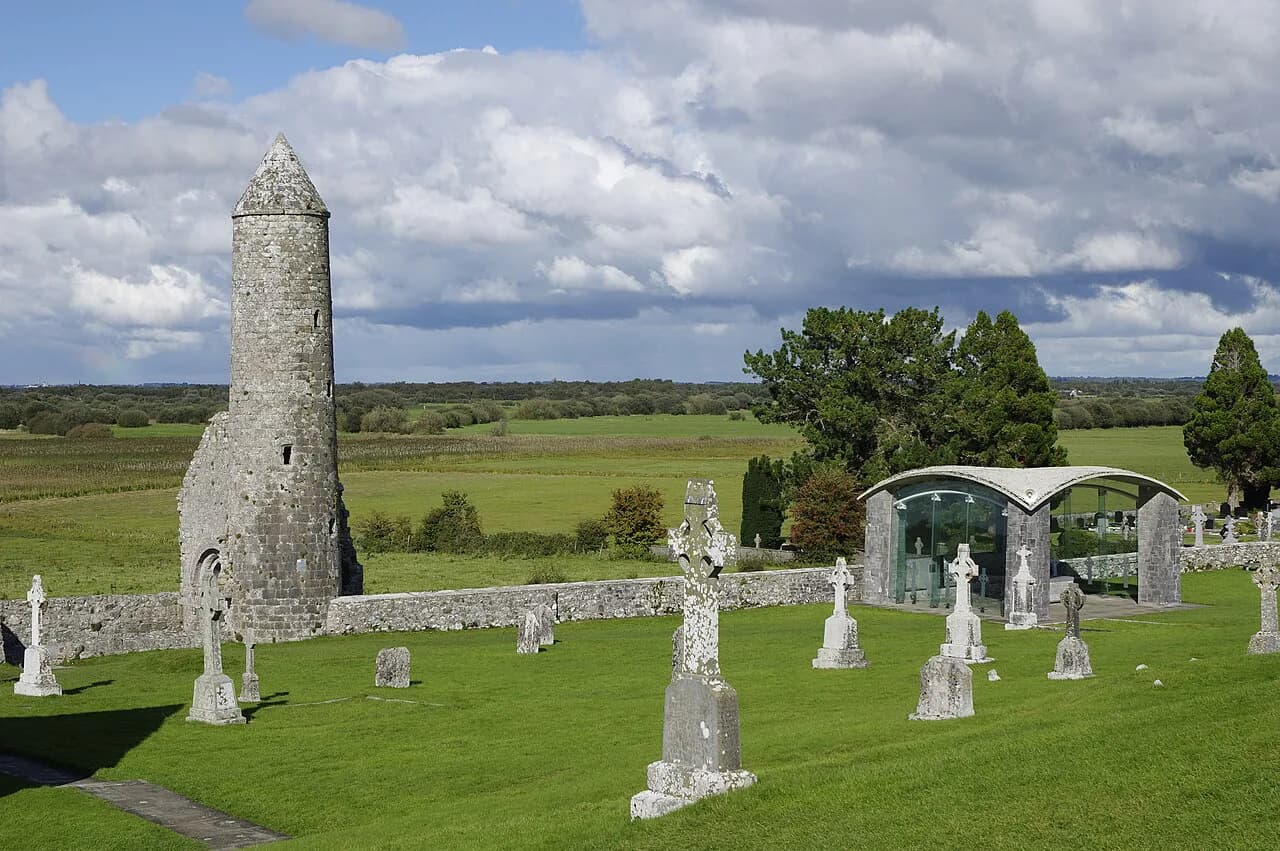
The closure matters because Clonmacnoise is one of the great early monastic sites on the River Shannon, founded by St Ciarán in the sixth century. Its ruins hold a cathedral, two round towers, three high crosses, nine churches and more than 700 Early Christian graveslabs. None of that is a substitute for the carved stones themselves, so treat the reopening period as the deciding factor.
If your trip falls in the closure window, shift your cross-reading to Killamery or Drumcliff and keep Clonmacnoise for a later plan. The notice gives a works window rather than a confirmed reopening date, so check the operator's page before setting a date rather than assuming the site will reopen exactly on schedule.
Where Clonmacnoise's Originals Are Kept
At Clonmacnoise the original high crosses, including the 10th-century Cross of the Scriptures, are displayed in a purpose-built visitor centre next to the monastic enclosure rather than left standing outdoors. That is an important distinction for anyone picturing carved crosses in a field: even when the site reopens, the finest carvings are conserved indoors.
The operator's page also describes a contracted redevelopment of the visitor centre, with new interpretation and exhibition space planned. An earlier notice about the construction phase mentioned temporary facilities, but the current notice on the same page supersedes it: the whole site is now fully closed because of the car park works, with no safe access, so do not rely on those facilities during the closure.
The practical lesson carries across the country: a cross described at a monastic site may be an original kept indoors, a standing stone still in position, or a fragment moved into a nearby building. Read each site's own page for which one applies before you set out, and never assume you can touch or reach a carved stone just because a photograph shows it outside.
Killamery High Cross: A Compact Carving Study
Killamery High Cross is a ninth-century cross standing 3.65 metres tall near the ruins of a monastery reputedly founded by St Gobán Fionn in the early seventh century. It is a state-owned National Monument in the care of the Office of Public Works, and it is an unguided site with no staff on hand.
The west face repays slow looking. It shows a stag hunt and a chariot procession, alongside panels that may represent the Lord sanctifying the Seventh Day with Adam and Eve. The northern arm carries four scenes likely depicting the life of St John the Baptist, and the southern arm shows Noah's Ark. The hedged wording matters: these are informed readings of worn stone, not certainties.
An inscription on the cross is interpreted as a prayer for the High King Maelsechnaill, dated 846–862. That single line ties the monument to a named ruler of the ninth century and gives the carvings a political as well as a devotional setting. Read it as a scholarly interpretation of a damaged text rather than a signed commission.
The reason to linger is that Killamery is not one object but a small assembly. Besides the cross there are two cross-slabs, a stone cross, the ruins of the original church and two bullaun stones; one cross-slab carries an intricately incised Latin cross and inscriptions praying for the soul of Aedhán. Allow enough time to walk the whole enclosure rather than photographing the tallest stone and leaving.
Killamery is an unguided state site, carrying the operator's standing caution for such monuments, that visitors should maintain care and caution during the visit. Ground around unguided monastic ruins can be rough or uneven, so wear footwear that suits wet grass and stone and move carefully around the carved fragments.
The Snake-Dragon Face and Why Ornament Matters
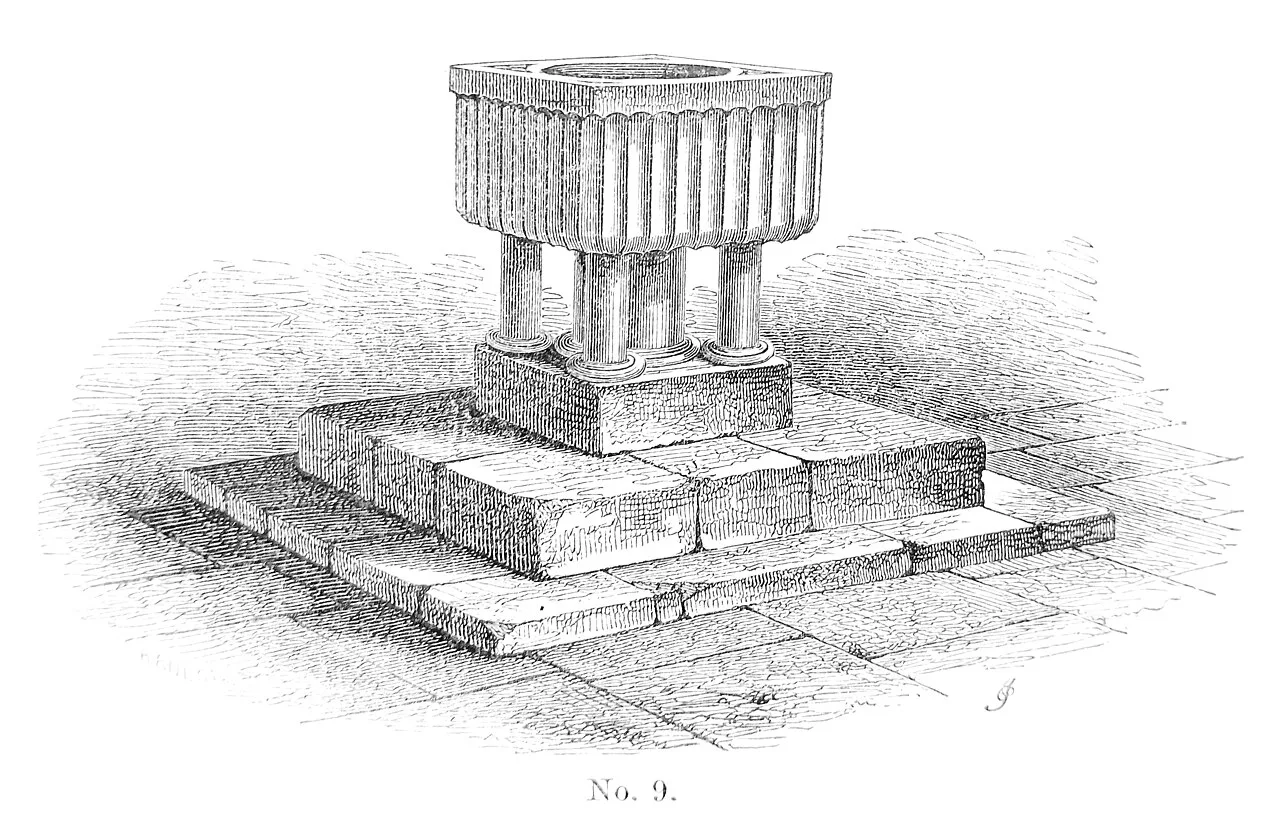
The east face of Killamery High Cross carries three marigold designs around a central boss, with intertwining serpents and an open-mouthed dragon, which is why the monument is nicknamed the Snake-Dragon Cross. A gabled capstone and double-moulded sides complete the profile.
This is the vocabulary to learn before touring crosses. Scripture panels on one face answer to interlace, spirals, animals and geometric ornament on another, and the two registers work together rather than separately. Once you can name a boss, a marigold design or a panel of interlace, the stones at the next site become readable instead of merely old.
Drumcliff, County Sligo: The Virgin and Child Cross
Drumcliff, in County Sligo under Ben Bulben, preserves what is left of a monastery founded by St Columcille in 574 on land granted by Áed mac Néill. A walled enclosure holds Sligo's only round tower and a complete high cross stands in the graveyard opposite.
The Drumcliff High Cross is the only known high cross in Ireland to show the Virgin Mary and child. Its north and south faces carry interlocking spirals and interlace, a rearing four-legged beast, and scenes including the Crucifixion, the Return from Egypt, the Arrest of Jesus, Adam and Eve and David killing Goliath, with experts also identifying Christ in Majesty.
Because it is complete, Drumcliff is the easiest place to learn how a high cross is structured: shaft, head, ring and capstone read as one design. Two other cross fragments survive here, a weathered limestone shaft and a second incorporated into the walls of St Columba's Church. Look for them after the main cross.
Access is the trade-off. The tower and enclosure sit across a busy main road, and parking is available opposite at Drumcliff Church, so cross carefully and keep children and dogs controlled. Like Killamery, the site is unguided, with no tour and no facilities, and the same care applies on rough or uneven ground.
Glendalough: Crosses Inside a Monastic City
Glendalough in County Wicklow is a glaciated valley where St Kevin founded a monastery in the sixth century, and it grew into one of Europe's most famous religious centres. The remains across the glen include a superb round tower, numerous medieval stone churches and some decorated crosses; the operator's page does not identify a single named cross, so arrive ready to look rather than to tick off one stone.
This is the staffed site of the group. The interpretive centre explains the place before you walk it, the visitor centre is fully accessible for visitors with disabilities, and there are toilets, a bookshop and guided tours. Access to the graveyard, however, is very difficult for wheelchair users, so plan the visitor centre and graveyard as two separate parts of the visit and decide who goes where.
The site is open all year and closes 23–29 December, with seasonal hours: daily 09:30–18:00 from mid-March to 14 October with last admission at 17:15, and 09:30–17:00 from 15 October to mid-March with last admission at 16:15. Admission is €5 for an adult, €4 group or senior, €3 child or student and €13 family, and paying for parking in the visitor centre car park entitles you to one free visitor-centre admission. Check the seasonal blocks before travelling, since the hours change with the calendar.
Budget an hour to ninety minutes, which is the average visit the operator gives. St Kevin's Bed, a small man-made cave in the cliff above the Upper Lake, is said to be where the saint lived and prayed, though it may in fact be a prehistoric burial place that predates him; treat the story as tradition, not record.
Kilmacduagh: Setting Rather Than Carvings
Kilmacduagh Monastic Site in County Galway is a seventh-century foundation at the edge of the Burren, associated with two local families, the O'Heynes and O'Shaughnesseys. Its page describes two different founding stories, one involving St Meadoc guided by an angel to heal the King of Connaught, the other Colmán Mac Duagh founding the monastery after his belt fell to the ground. Present both as accounts, not as settled history.
The enclosed settlement holds St John's Church, possibly twelfth century, the abbot's house, the thirteenth-century O'Heynes Church, St Mary's Church across the road and the larger cathedral. The seven-storey round tower, probably the site's most impressive feature, stands 34.3 metres and leans significantly; the Office of Public Works restored it twice, in 1878 and 1971.
Come here to understand the container rather than the carving. The operator page does not describe high crosses at Kilmacduagh, so do not arrive expecting a cross with named panels. What you get is the arrangement of church, tower and enclosure that framed carved stones elsewhere, plus a very tangible sense of how much of this monastic landscape survives as earth and masonry.
It is unguided and state-owned, and much of the fabric was damaged in medieval battles, so expect rough ground and no staff presence. Pair it with the round-tower story below rather than with a cross-focused itinerary.
Round Towers Beside Crosses
Round towers and high crosses belong to the same early monastic world, and Kilmacduagh's leaning tower shows how completely the two can dominate a site. But climbing is rare. St Canice's Cathedral in Kilkenny has a round tower described as one of only two in the country that people may climb, a 30-metre structure of seven floors and 121 steps reached by internal ladders. For the full picture of this site, see this St Canice's Cathedral, Kilkenny: Visitor Guide & Round Tower.
The tower is the oldest standing structure in the city, possibly of mid-ninth-century date, and it is closed on Sunday mornings for worship. Hours are seasonal and weather permitting: October to April Monday to Saturday 10:00–17:00 with last climb at 16:30 and Sunday closed; May to September Monday to Saturday 09:00–18:00 with last climb at 17:30 and Sunday 13:00–18:00. In summer it is busiest from 11:00 to 16:00.
The cathedral itself is a thirteenth-century building with a complicated history: its central tower collapsed in 1332, it was devastated under Cromwell in 1650 and stood roofless for twelve years. It is not a high-cross site, but a 40-minute guided tour and tower climb adds the vertical dimension that crosses and towers share. The tour is €16 for adults, €9 for children aged 6 to 18 with a minimum height of 1.4 metres, €42.40 for a family of two adults and two children and €13 concession.
Treat St Canice's as context rather than a substitute. The source does not present its tower as part of the original early Christian monastery, and the cathedral is medieval, so read the visit as a lesson in monastic stonework and urban religious history. If you want a broader frame for these sites, this material sits naturally within a wider guide to round towers in Ireland.
Staffed Sites and Unguided Monuments: Matching Expectations
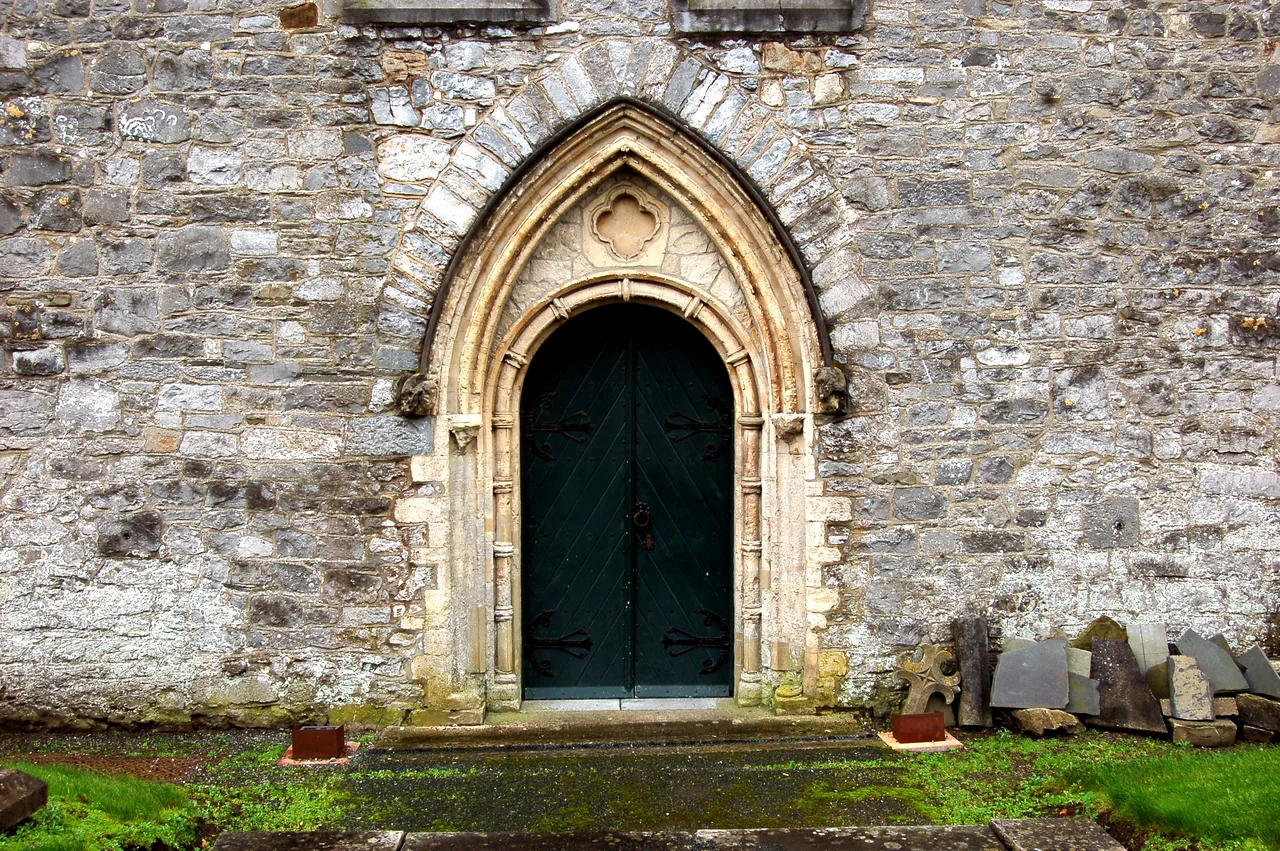
Two kinds of visit sit behind these names. Glendalough offers a staffed visitor centre, guided tours, toilets and a bookshop, while St Canice's in Kilkenny runs guided cathedral tours and a seasonal tower climb by separate ticket. Killamery, Drumcliff and Kilmacduagh are unguided National Monuments with no facilities. Kilmacduagh and Killamery are explicitly state-owned sites in the care of the Office of Public Works with a standing caution about care and uneven ground. That status means legal protection and basic upkeep, not staff, toilets or interpretation.
Choose accordingly. If you need a warm room, labels and accessible toilets, build the day around Glendalough or Kilkenny. If you want to stand alone with a carved stone and read it slowly, the unguided monuments are the better experience, provided you bring weatherproof clothing and accept rough ground underfoot.
Putting a Route Together
Plan by carvings rather than by county count. Start with Killamery if you want dense scriptural panels and a cross-slab group in one small field; go to Drumcliff if you want a complete cross and the rare Virgin and child panel; add Glendalough if you want a full monastic city with a visitor centre and lake views. Two sites in a day is realistic, three is ambitious once you allow time for slow looking.
Place Clonmacnoise outside the plan until the closure lifts after January 2027, and place Kilmacduagh alongside whichever cross site is nearest rather than as a carving stop in its own right. St Canice's fits any Kilkenny day, but its tower climb is weather dependent and the tower is closed on Sunday mornings for worship, so aim the climb at a weekday morning if the view matters.
If you are following the broader story of Irish monasticism and pilgrimage, these crosses sit within a long tradition of Irish saints and pilgrimage sites, and the wider guide to Irish pilgrimage sites sets out the network of monasteries and holy places to which they belong.
Plan Your Visit
High crosses in Ireland reward a plan built around two things you can actually confirm: which stones are outdoors and which originals are kept indoors, and which sites are open. Clonmacnoise is closed until January 2027, so its Cross of the Scriptures is a visitor-centre collection to plan for later rather than a stop for this trip.
For now, Killamery and Drumcliff give you the richest carved panels at unguided sites, Glendalough gives you the full monastic setting with staff and facilities, Kilmacduagh gives you the enclosure, and St Canice's gives you the tower. Verify the seasonal hours at Glendalough and the Clonmacnoise notice before setting out, then give each stone more time than you think it needs. For another heritage guide, read about Drumcliffe Church. For another heritage guide, read about Monasterboice.
Explore more Ireland guides
Frequently Asked Questions
What is the difference between a high cross and a Celtic cross?
A high cross is a tall stone cross, usually ringed and carved with scriptural scenes and ornament, erected at an early Irish monastic site. The ringed shape is often called a Celtic cross in popular use, but the term high cross describes the monument's scale and setting as much as its outline. The carved panels at Killamery and Drumcliff show what distinguishes these stones from ordinary graveyard crosses.
Can you still see the high crosses at Clonmacnoise?
Not on site at present. Clonmacnoise is fully closed to visitors from 19 October until January 2027 because the car park must close for contractor works, leaving no safe access. The original crosses, including the 10th-century Cross of the Scriptures, are kept in the adjacent visitor centre rather than outdoors. Check the operator's notice before planning a visit.
Where is the only Irish high cross showing the Virgin Mary and child?
The complete Drumcliff High Cross in County Sligo, standing in the graveyard opposite the round tower, is identified as the only known high cross in Ireland to show the Virgin Mary and child. Its faces also carry interlace, a rearing beast and scenes from the Crucifixion to David and Goliath. Access is across a busy main road, so cross with care.
Are the high crosses at Killamery original and outdoors?
The 9th-century Killamery High Cross stands outdoors near monastery ruins as a state-owned National Monument, alongside two cross-slabs, a stone cross, church ruins and two bullaun stones. It is unguided and has no staff on hand, so bring your own notes. Carved surfaces are exposed to weather, so look rather than touch.
Do you need a guide to visit Killamery or Drumcliff?
No guide is provided at either. Both are unguided National Monuments in state care, with no tours, visitor centres or facilities. Bring your own notes on the carved panels and allow time to read the stones slowly. The operator warns that unguided sites require care and caution during a visit.
Which round towers in Ireland can you climb?
St Canice's Cathedral in Kilkenny describes its round tower as one of only two in the country that people may climb. The 30-metre tower has seven floors and 121 steps via internal ladders. Hours are seasonal and weather permitting, and the tower is closed on Sunday mornings for worship.
Is Glendalough worth visiting for its high crosses alone?
Glendalough is better understood as a whole monastic city than as a single cross. Its remains include a round tower, numerous medieval churches and some decorated crosses, and the operator page does not single out one named cross. Visit for the valley setting and the interpretive centre, and give the graveyard time if mobility allows.
How long should you allow at a monastic site with a high cross?
Glendalough's operator gives an average visit of one to one and a half hours, a reasonable benchmark for a staffed site. At unguided monuments such as Killamery or Drumcliff, the carvings and surrounding slabs can absorb similar time if you read each face. Add extra for crossings, parking and rough ground.
Sources
- Glendalough Monastic Site and Visitor Centre | Heritage Ireland
- Clonmacnoise Monastic Site | Heritage Ireland
- Killamery High Cross | Heritage Ireland
- Drumcliff Round Tower and High Crosses | Heritage Ireland
- History of St Canice’s Cathedral | Kilkenny’s Past
- Guided Tour & Tower Climb | St Canice’s Cathedral
You might also like



Continue reading
More guides you'll find useful





