
Killamery High Cross: A Visitor Guide to the Snake-Dragon Cross
Killamery High Cross is an unguided 9th-century National Monument in a County Kilkenny graveyard. See what is carved on each face and how to find the site.
On this page
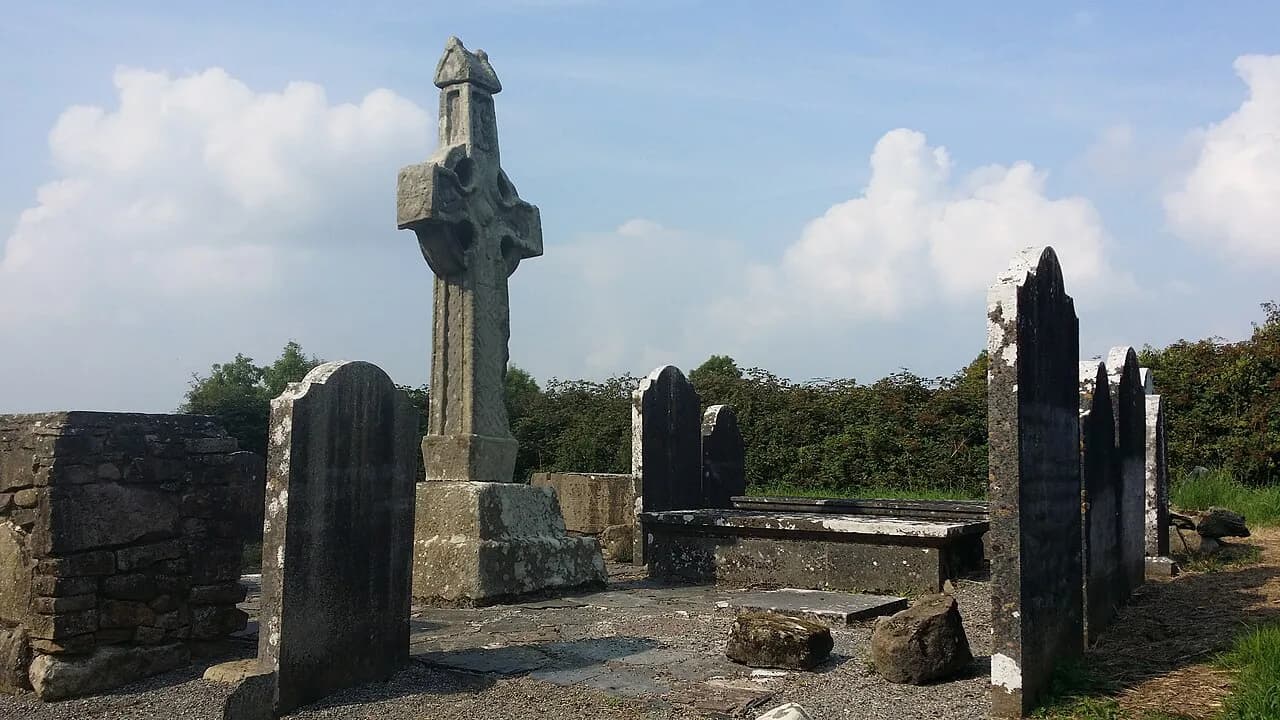
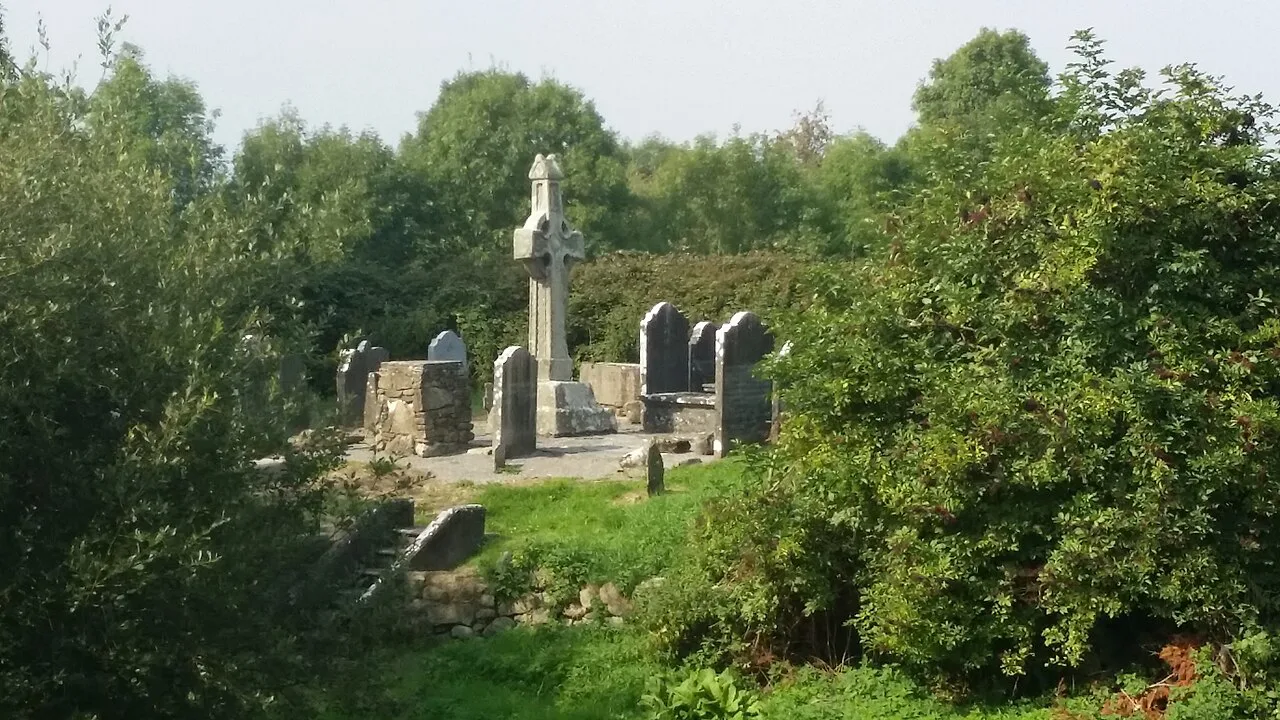
Killamery High Cross is a 9th-century high cross standing in an old graveyard in County Kilkenny, cared for by the Office of Public Works as a National Monument. It is unguided and unattended, so the visit is a short, self-directed reading of stone rather than a staffed heritage experience. The cross is the reason to come, but the surrounding slabs, church ruins and bullaun stones reward a slower look. Comparable monastic sites in OPW care are gathered in our guide to irish pilgrimage sites.
Plan for a focused stop of perhaps half an hour to an hour, depending on how long you spend tracing weathered carving. Bring the coordinates or a paper map, since this is a rural graveyard rather than a visitor centre, and come ready to read the stone without relying on prepared interpretation to fall back on.
Setting and Status: An Unguided National Monument
Heritage Ireland describes the monument as state-owned and in the care of the Office of Public Works, protected under the National Monuments Acts. It stands near the ruins of a monastery reputedly founded by St Gobán Fionn in the early 7th century, a traditional attribution rather than a securely documented date. Treat the monastery connection as background to the cross, not as a separate built attraction.
Because the site is listed among unguided monuments, there are no tours, staff or formal visitor facilities to expect. The OPW advises visitors to take care and caution at such sites, so watch your footing among graves, stones and uneven ground. For broader context on comparable monastic places in OPW care, the Kilmacduagh Monastic Site offers a useful comparison for how such ruins are presented to the public.
The Cross Itself: Scale and Craft
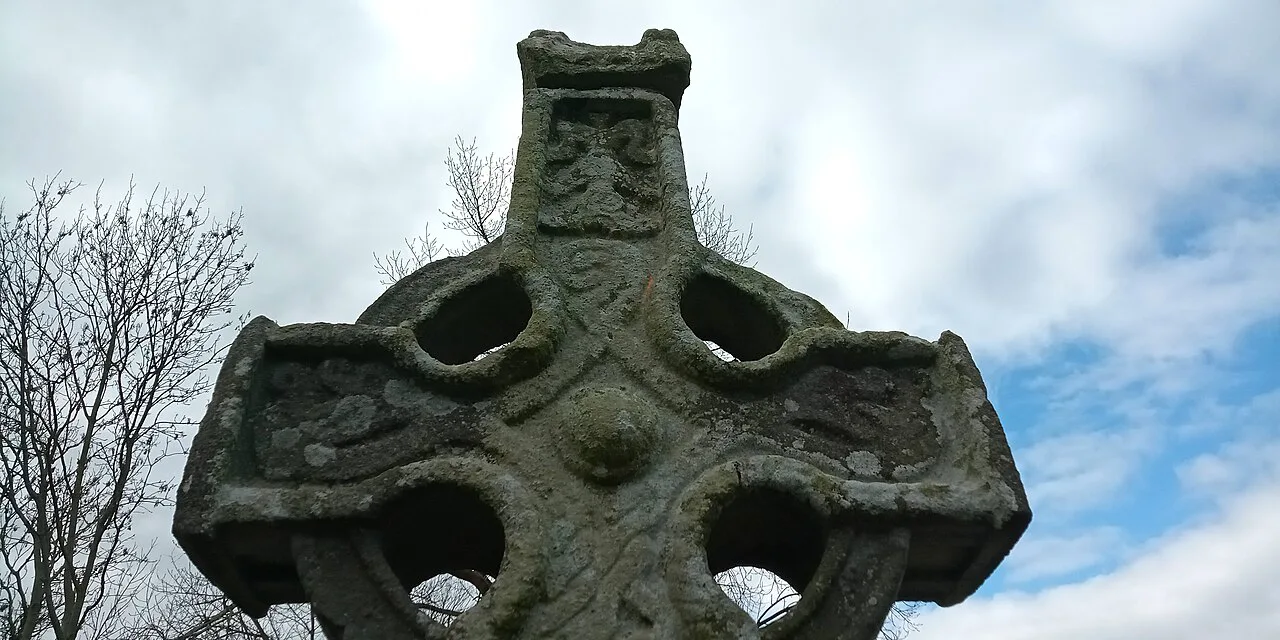
The cross stands 3.65 metres high and is treated as a 9th-century work of art, without a more precise carving date being established. A gabled capstone tops it, and the narrow sides carry double mouldings that frame the carved faces. Those architectural details are easy to miss if you only look at the figure panels, so walk around the monument before settling on one view.
An independent field record places Killamery within the western Ossory group of crosses, a cluster of related monuments in this part of Kilkenny and Tipperary. That grouping is useful for knowing what to look for: panel-based figure carving and heavy weathering rather than crisp narrative relief. It is not a ready-made driving itinerary.
The West Face: Figures and Patterns
Most of the figure sculpture sits on the west face according to field observations, and it is badly weathered. Heritage Ireland identifies a stag hunt and a chariot procession, with panels possibly showing Adam and Eve and the Lord sanctifying the Seventh Day. The word possibly matters: these are scholarly readings of worn stone, not captions.
The independent record adds a sun or whorl motif at the centre with figures arranged around it, a crucifixion scene below, and two ornate shaft panels carrying fret and key patterns. These geometric panels often survive better than faces and can help you orient yourself when the figures blur. If you want to compare how other Irish crosses handle ornament and figure panels, a wider survey of high crosses in Ireland is worth reading before you go.
The Other Faces: Baptist Scenes, Noah and the Snake-Dragon
On the northern arm, four scenes are likely to represent episodes in the life of St John the Baptist, while the southern arm carries Noah's Ark. On the east face, three marigold designs frame a central boss surrounded by intertwining serpents, with an open-mouthed dragon above. That combination gave the monument its popular name, the Snake-Dragon Cross.
The east face is usually the easier side to read because its ornament is bolder than the human figures. Start there, then move to the west face with the knowledge of what you are hunting for. Light changes through the day, so if one face looks flat, circle the cross again rather than assuming the carving has vanished.
The Inscription: A Prayer for Maelsechnaill
A worn inscription on the base of the western side is interpreted as a prayer for Maelsechnaill, a High King of Ireland whose reign is given as 846 to 862. The reading is offered as an interpretation, not a settled translation. What it suggests is a monument connected to royal patronage or commemoration, which is a useful frame for the figure panels above it.
Do not expect to decipher the lettering easily in the field. The base inscription is on the western side and is worn, and the published reading depends on expert analysis. Photograph that face if you want to study it later, and rely on published interpretations rather than attempting a confident translation on site.
The Rest of the Site: Slabs, Ruins and Bullaun Stones
Beyond the cross, Heritage Ireland records two cross-slabs, a stone cross, the ruins of the original church and two bullaun stones. One cross-slab carries an intricately incised Latin cross and inscriptions praying for the soul of Aedhán. The independent record reads the same formula twice on the slab and notes that one bullaun is holed right through while the other is slightly broken.
The independent field record notes that sheep graze at the site, a reminder that this is a graveyard in a farmed landscape. If a gate is closed, close it after you, keep to the track, and treat the stones with care. Any spiritual meaning attached to the bullaun stones is best treated cautiously rather than as established fact.
If holy wells interest you, the field record mentions one below steps on the north side, but it is an old observation and should not be relied on as current. A broader look at Irish holy wells can help you judge what such features typically involve without expecting any special properties.
Finding Killamery: Approach and Location Aids
The clearest route description comes from an independent field record rather than an official source: from Clonmel take the N76 north, and roughly 1.5 kilometres after Ninemilehouse turn right where a sign points to Killamery High Cross. After about 150 metres there is a track on your right; walk roughly 100 metres up it and the cross stands in the old graveyard on your right. Treat this as indicative and use a current map to confirm the junctions.
The same record gives Discovery Map 67 and coordinates of about 52°28'32"N, 7°26'46"W, which are helpful when rural signposts are sparse or a junction is ambiguous. Check local signposting on the day, since minor road signage can change. A ringed high cross in a graveyard is not always visible from the road, so the short walk up the track is part of the approach rather than a detour.
If you are building a heritage-themed day, this is the kind of place that fits alongside other early ecclesiastical sites rather than a town-centre museum stop; our guide to irish pilgrimage sites covers comparable monastic places to pair with it. Allow extra time for the walk in and out, and do not schedule the stop too tightly if you are travelling on minor roads.
Visiting Without a Guide
A short visit works best as a deliberate reading of the stone: east face first for the serpents and dragon, then west for figures and patterns, then the base inscription and finally the slabs and ruins around you. Take your time and resist filling gaps in the weathered carving with certainty. If you want a wider frame for early Christian sites, ancient sites in Ireland offers background on the kinds of monuments you will meet.
St Gobán Fionn is a saint associated with the reputed early monastery here, and his connection is traditional rather than documented in the sources. For context on how Irish saints are remembered and where their sites survive, our material on irish saints is a useful companion. Keep the distinction between a saint's tradition and a monument's dated fabric clear in your own reading.
If you enjoy comparing cross types, the great crosses at Monasterboice in County Louth show how figure sculpture can be read at a larger site. Killamery is the opposite experience: small, rural, weathered and unmediated. Both approaches have value, and the contrast sharpens what you notice here.
Decisions and Trade-offs
Killamery rewards curiosity about early medieval stone carving rather than a general sightseeing checklist. There are no staffed facilities on site and interpretation should not be assumed, so the visit depends on what you bring in the way of preparation. If you need toilets, café stops or shelter, build those into the surrounding day rather than expecting them here.
The cross is exposed in a graveyard, and the OPW's caution about unguided sites applies directly to uneven ground and old stones. Wear sensible footwear and avoid climbing on any monument. The approach route here comes from an independent field record, not the OPW, so confirm junctions on a current map before making a long detour.
Plan Your Visit
Killamery High Cross suits travellers already exploring the early monastic landscape of Kilkenny and Tipperary, or anyone willing to seek out a weathered 9th-century monument on its own terms. It is not a substitute for a staffed heritage site, and the experience depends on preparation and patience. If you want a staffed alternative in the same county, our guide to castles in Kilkenny covers Kilkenny Castle and how that visit is organised.
Before travelling, confirm the approach route on a current map and check Heritage Ireland for any change to site status. Then give yourself time to circle the cross, read its faces and look at the slabs, ruins and bullaun stones rather than treating it as a photo stop.
Explore more Ireland guides
Frequently Asked Questions
Is Killamery High Cross free to visit?
Heritage Ireland describes the site as an unguided National Monument in the care of the Office of Public Works, and it lists no staffed reception, ticketing or formal admission arrangement. Because it is an unattended, unguided monument, do not count on facilities or interpretation being present; check the official page before travelling if the visit is central to your plans.
How do I find Killamery High Cross?
An independent field record gives the approach from Clonmel on the N76, turning right after Ninemilehouse where a sign points to the cross, then walking a short track to the graveyard. Treat those directions as indicative and confirm junctions on Discovery Map 67 or with current mapping.
What is the Snake-Dragon Cross?
It is the popular name for Killamery High Cross, taken from the east face, which carries three marigold designs around a central boss with intertwining serpents and an open-mouthed dragon. The name comes from the carving rather than from any written medieval title.
How long should I allow at the site?
Most visitors will need less than an hour, including the walk in from the road. Because the site is unguided and the figures are weathered, the visit is as long as your interest in stone carving makes it; bring a map and, if you want to study detail, a torch.
Can I identify the figures on the cross?
Some panels are identified as possible or likely subjects, such as Adam and Eve, the Seventh Day, scenes from the life of John the Baptist and Noah's Ark. Weathering makes certainty difficult, so use published interpretations and expect ambiguity in the field.
Sources
You might also like



Continue reading
More guides you'll find useful





