
Gougane Barra Church: St Finbarr's Oratory Guide
Gougane Barra church means St Finbarr's Oratory on the lake island. Here is what was built when, plus the forest trails and car park around it.
On this page
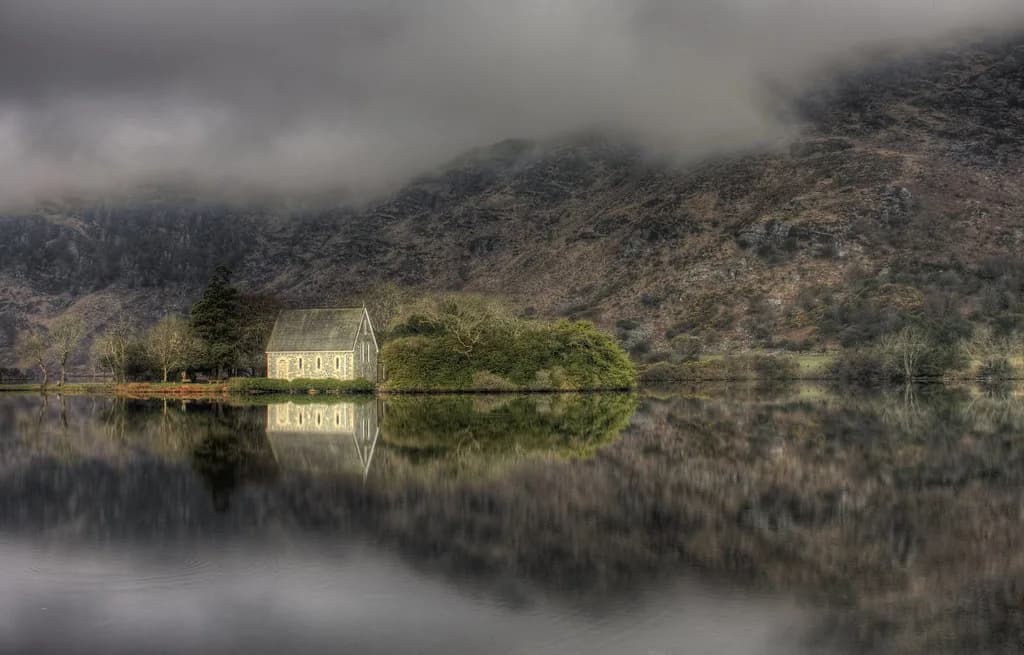
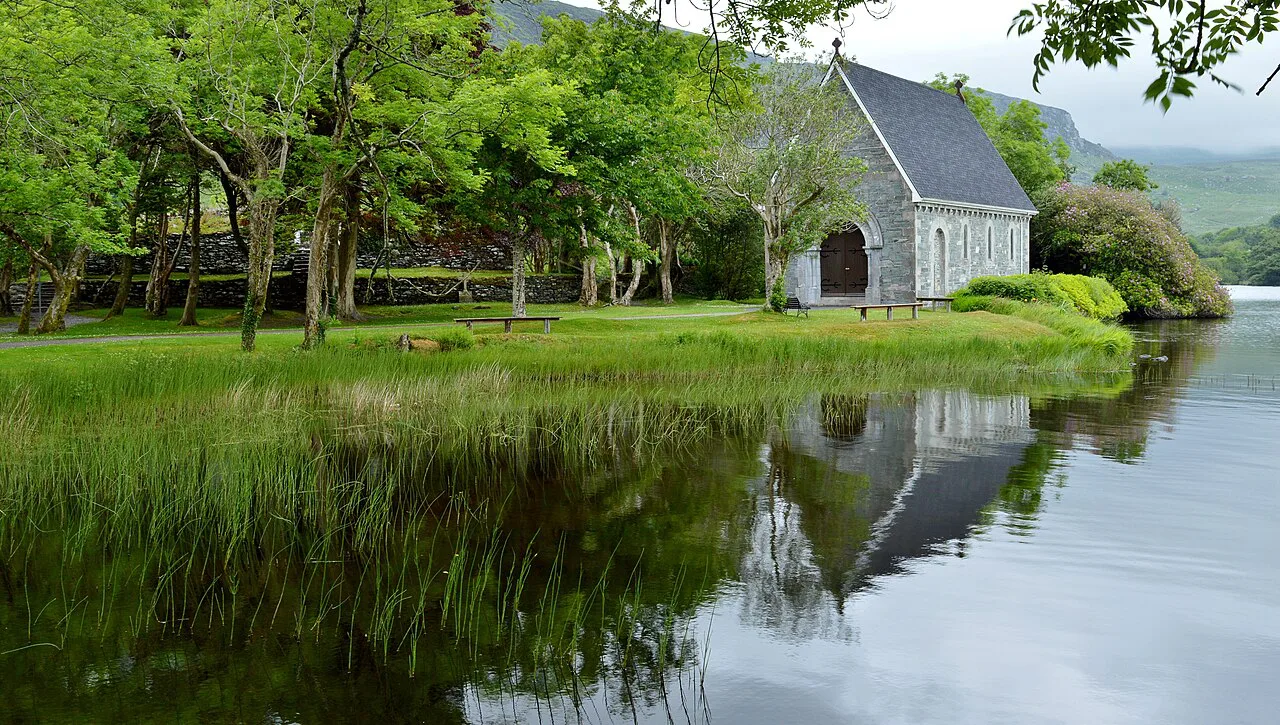
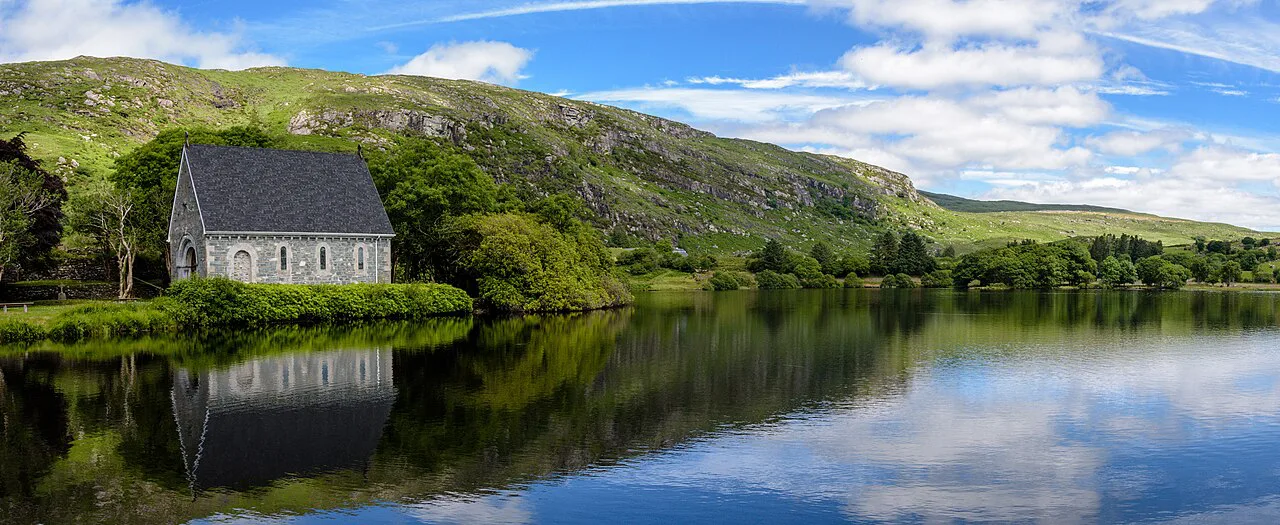
Gougane Barra church is St Finbarr's Oratory, the small chapel on the lake island at the entrance to Gougane Barra Forest Park in west Cork. The island sits in Uibh Laoire Parish in the Diocese of Cork and Ross, a short way off the shore. The building you see is not ancient fabric: the standing neo-Romanesque chapel dates to 1902, while the island's hermitage belongs to the seventeenth century.
That distinction matters for anyone planning a visit. The sixth-century layer is a tradition attached to St Finbarr, not surviving masonry, and the diocesan record, the county archaeological inventory and the state forestry operator all describe the place in different but compatible terms. Read them together and the island becomes easier to understand: a living devotional site wrapped in a forested valley.
What Gougane Barra Church Actually Is
The name covers more than one thing. The oratory is the chapel on the island; Gougane Barra Forest Park is the Coillte property of over 137 hectares that surrounds the lake, tucked at the edge of the Sheehy mountains. Visitors usually arrive through the forest park, so the car park, trails and lake shore frame the church before you reach it.
The island sits at the edge of the lake near the shore at the entrance to the forest park, so the approach is short once you are in the park. Coillte notes that the River Lee rises in these hills before running roughly 89 kilometres to Cork Harbour. The oratory and its grounds belong to the parish, which asks groups and individuals to respect the sacredness and ethos of the site.
Three Dates Not to Confuse
The Cork County Council archaeological inventory lists the site as St Finbarr's Hermitage under record CO080-012001-. It describes a hermitage in the form of a cloister established on the lake island in the seventeenth century by the Carmelite priest Denis O'Mahony, and a neo-Romanesque chapel built on the island in 1902. That gives two firm construction dates that are often blurred together in retellings.
The third date is different in kind. The sixth-century association with St Finbarr is a tradition transmitted by the church rather than a surviving building phase. Put simply: the story is early medieval, the cloister is seventeenth-century, and the chapel is twentieth-century. Knowing which is which keeps a visit honest, and it also explains why the island carries so much weight despite its small size.
The St Finbarr Tradition
According to the Diocese of Cork and Ross, St Finbarr is honoured as a patron of Cork and one of the patrons of the diocese, and the island is associated with his early monastic settlement. The tradition holds that he died in 623 and that his feast falls on 25 September. Diocesan material also credits him with founding the centre of learning that grew into the city of Cork.
These are church claims and should be read as such, not as excavated fact. For travellers, the useful takeaway is that Gougane Barra sits at the start of a Cork story that continues in the city itself, so pair the valley with a look at the museums in Cork to trace that heritage indoors. Anyone tracing early monastic landscapes elsewhere in Ireland will find the same pattern of tradition outrunning stone, a theme worth following across the island's irish saints.
Reading the Island Landscape
Coillte describes St Finbarr's Oratory, the small church on the lake island, as having beautiful old Stations of the Cross and stained-glass windows, encountered on the approach to the forest park. These features belong to the devotional life of the site rather than to a museum display. The lake, the steep valley walls and the mountain backdrop do much of the interpretive work themselves.
Interior access is not something to assume. The diocese and the forestry operator publish no opening hours or tour schedule for the oratory, so treat a visit as a landscape and grounds experience first. If going inside matters to you, contact the parish before travelling using the details published on its oratory page, and build the rest of the day around the park.
Gougane Sunday and Living Devotion
The annual diocesan pilgrimage, Gougane Sunday, falls on the Sunday after 25 September. The Diocese of Cork and Ross gives 27 September as the 2026 date, with Confessions, the Rosary and Mass through the afternoon. Because the rule is tied to the feast day rather than a fixed calendar date, the date shifts each year; check the diocesan page rather than relying on an old listing.
The 2023 Mass marking 1,400 years since St Finbarr's death was held in October of that year and belongs to history, not to any forthcoming calendar. Attendance figures reported at the time should not be read as current. Alongside the annual Mass, the diocese describes doing the rounds as a lay devotion that took shape during the Penal Laws and survives as a way of praying for the sick and for community needs; it is living practice rather than a performance for visitors.
A Place for Weddings
Coillte and the diocese both note the island's long-standing use for weddings, and its lakeside setting makes that easy to understand. Treat this as context about how the site is used, not as a service arranged through a visitor page: ceremonies are a matter for the parish. Couples should approach the parish directly and well ahead of any date.
Walking the Surrounding Forest Park
Coillte lists six waymarked trails, so the walk can be sized to the time you have. The multi-access Slí an Ghaorthaidh runs 0.5 kilometres in about 30 minutes with ten nature stops, while Slí na Laoi follows the infant Lee for 1.3 kilometres at a moderate grade. Easier options include Slí Dhoire na Coise at 1.8 kilometres, roughly 45 minutes, along the Lee to the lake and back.
For something harder, Coillte grades Slí an Easa at 1.8 kilometres and about 1.5 hours as strenuous, and Slí na Sléibhe at 2 kilometres and two hours as the most majestic of the routes, climbing high for wide views. A short 0.5-kilometre option, Slí an Choim Rua, suits a quick look behind the forest valley. There is also a 3-kilometre motor trail for those touring by car.
Arriving by Car or by Bike
The forest park car park charges a five-euro car entry fee, payable by debit or credit card only, or covered by a Coillte annual pass; no cash option is stated. That charge is Coillte's parking fee for the forest park and is not an admission fee for the oratory. Plan to pay by card and check the Coillte site before setting out if anything about access is unclear.
Cyclists should know that Coillte describes the 318-kilometre Cork City to Beara and Gougane Barra route as finishing at Gougane Barra. That is a statement about where the route ends, not an endorsement of the riding or a promise about conditions on the day. Arriving on two wheels still means using the same park entrance and respecting the same sacred ground beyond it.
Etiquette and Permissions
The parish asks everyone using the oratory and grounds to respect their sacredness and ethos. Any assembly, gathering or function of any sort needs prior written permission from the Parish Priest, together with evidence of insurance indemnity. Contact details are published on the parish page, so a group organiser should make that approach early rather than arriving with a plan in hand.
What to Verify Before You Go
The official material confirms no oratory opening hours, guided-tour schedule or interior access guarantee, so build the day around the forest park and the pilgrimage calendar instead of a fixed indoor timetable. Check the diocesan page for the current Gougane Sunday date and the Coillte page for parking, trail conditions and any notices. Neither promises facilities on the island itself.
Plan Your Visit
Treat Gougane Barra church as a small island chapel in a large, mountainous setting. Come for the St Finbarr tradition, the 1902 building and the seventeenth-century hermitage story, then give the forest park enough time for at least one trail and the lake shore. Drivers should carry a card for the car-entry fee and cyclists should expect to finish a long route here rather than start a short one.
If you are following early Christian landscapes across the country, this island works as a western Cork counterpoint to other monastic and pilgrimage places cared for by various bodies; browse the irish pilgrimage sites collection to place it in a wider map before you travel.
For a related stop, Monasterboice offers another early Christian landscape to compare with Gougane Barra's island setting.
Explore more Ireland guides
Frequently Asked Questions
Is Gougane Barra church the same as St Finbarr's Oratory?
Yes. The church visitors ask about at Gougane Barra is St Finbarr's Oratory, the small chapel on the lake island at the entrance to the forest park. It belongs to Uibh Laoire Parish in the Diocese of Cork and Ross. The forest park around it is a separate property managed by Coillte.
When was the church at Gougane Barra built?
The standing chapel is dated to 1902 and described as neo-Romanesque in the Cork County Council archaeological inventory. An earlier hermitage in the form of a cloister was established on the island in the seventeenth century by the Carmelite priest Denis O'Mahony. The sixth-century St Finbarr connection is church tradition rather than surviving fabric.
Did St Finbarr build the church on the island?
The diocese associates the island with St Finbarr's early monastic settlement and honours him as a patron of Cork, with a tradition that he died in 623 and is commemorated on 25 September. That is a claim of church tradition, not archaeological proof, and it does not mean the present chapel is his building.
Can you go inside St Finbarr's Oratory?
No published opening hours or interior access guarantee appears in the official material. The parish and Coillte describe the island and its setting, and Coillte describes the small church's Stations of the Cross and stained glass, but no timetable or visitor access agreement is published. Contact the parish before travelling if going inside matters to you.
When is Gougane Sunday?
Gougane Sunday is held on the Sunday following 25 September, so the date moves each year. The Diocese of Cork and Ross gives 27 September as the 2026 date. Check the diocesan page for the current year rather than relying on a past listing.
Do you have to pay to visit St Finbarr's Oratory?
The only published charge is Coillte's car-entry fee for the forest park, payable by debit or credit card or with a Coillte annual pass. It is a parking charge, not an admission fee for the oratory. No oratory ticket price is published.
How long do the walking trails at Gougane Barra take?
Coillte lists six trails. Short options include the multi-access Slí an Ghaorthaidh at about 30 minutes and Slí an Choim Rua at about 30 minutes. Longer routes run from roughly 45 minutes to two hours, with Slí na Sléibhe graded strenuous.
Can you hold a ceremony or gathering at the oratory?
Any assembly, gathering or function at the oratory or its grounds requires prior written permission from the Parish Priest, with evidence of insurance indemnity. Contact details are published on the parish page. Weddings are a long-standing use of the island, arranged through the parish.
Sources
You might also like



Continue reading
More guides you'll find useful




