
Lusk Round Tower and Belfry: Visitor Guide to the Monastery Site
Lusk Round Tower and Belfry is a National Monument in Lusk village, 20km north of Dublin. Learn its tower, medieval tombs and free guided tour access.
On this page
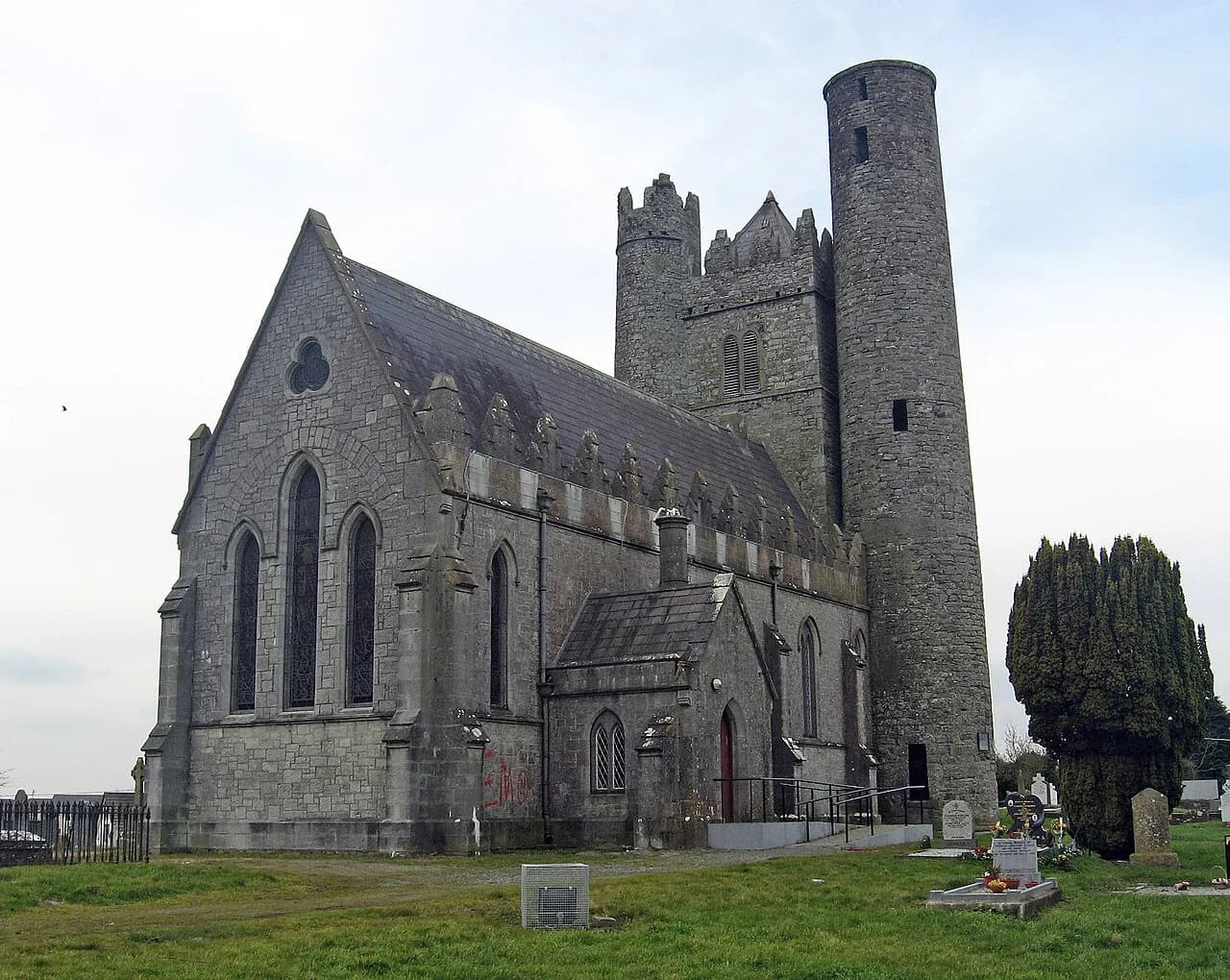
Lusk Round Tower and Belfry is a National Monument in the graveyard of St Maccullin's, inside an ecclesiastical enclosure in Lusk village, about 20km north of Dublin city. The essential visiting fact is simple: admission is free, but the interior is seen only on a guided tour that is confined to the ground floor of the belfry, not the tower's upper floors.
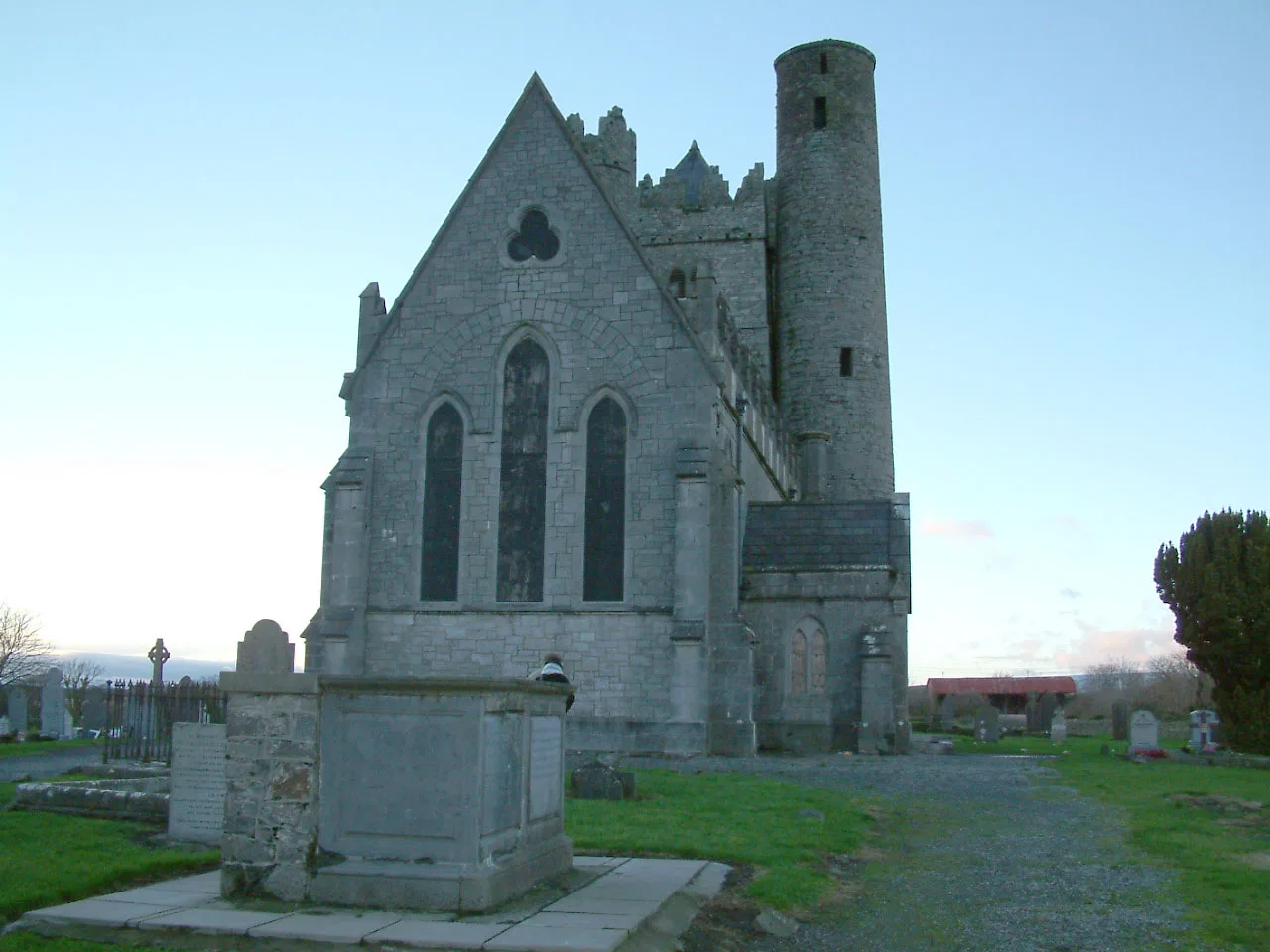
Plan the visit around two structures rather than one. The round tower is the late 10th-century limestone shaft visible across the village, while the square belfry beside it dates to the 15th century and holds the carved tombs and fittings described on the operator's page.
The Setting: Graveyard and Ecclesiastical Enclosure
The monument stands within an ecclesiastical enclosure in Lusk village, a setting that frames how the structures should be read. Approaching through the graveyard puts the tower and belfry in the same view, which is how the early monastery would have been understood: as a single landscape rather than two separate stops.
Heritage Ireland describes the site as standing in the graveyard of St Maccullin, within an ecclesiastical enclosure in Lusk village. Fingal County Council's tourism listing separately frames the tower as rising high above the heart of the village. Together those descriptions suggest the best first impression comes from the enclosure itself, before any tour begins.
The Round Tower: Fabric and Construction
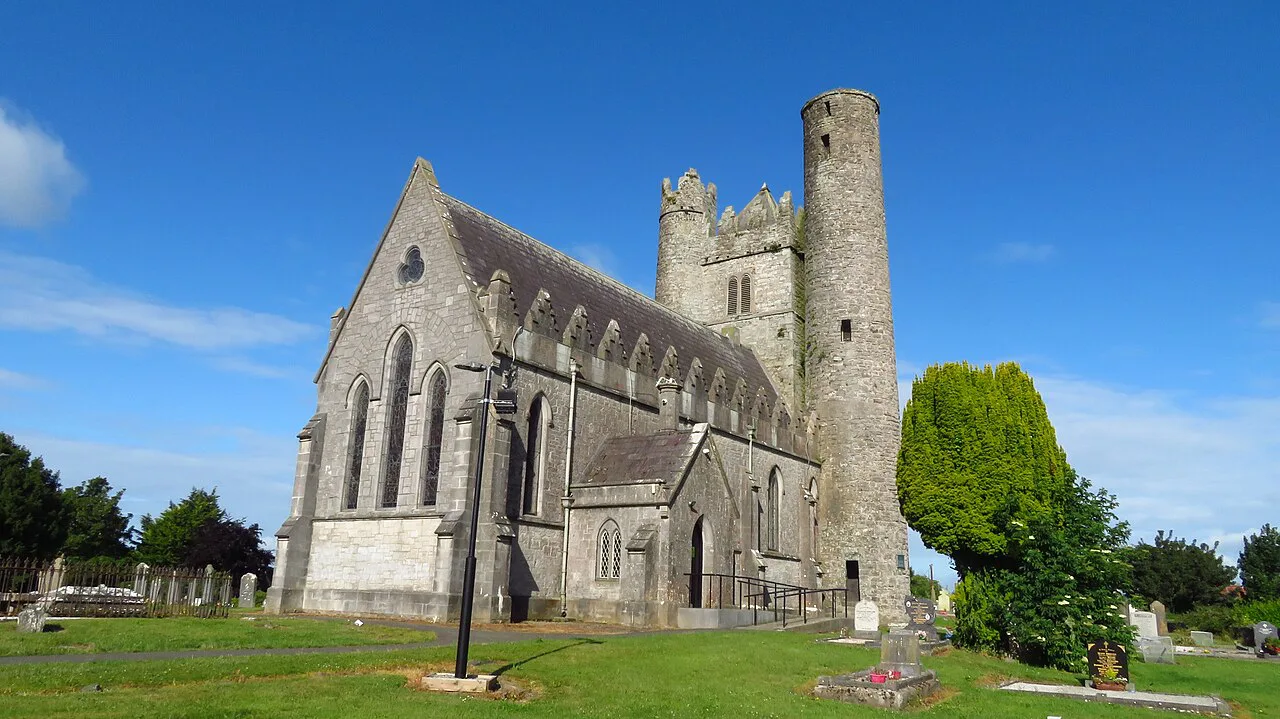
According to Heritage Ireland, the tower was built in the late 10th century from coursed limestone, rises to 34 metres, and contains eight floors plus a basement. Narrow slit windows light the interior, with windows facing the cardinal points just below the cap. That combination of height and small openings is worth noting when you look up from the graveyard, because the masonry and window pattern are the clearest evidence of the original build.
One detail confuses many visitors. The entrance door sits low, apparently within reach of attackers, but Heritage Ireland explains that ground level around the base has been raised over several hundred years. Read the doorway as a product of accumulated soil and burial ground rather than as an original defensive design.
St Maccullin and the Early Monastery
Heritage Ireland records that St Maccullin, an early Irish saint, founded the monastery here after being made Bishop of Lusk by Pope Gregory in the 5th century. The monastery was raided and plundered during the Viking Age in 827 and 856, and the same account links the Vikings' later settlement at Dubh Linn to the site's story.
The founding tradition and the recorded raids belong to different orders of evidence, so treat the saint's biography as tradition and the raid years as the operator's historical record. For wider context on saints associated with early Irish monasteries, the irish saints guide is a useful companion before you travel.
The Belfry and Its Carved Tombs
The adjacent square belfry is dated to the 15th century and contains a 17th-century font, a ballaun stone, and part of a fireplace decorated to depict the Annunciation. These are the features to look for on the ground floor, since that is the level the guided tour covers.
Several medieval tombs with effigies stand in the belfry, including commemorations of Walter Dermot, who died in 1538, and James Birmingham, who died in 1637. The double effigy tomb on the ground floor commemorates Sir Christopher Barnewall, who died in 1575, and his wife Marion Sharl, who died in 1589. Knowing the names in advance helps you pick them out rather than scanning a room of worn stone.
The Roof and Later Repairs
The tower's roof has changed more than its walls. Heritage Ireland notes that the once conical roof was restored by Rector William Reeves in 1860 and was later replaced with a flat cap. That flat top marks a later intervention rather than a medieval original, and noticing it changes how you read the tower's silhouette.
For comparison with other Irish towers and their varied caps and doorways, the round towers ireland guide sets out how these structures differ across the country. Lusk's raised doorway and flat cap make it a distinctive example rather than a typical one.
Suppression and Survival
The monastery's later history is bound up with the Reformation. Heritage Ireland explains that after the Act of Supremacy in 1534, legislation forced any monastery worth less than £200 to close, and the 1539 Act for the Dissolution of Greater Monasteries saw compulsory closure and abandonment. These acts were used by Henry VIII to weaken Rome's power and seize monastic wealth.
Understanding that sequence helps explain why a site with an early medieval tower survives mainly as ruins and a graveyard rather than as a working monastery. The tower and belfry are protected under the National Monuments Acts 1930 to 2014, so the buildings you see are conserved rather than reconstructed.
Visiting: Tours, Access and Capacity
Heritage Ireland lists admission as free and says access to the interior will be by guided tour only, restricted to the ground floor of the belfry. Each tour has limited capacity and places are first-come, first-served, with no booking mechanism stated on the operator's page. The operator also gives a dated notice that the site is open for tours from 2 May 2026, so treat the guided tour as the route inside and confirm the current arrangements before relying on it.
The operator's page also carries a dated notice that the site is open for tours from 2 May 2026, which is a start notice rather than a closure announcement. It does not publish daily opening hours, tour times or duration, so check the current terms before making a special trip.
Explore Fingal, the county council's tourism listing, advertises a Lusk Round Tower and Belfry Tour and a Tour of Medieval Lusk, Round Tower and Belfry. Treat that listing as local event promotion and confirm the arrangements with the operator before relying on it.
Reading the Monument as One Landscape
The tower, belfry and graveyard are best understood together. The tower speaks to the early monastery and its Viking-era troubles, while the belfry carries the later medieval and post-Reformation memory of the site in its tombs and fittings. Walking between them within the enclosure makes that chronology visible in a way that reading about each structure separately does not.
If you are following a wider route through Ireland's monastic remains, the irish pilgrimage sites guide sets Lusk alongside other named sites and helps you decide how much time to give each. Lusk is compact, so it works well as one stop among several rather than a full day on its own.
What to Look For on a Short Visit
Outside, study the coursed limestone, the narrow slit windows and the cardinal windows below the cap, then look at how far the ground has risen against the low doorway. Inside the belfry on the tour, focus on the 17th-century font, the ballaun stone, the Annunciation fireplace fragment, and the named effigy tombs.
Visitors often compare Lusk with other early monastic landscapes. Kilmacduagh, for instance, shows how a similar ensemble of tower and church buildings reads at a larger scale, and the comparison sharpens what is distinctive about Lusk's compact village setting.
Plan Your Visit
Lusk Round Tower and Belfry rewards a short, focused visit: the late 10th-century tower, the 15th-century belfry and its medieval tombs, and a graveyard setting that holds them together. Admission is free, but interior access depends on a ground-floor guided tour with limited, first-come places, and the operator's notice dates tours from 2 May 2026, so build some flexibility into your timing.
Check the operator's page shortly before travelling for current tour arrangements, since the published details cover starting terms rather than a full schedule. If you are tracing Ireland's early Christian heritage more widely, the Ancient Sites in Ireland guide is a sensible next stop. For another heritage guide, read about Monasterboice. For the broader city story that frames sites like this, the Dublin History: A Chronological Guide to the City's Key Sites is a useful companion.
Explore more Ireland guides
Frequently Asked Questions
Can you go inside Lusk Round Tower?
Heritage Ireland states that interior access is by guided tour only and is restricted to the ground floor of the belfry. The tour does not extend to the round tower's upper floors or other levels, so the tower shaft is appreciated from outside in the graveyard.
How much does it cost to visit Lusk Round Tower and Belfry?
Heritage Ireland lists admission as free. Because the operator gives only a dated tour-start notice rather than a full schedule, check the current terms directly before travelling.
How old is Lusk Round Tower?
Heritage Ireland dates the round tower to the late 10th century and describes it as built of coursed limestone. The adjacent belfry is a later structure, dated to the 15th century.
What can you see in the belfry at Lusk?
On the ground-floor tour you can see a 17th-century font, a ballaun stone, part of a fireplace decorated with the Annunciation, and medieval effigy tombs including those of Walter Dermot, James Birmingham, and Sir Christopher Barnewall with Marion Sharl.
Do you need to book a tour of Lusk Round Tower and Belfry?
Heritage Ireland does not describe a booking system. It says places on each tour are limited and allocated first-come, first-served, so check the current arrangements with the operator before you travel.
Where is Lusk Round Tower in relation to Dublin?
The monument stands in Lusk village, about 20km north of Dublin city, within an ecclesiastical enclosure and graveyard around St Maccullin's.
Why is the doorway of the round tower so close to the ground?
The low doorway reflects centuries of accumulated ground level around the base rather than an original defensive design. Heritage Ireland notes that the ground has been raised over several hundred years, so the door now sits within reach.
Sources
You might also like



Continue reading
More guides you'll find useful





