
Drumcliffe Church, County Sligo: Yeats, Round Tower and High Cross
Plan a visit to Drumcliffe Church in County Sligo: St Columba's working church, the round tower, high cross and W.B. Yeats's grave beneath Benbulben.
On this page
Drumcliffe, County Sligo, is a compact site set against the striking backdrop of the Benbulben Mountains, and it draws visitors for four things: St Columba's working church, a round tower, a high cross and the grave of W.B. Yeats. Discover Ireland notes that nearby is the site of a sixth-century Columban monastery, so the later buildings and monuments read as layers over older sacred ground rather than separate attractions. Allow time to walk the whole enclosure slowly instead of treating it as a single photo stop.
The most common mistake is the name. There is another Drumcliffe in County Clare, near Ennis, which has its own ruined church, round tower and cemetery and is a national monument in state guardianship. The Clare monument's official record describes a very different site, with an Ennis burial ground and its own separate history, so nothing from it should be applied to the Sligo churchyard. If your map result sits near Ennis, you have the wrong Drumcliffe.
The Monastic Setting Below Benbulben
Discover Ireland records that nearby is the site of a sixth-century Columban monastery, and the round tower, high cross and graves sit within that wider sacred ground. Visitors should read the site as a sequence: the early monastic footprint first, then the later church built over and beside it, then the memorials added across the centuries. That layering is what makes a short stop worth more than the time it takes to cross the grass.
The setting matters as much as the stones. Discover Ireland describes Drumcliffe as set against the striking backdrop of the Benbulben Mountains, and that skyline frames almost every view across the enclosure. On a clear day the mountain gives the churchyard a scale that photographs rarely capture, so pause at the gate before walking in rather than heading straight for the grave. For a wider map of comparable early Christian landscapes, the Irish pilgrimage sites collection places Drumcliffe alongside other monastic places worth a detour.
St Columba's Church (1809): A Working Church
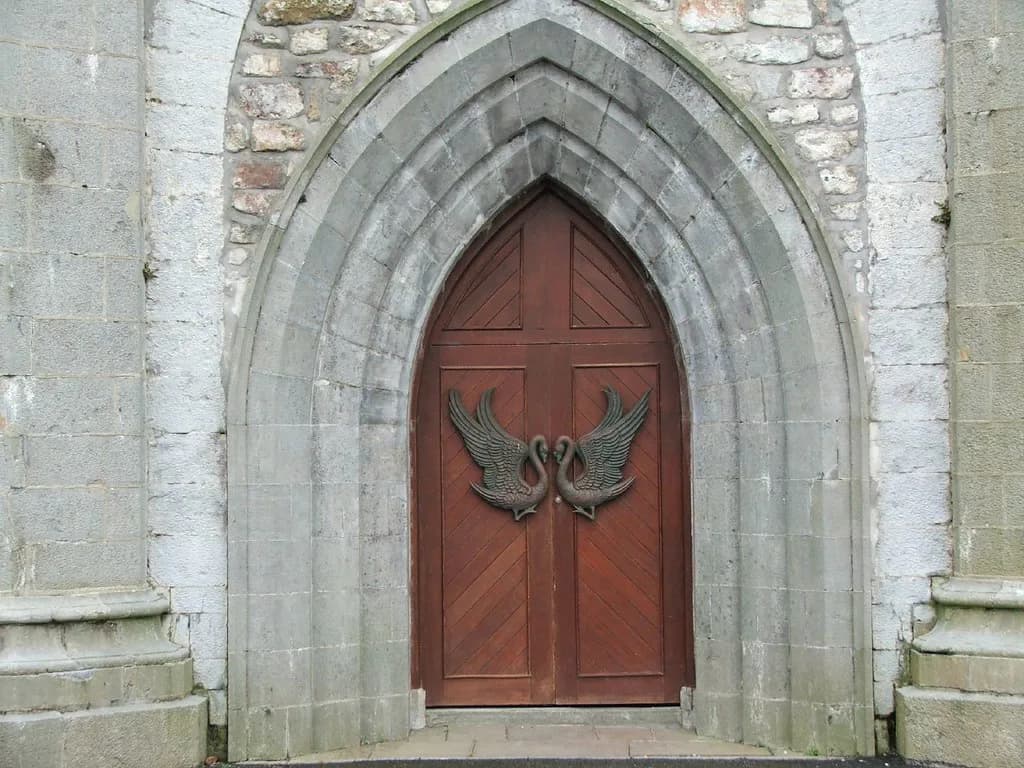
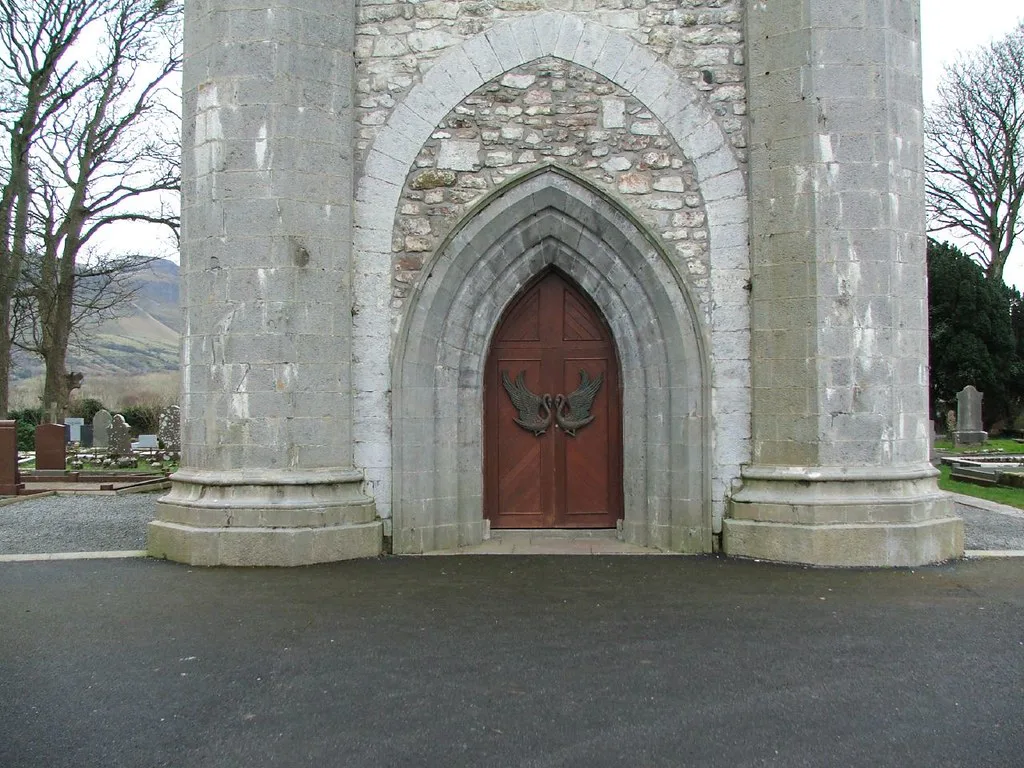
St Columba's Church was built in 1809 and remains a working Church of Ireland church at the heart of the small local community, so a visit is to an active place of worship rather than a museum. The churchyard is open to visitors all year round, but the church itself is open daily only during the peak visitor season, according to Discover Drumcliffe. If the interior matters to your visit, plan around that seasonal opening rather than assuming the doors will be unlocked in midwinter.
Inside, look for the memorials that line the church walls, including one dedicated to the late Pastor John Yeats, who was rector at Drumcliffe long before his famous great-grandson first visited. Set into the church walls are remnants of ancient high stone crosses found over the years on the monastic site, a detail easy to miss if you only look at eye level. Treat these fragments as part of the building's fabric rather than as display pieces, and give other visitors and worshippers room to move. If these carved fragments leave you wanting more, the ancient sites in Ireland guide covers the tombs, forts and trackways that surround monuments like this one.
Group visitors described as paying group visitors receive a Discover Drumcliffe booklet with a site map and notes on points of interest, from the monastic beginnings to Yeats's grave. That booklet is described for paying groups, not as a general handout, so independent travellers should not expect one at the gate. If you are organising a group, ask the site directly in advance about the booklet and what the group visit includes.
The 1895 East Wall Mural
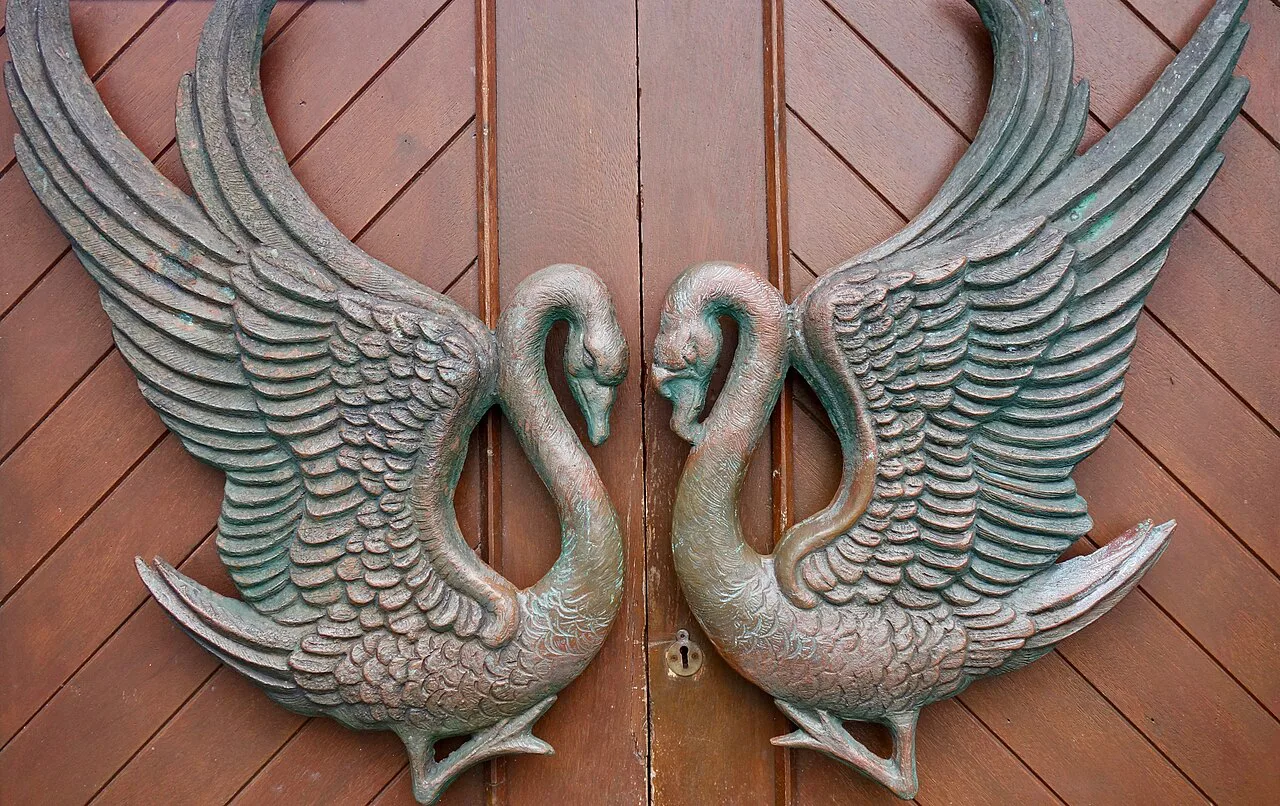
The church's best-known interior feature is its east wall mural, painted in 1895. Discover Drumcliffe explains that the Church of Ireland at the time was reluctant to have crosses in its churches or pictures of religious icons, and the mural answered that reluctance with abundant Christian imagery and cleverly embedded messages. It is described as one of a kind in Ireland, which is a strong claim for a small country church and the reason many visitors step inside at all.
Because the mural sits inside the church, it is only viewable when the building is open, which the community site ties to the peak visitor season. Build your day around that constraint: see the churchyard, tower and cross first, then go inside when the doors are open rather than saving the interior for last. If the church is closed on the day you pass, the mural is a reason to return rather than something you can see from the doorway.
The Round Tower: Sligo's Only Round Tower
The round tower stands directly opposite the graveyard and is described by Discover Drumcliffe as Sligo's only round tower. The same source suggests it was probably used as a bell tower, which fits the usual reading of these structures as markers and sound-carriers for a monastic community. The tower here is a landmark to look at and walk around, not a monument to climb; nothing published indicates internal access.
Read the tower by its silhouette and its relationship to the church rather than by a construction date, because no date for this tower is given in the available sources and the tenth-century dating attached to the Clare tower does not belong here. Notice how it stands apart from the graveyard yet still governs the site's profile from the road. The round towers ireland guide is useful if you want to compare proportions and settings across other examples before or after your visit.
The High Cross at the Front of the Graveyard
A high cross stands at the front of the graveyard and is described as a landmark that would have been used in years gone by. No date or carving style is published for it in the sources here, so resist assigning it a century from its appearance alone. Look instead at its position: it faces arrivals, which tells you something about how the site announced itself to visitors long before signboards existed. The high crosses ireland collection is the place to go for comparative reading of these monuments.
The cross is also the natural starting point for a circuit of the enclosure. Begin there, move along the graveyard, and finish at the tower or the church door depending on what is open. This order keeps the visit logical on foot and prevents the common mistake of photographing the tower first and then doubling back across the graves. If this is your first stop on a wider sweep, the ancient sites ireland guide sets out how tombs, forts and trackways fit around monuments like this one.
W.B. Yeats's Grave and Epitaph
Yeats's grave lies in the churchyard, marked by a simple headstone carrying the epitaph instructing the reader to cast a cold eye on life, on death, and for the horseman to pass by. Discover Ireland records that this was the poet's self-penned epitaph, together with instructions that the grave consist of no marble and no conventional phrase. That instruction explains the deliberate plainness of the marker, which can disappoint visitors expecting a monument and rewards those who arrive knowing why it looks as it does.
Discover Drumcliffe states that Yeats's desire to be buried at Drumcliffe, taken from his poem connected with Benbulben, probably serves as the first endorsement of how sacred the ancient site is. That is the community's own framing rather than a neutral historical verdict, but the grave is nonetheless the reason many people make the stop. Approach it quietly, since it sits among other graves and remains a place of mourning for some visitors.
Practical Access and What to Expect
Two access rules cover most visits. The churchyard is open to visitors all year round, while the church is open daily during the peak visitor season, as stated by Discover Drumcliffe. There is no published visitor centre, no stated admission price for the churchyard and no fixed tour schedule in the sources here, so check the community site before travelling if any of these matter to your plans.
A coffee shop and craft shop operate on site, according to Discover Ireland, which makes Drumcliffe an easy pause rather than a brisk stop. Combined with the churchyard, tower, cross and grave, a visit fits comfortably into a half-day alongside other Sligo heritage stops without feeling rushed. Prices and shop hours are not published in the sources consulted, so confirm them on arrival or through the site's own channels.
Where Drumcliffe Fits a Sligo Heritage Day
Drumcliffe works best as one element of a heritage day rather than a destination on its own. Its combination of an early monastic site, a later church and a literary grave gives it a different character from the purely archaeological sites of the Irish pilgrimage sites group, and the contrast is the point. If you want to vary the monuments rather than repeat the churches, the castles in county galway guide covers four sites with current access details. Pair it with other early Christian places rather than stacking several similar churchyards back to back.
If you are following the story of Irish monasticism, the Irish Saints material is useful background for understanding the Columban tradition attached to the site. Keep expectations modest: Drumcliffe is a working churchyard, not a reconstructed heritage park, and its appeal lies in that continuity. The ancient sites ireland collection offers further context if you want to extend the theme across the region.
Plan Your Visit
Drumcliffe, County Sligo, rewards visitors who arrive knowing what they are looking at: a later working church (1809), a round tower, a high cross and Yeats's grave, set near the site of a sixth-century Columban monastery below Benbulben. Check the seasonal opening of the church interior before you travel, leave time to walk the full churchyard, and do not confuse this site with the separate Drumcliffe near Ennis in County Clare, which is a national monument in state guardianship with its own ruined church and cemetery. Confirm current arrangements through Discover Drumcliffe and Discover Ireland rather than relying on outdated listings.
Explore more Ireland guides
Frequently Asked Questions
Is Drumcliffe Church the same as Drumcliffe in County Clare?
No. Drumcliffe in County Sligo is the site of St Columba's Church, the round tower, the high cross and Yeats's grave, below Benbulben. Drumcliffe in County Clare, near Ennis, is a separate monument with its own ruined church, round tower and cemetery. Check which county your map result shows before setting out.
Can you go inside St Columba's Church?
The churchyard is open to visitors all year round, but Discover Drumcliffe states that the church itself is open daily during the peak visitor season only. If seeing the 1895 east wall mural matters to you, plan around that seasonal window and check the community site before travelling rather than assuming year-round interior access.
Where is W.B. Yeats buried?
Yeats's grave is in the churchyard at Drumcliffe, County Sligo, marked by a simple headstone bearing his self-penned epitaph, including the instruction that the grave have no marble and no conventional phrase. The grave is one of the principal reasons visitors stop at the site.
Is the round tower at Drumcliffe open to climb?
No published source describes internal access to the tower, which stands opposite the graveyard and is described as Sligo's only round tower, probably used as a bell tower. Treat it as a monument to view and walk around rather than one to enter.
Do you need tickets for Drumcliffe Church?
No admission price is published for the churchyard or church in the sources available, so independent visitors should not budget for a ticket on the assumption one exists. Paying group visitors are described as receiving a Discover Drumcliffe booklet, which is a group arrangement rather than a general entry fee. Confirm any costs directly if you are organising a group.
How long does a visit to Drumcliffe take?
Most visitors can see the churchyard, high cross, round tower and Yeats's grave in a fairly short stop, with extra time if the church interior is open. The site is compact and best combined with other Sligo heritage places rather than treated as a full day out.
Sources
You might also like



Continue reading
More guides you'll find useful



