
Kenmare Lace: History, Design and Where to See It
Kenmare Lace is a fine Irish needlepoint tradition shaped by the Poor Clares and a design school. Learn its history and where to see original designs today.
On this page
Kenmare Lace is a needlepoint lace: it is worked with a needle and thread rather than a hook, building pattern through a detached buttonhole stitch. That places it apart from Irish crochet, which is made with a single hook, and from net-based laces such as Carrickmacross, where muslin is applied to a machine net. Knowing that distinction is the first useful step for reading labels and exhibition captions correctly.
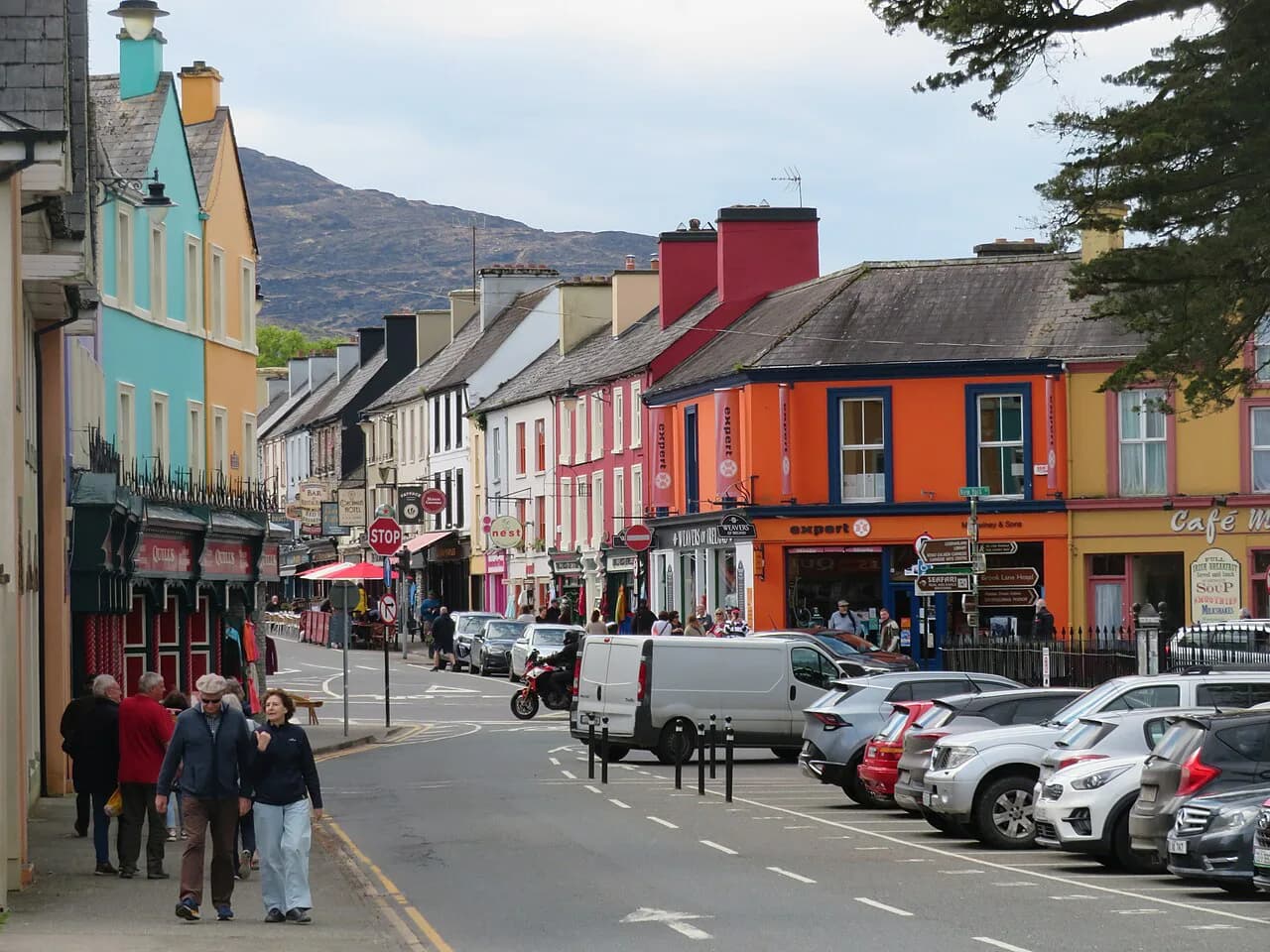
The story belongs to one town and one institution: the Poor Clares who came to Kenmare, the school they ran, and the design training that turned competent handwork into a recognisable local style. For a visitor, the practical anchor is the Kenmare Lace & Design Centre, which presents locally made Kenmare Lace alongside other Irish laces and holds the surviving original designs.
What Kenmare Lace Actually Is
The Guild of Irish Lacemakers describes Kenmare Lace as needlepoint worked with a needle and thread on a detached buttonhole stitch, historically in linen thread. Because linen of sufficient quality is no longer readily obtainable, modern makers generally use cotton. That shift matters for visitors handling or examining pieces, since the thread itself changes how fine the work appears.
Limerick City Council's history of the Irish lace industry classifies needlepoint as a handmade true lace, inspired by Italian needlepoint and distinct from laces that rely on a net base. It places Kenmare among the needlepoint centres, alongside Youghal and Inishmacsaint. That framing is worth holding on to: the label on a display case tells you which family of technique you are looking at.
Ireland's National Inventory of Intangible Cultural Heritage takes a wider view, noting that lace-making centres spread across the island from the eighteenth to the early twentieth century and that each produced locally recognisable styles, naming Kenmare among them. It also treats Irish Crochet Lace as a separate tradition with its own history, so the two should not be conflated in any account of Kenmare work. The same inventory records that the Guild of Irish Lacemakers was founded in 1987, which makes it a recent support body rather than a nineteenth-century institution.
Why the Poor Clares Came to Kenmare
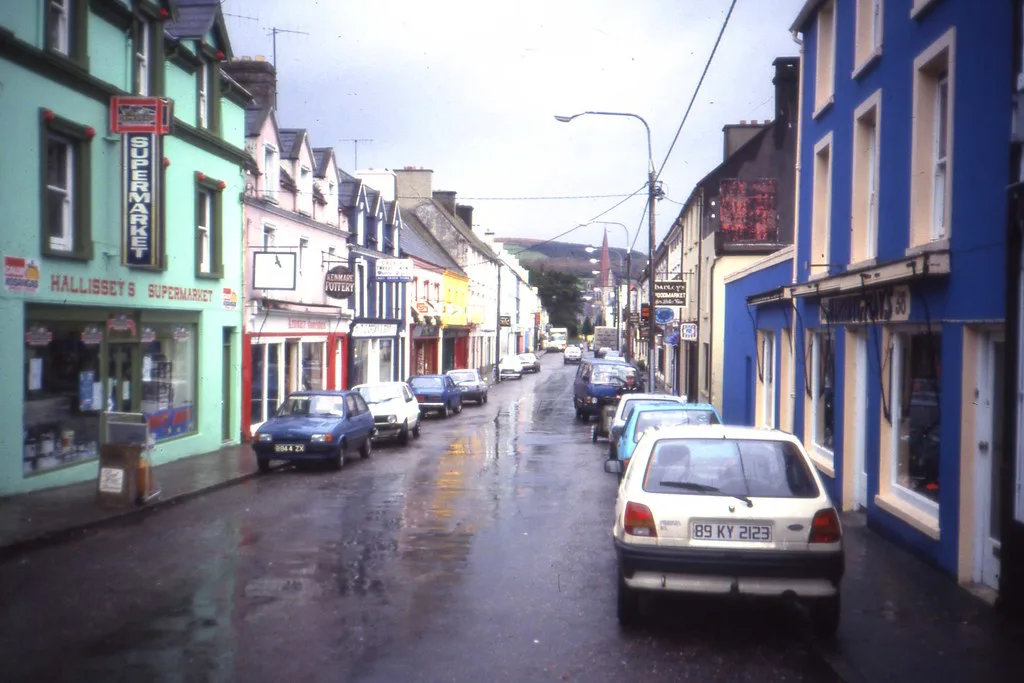
The Kenmare Lace & Design Centre's own history records that the Poor Clares arrived in Kenmare in 1861, brought by the parish priest Fr. John O'Sullivan to open a school. He saw education as the route out of hardship after the recent famine, and a new church and school followed, giving local tradesmen and labourers several years of employment. The Guild of Irish Lacemakers gives the same 1861 date and the same account of the invitation.
It is worth being precise here: 1861 marks the nuns' arrival and the opening of their school, not a documented first day of fine needlepoint production. A separate Limerick City Council publication gives 1864 for the introduction of Kenmare lace, so the sources diverge on the precise starting point. Visitors should treat the early 1860s as the period when the enterprise took shape rather than a single founding moment.
The nuns recognised that girls leaving the school had no means of earning a living, and taught them lace-making as a saleable skill. The operator's history notes that earnings eventually ranged from five to eighteen shillings a week, a substantial sum at the time, and that wealthy visitors travelling the Killarney to Glengarriff route were encouraged to call at the convent to view and buy lace during rest stops. The Guild adds that work was later displayed in a local hotel, widening the market beyond the convent parlour.
The 1883 Verdict That Changed the Design
Technical skill alone did not satisfy the judges. At the Cork Exhibition of 1883, medals went to entries from the Kenmare convent, but the assessment was that the work was skilfully and perfectly executed while the designs fell short of the same standard. Alan S. Cole, a lace expert sent by the Science and Art Department at South Kensington, then gave illustrated lectures around Ireland on design.
The response was institutional rather than individual. An art class was established in Kenmare under James Brennan, headmaster of the Cork School of Art, and an examination centre was set up locally because the rule of enclosure prevented the Poor Clare nuns from travelling to sit exams. The Guild records that the Kensington College of Art permitted the convent examination centre so the sisters could gain art certificates without breaching that rule.
This is the pivot that makes Kenmare legible to a visitor comparing it with other Irish lace centres: the town became known for original design as much as for fine stitching. Limerick City Council's account notes that Kenmare's school of design was linked to the National Art Training School at South Kensington and the Crawford School of Art in Cork, which underpinned the prize-winning quality of the designs. Anyone tracing how such collections are presented today can set this against the museums in Limerick.
Pattern Books and the Local Signature
The design classes produced something concrete and durable. According to the Guild, two books of lace patterns containing more than a hundred designs were compiled by the nuns, later photocopied, and those photocopies are used today by lace-makers at the Centre while the originals are carefully preserved there. That is a rare thing in a craft story: the working reference survives alongside the finished article.
The operator states plainly that the original designs can still be seen today at the Kenmare Lace & Design Centre, and that the centre follows the local tradition by holding locally made Kenmare Lace and other Irish laces. Visitors should read this as a working design and craft centre rather than a museum with a fixed collection display, and plan questions about what is out on any given day accordingly. The centre's site also lists books on lacemaking, kits and materials alongside the lace itself.
Understanding this design lineage helps when looking at finished pieces. Where other centres may be identified chiefly by a stitch or a base fabric, Kenmare's reputation rests on drawings made in the town that were then worked by hand. Comparing a pattern sheet with the lace it produced is the most rewarding way to spend time here.
Recognition at Home and Abroad
The operator's history lists commissions that carried Kenmare work well beyond Kerry. Queen Victoria ordered five pieces on different occasions, created from prize-winning designs, and a bed cover worked for an American client fetched a substantial sum in 1886. Limerick City Council's publication records that in the same year Alan Cole described a large bedspread and set of pillow covers in Kenmare needlepoint as the largest and most important work made for Irish lace up to that time. These are separate statements about separate objects and should not be merged into one.
Named makers also appear. Sr. Bonaventure Smith is credited by the operator with being the first artist to use Celtic tracery in nineteenth-century ecclesiastical vestments, making mitres for members of the Irish, American and Australian hierarchy. Local workers Katie and Mary-Jane Leahy are associated with the Tabernacle Veil, which the operator states is now in the National Museum in Dublin. Custody in a national collection does not establish that a piece is currently on display, so a visitor hoping to see it should check with the museum rather than assume it is in a case.
The operator's history also quotes a 1982 journal piece naming further pieces, including a rochet presented to Pope Leo XIII and a mitre presented to Pope John Paul II in 1980. These are cited attributions from that source rather than independently catalogued holdings, and are best treated as part of the lace's recorded reputation. They add context to the Centre's display of local work, not a checklist of things to see in Kenmare.
Decline, Survival and the Wider Irish Story
The market for handmade lace fell away with the social and economic changes brought by the 1914 to 1918 war, and many workers emigrated, though the convent lace room and its display of antique and modern lace remained in place for years afterwards. The National Inventory describes the same arc nationally: mechanisation from the late 1800s and the disruption of trade routes during the war eroded demand, reducing a world industry to hobby-craft scale.
Placing Kenmare inside that broader timeline is useful. Limerick City Council's history divides Irish lacemaking into an eighteenth-century phase, a Golden Age from 1820 to 1914 when classic Irish laces including Carrickmacross, Limerick, Youghal and Kenmare were developed, and a long decline after 1914. That structure explains why so many named styles emerged within a single century and then faded together.
Revival is documented rather than assumed. The National Inventory names Kenmare among the centres where Irish lace has seen recent revival, alongside Youghal and Headford in County Galway, and describes small creative hubs surviving in Dublin, Cork, Limerick and Monaghan. Lace in Ireland today is largely practised as a craft hobby, which shapes what a visitor should expect: demonstrations and teaching rather than a commercial factory floor.
Visiting the Kenmare Lace & Design Centre
The Kenmare Lace & Design Centre is the named place to see this work in its home town. Its own site describes a centre where you can find pieces of locally made Kenmare Lace and other Irish laces, along with books on lacemaking, kits and materials, and where the original designs are preserved. Plan it as a craft visit with conversation and close looking, not a ticketed exhibition with a fixed route.
Demonstrations are the operator's stated offer: they are available during summer opening hours or by appointment in the off season, and large group demonstrations are by appointment only. That wording means an October visit should be arranged in advance rather than assumed. Opening hours, admission arrangements and current demonstration times are the kind of detail that changes, so confirm them with the centre before travelling.
Classes are handled more loosely on the site, which announces lacemaking classes as beginning shortly without a confirmed date, and posts winter class times without a published schedule page. Treat any class listing as provisional until the centre confirms it directly. If you are travelling specifically to learn the stitch rather than to look at finished work, ask about the format and materials in advance.
Reading the Lace Types Side by Side
Kenmare needlepoint is not the same craft as Irish crochet, which the National Inventory describes as built from separate motifs joined by background netting and mesh stitches, each item unique to its maker's choices. Crochet developed through centres such as Clones in County Monaghan, and the inventory treats the styles as regionally distinct. When a label says Kenmare, expect a needle, not a hook.
Nor is it Carrickmacross work, which Limerick City Council's history describes as muslin applied to a machine-net base with the surplus fabric cut away, set up in the early 1820s near Carrickmacross in County Monaghan. Youghal needle lace belongs closer to Kenmare in technique, having been established at the Presentation Convent there in the 1850s, but it is a separate centre with its own designs. Seeing these families described accurately makes a visit to any one of them more meaningful.
Getting the Most From a Kenmare Lace Visit
Go for the design work as much as the finished article. Ask to see the surviving pattern material the operator says is preserved at the Centre, look at how a drawing translates into needlepoint, and compare what you see with the crochet and net-based traditions covered on the wider Irish lace guide. That comparison is what turns a shop counter into a history lesson.
Before travelling, confirm demonstration availability and class arrangements directly with the Kenmare Lace & Design Centre, since the off-season offer is by appointment and the class announcements carry no fixed date. If your interest extends to holdings elsewhere, check with the National Museum in Dublin about the Tabernacle Veil rather than assuming it is on view. A little verification makes the difference between a disappointing stop and a genuinely informative one.
Explore more Ireland guides
Frequently Asked Questions
What is Kenmare Lace made of and how is it constructed?
It is a needlepoint lace, worked with a needle and thread using a detached buttonhole stitch. Historically the thread was linen; because linen of suitable quality became hard to obtain, cotton is now generally used. It is not crochet, which is worked with a single hook.
When did the Poor Clares come to Kenmare and why?
The Kenmare Lace & Design Centre and the Guild of Irish Lacemakers both record their arrival in 1861, invited by the parish priest Fr. John O'Sullivan to open a school as a route out of post-famine hardship. A Limerick City Council publication gives 1864 for the introduction of the lace itself, so treat the early 1860s as the formative period rather than a single founding date.
Why did design become so important to Kenmare Lace?
At the Cork Exhibition of 1883 the work was judged excellently executed but weaker in design, prompting lectures by the lace expert Alan S. Cole. An art class followed under James Brennan, and a convent examination centre was permitted so the enclosed nuns could gain art certificates. Original design then became the town's signature.
Is Kenmare Lace the same as Irish crochet?
No. Kenmare Lace is needlepoint, built stitch by stitch with a needle and thread. Irish Crochet Lace is made with a hook and assembled from separate motifs joined by background netting and mesh. Ireland's National Inventory of Intangible Cultural Heritage treats the styles as distinct regional traditions.
Where can I see Kenmare Lace today?
The Kenmare Lace & Design Centre is the named place in the town, presenting locally made Kenmare Lace and other Irish laces along with books, kits and materials, and the operator states that the original designs are preserved there. Some historic pieces are held elsewhere, including the Tabernacle Veil in the National Museum in Dublin, but custody does not guarantee current display.
Are lacemaking demonstrations available at the Kenmare Lace & Design Centre?
The operator says demonstrations run during summer opening hours and by appointment in the off season, with large groups by appointment only. That makes an autumn visit something to arrange in advance rather than assume. Confirm current times and availability with the centre before you travel.
Can I learn to make Kenmare Lace there?
The centre's site advertises lacemaking classes as beginning shortly but gives no confirmed date, and winter class times are posted without a published schedule. Ask the centre directly about upcoming dates, format and materials if learning the stitch is your main reason for visiting.
How does Kenmare fit into the wider history of Irish lace?
Irish lacemaking had a Golden Age roughly from 1820 to 1914, when classic styles including Carrickmacross, Limerick, Youghal and Kenmare developed, followed by a long decline after the 1914 to 1918 war. The National Inventory names Kenmare among the centres where the craft has seen a recent revival.
Sources
- The History of Kenmare Lace – Kenmare Lace & Design Centre
- Kenmare Lace – The Guild of Irish Lacemakers
- Homepage - Kenmare Lace, Irish Lace, Kenmare Lace, Irish Crochet – Kenmare Lace & Design Centre
- Irish Crochet Lace - Ireland’s National Inventory of Intangible Cultural Heritage
- amazing-lace-a-history-of-the-limerick-lace-industry-resized.pdf
You might also like



Continue reading
More guides you'll find useful



