
Clones Lace: Irish Crochet History and the Clones Lace Museum
Clones lace is a distinctive Irish crochet tradition with Famine-era roots. Learn what sets it apart and how to see it at the Clones Lace Museum.
On this page
Clones lace is a crochet lace tradition from County Monaghan, not a needle lace or an appliqué, and the place to encounter it is the Clones Lace Museum at Ulster Canal Stores in Clones, County Monaghan. The museum is free to visit and tells the social history of the town and the craft. Hours are not settled across published sources, so confirm with the venue before travelling.
Why Clones Matters in Irish Lace History
Lacemaking spread across Ireland in distinct regional styles, and Clones crochet lace is singled out as one of the locally recognisable types in the national inventory of Irish crochet lace. Monaghan appears among the historic centres where lace-making operated as a cottage industry. That regional identity is the reason a town of Clones's size holds a dedicated lace collection rather than a general textile display. For the wider story, see our guide to Irish Crochet Lace.
A published history of the Limerick lace industry places Irish lacemaking in three broad periods: an early phase from the 1730s to the 1780s, a Golden Age from 1820 to 1914 when the classic Irish laces took shape, and a long decline after 1914. Clones crochet belongs to the middle period, when lace became a significant export and a source of household income. Our Irish Lace guide covers the other regional traditions.
What Clones Lace Actually Is
Clones lace is crochet work made with a fine hook and cotton thread, built from separate motifs that are positioned on a template and then joined by a filling stitch. The characteristic Clones Knot is a small rolled dot made by turning the hook repeatedly around the thread, and hundreds of them could fill a single piece. Motifs drew on the makers' surroundings, including shamrocks, harps, ferns and wild roses.
The national inventory describes Irish crochet more generally as separate motifs joined by background netting or mesh worked in linking chains, with each piece reflecting the maker's own choice of motif and mesh. That structure is what gives crochet lace its texture, and it is the first thing to look for in a display case. Read a piece from the motifs outward rather than scanning the whole panel at once.
Crochet, Not Needle Lace or Appliqué
Irish lace is an umbrella term covering several techniques that should not be conflated. Crochet uses a single hook and sits between lace and knitting in weight and method, while Irish needlepoint is made entirely with a needle and Carrickmacross is an appliqué of fine fabric on machine net. Limerick lace developed separately again, and the Limerick study notes that Carrickmacross and Limerick both used machine-made net as a base.
Clones lace is often compared in appearance to Venetian needle lace, but the resemblance is one of effect rather than construction: Irish makers used a hook to reach a similar look far faster. That shortcut is central to understanding why crochet became a practical relief industry. Visitors who expect needle lace will misread the museum's pieces, so keep the hook in mind.
Famine-Era Origins and Cassandra Hand
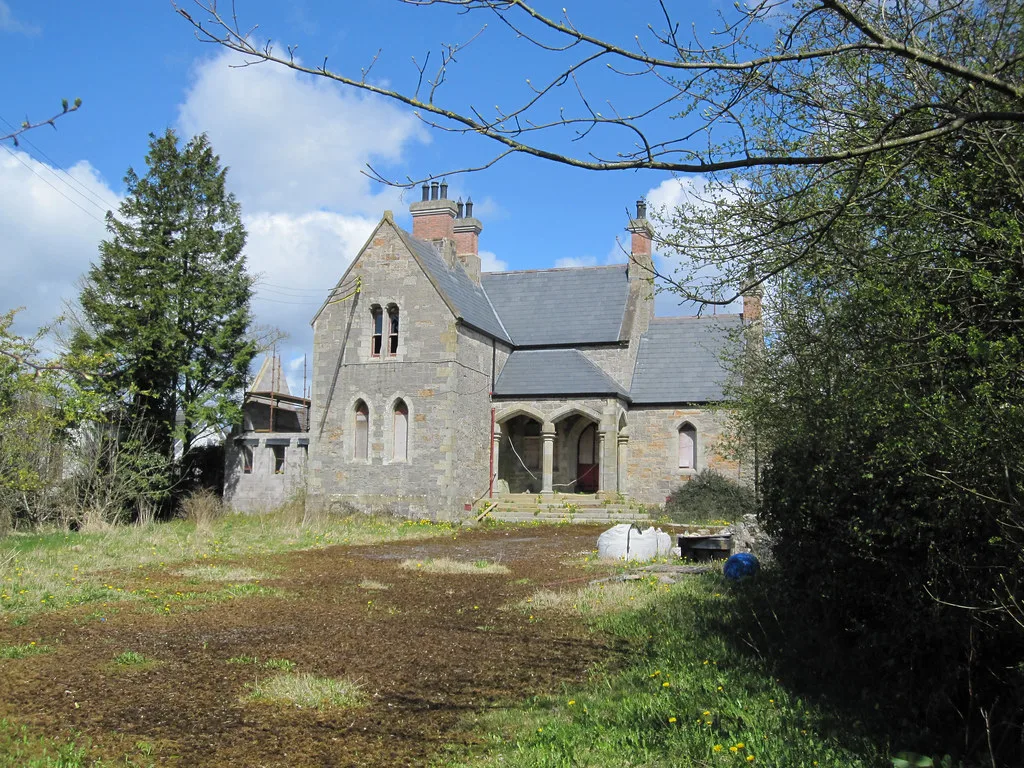
Cassandra Hand, wife of the local rector, arrived in Clones in 1847 and turned her energies to a relief scheme that gave families an income from lace. The Limerick study records that crochet was introduced to Clones by Mrs Hand soon after Mrs Roberts of Dunlavin began teaching it as famine relief, and that Clones flourished while the Dunlavin industry faded. The national inventory likewise links the spread of the craft to the Great Famine years.
Crochet in Ireland had two early centres in the 1840s, one at the Ursuline convent in Blackrock, Cork, and the other at Clones. Lace sales funded a school for infants and young girls, a building now used as a folk museum known as the Cassandra Hand Centre. Treat that as historical context for the town rather than a second lace venue. For the Cork end of that story, our Blackrock, Cork: A Built-Heritage Guide to the Historic District picks up the district's wider built heritage.
Growth, Family Secrets and Decline
By 1910 Clones was reportedly the centre of crochet lacemaking in Ireland, but many patterns were kept as closely guarded secrets within families. When lacemaking families emigrated or died out, and fashion moved on, the knowledge went with them. The national inventory gives the wider reasons for the slump: mechanisation in the late 1800s and early 1900s, and the disruption of trade routes during the 1914 to 1918 war.
Irish crochet enjoyed a brief revival of interest through fashion designers in the 1960s, including Sybil Connolly, but the craft settled into small hubs rather than a world industry. That arc explains why a museum collection matters here: much of the evidence survives as objects rather than as continuous workshop tradition.
Revival and the Clones Lace Guild
Local women reinvigorated the craft in 1988 and launched the Clones Lace Guild, which the Laces of Ireland account credits with restoring Clones lace to its place in Irish history. Nationally, the Guild of Irish Lacemakers was founded in 1987 to support practising lacemakers through workshops, lectures and exhibitions. Both dates mark organised revival rather than continuous production.
Contemporary practice is largely individual and hobby-based, though small creative hubs survive in Dublin, Cork, Limerick and Monaghan. The national inventory documents newer groups working to draw scattered practitioners together, which is useful context for anyone hoping to meet makers. It does not guarantee that demonstrations or classes are running, so ask the venue rather than assuming.
Visiting the Clones Lace Museum
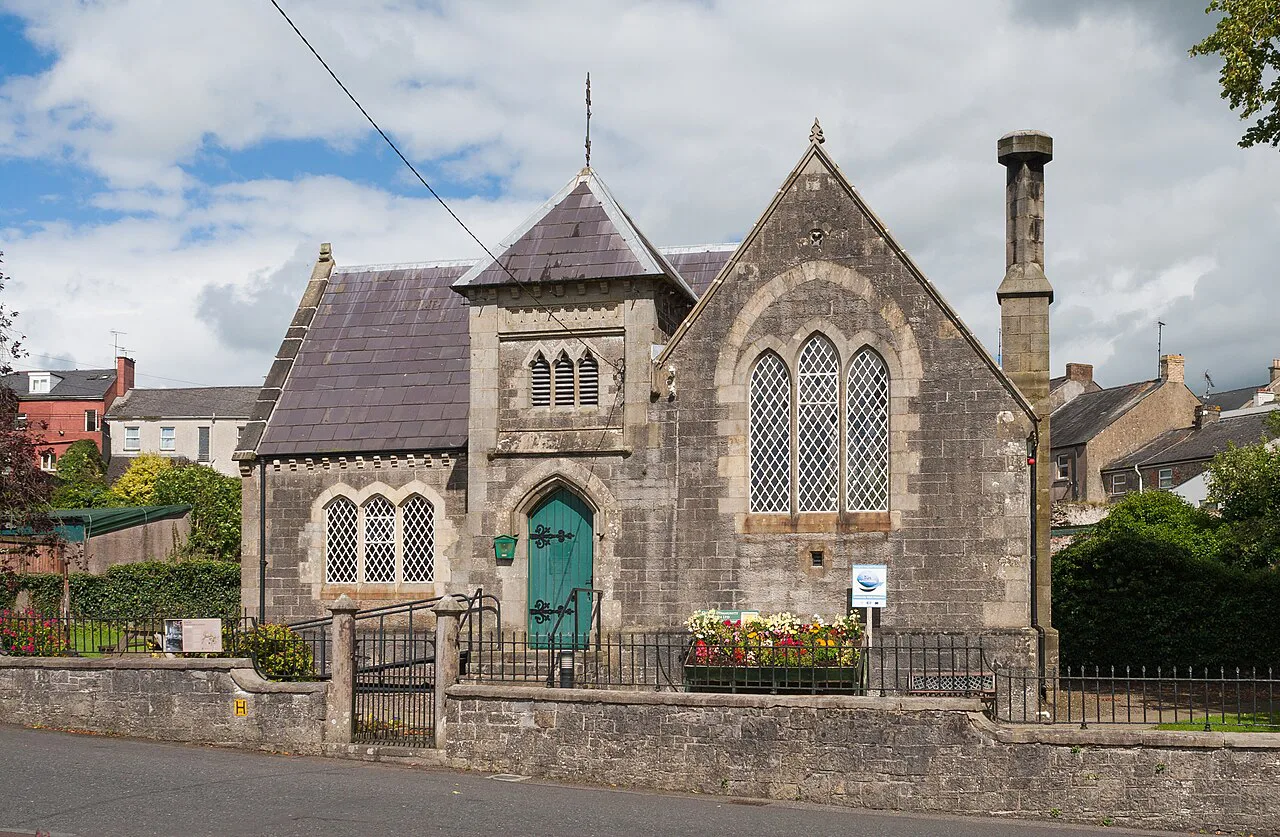
The museum sits inside Ulster Canal Stores, a restored cut-limestone canal storehouse built around 1839 on the banks of the Ulster Canal. The operator describes the museum as free to visit and focused on the social history of Clones and how Clones lace became part of community life after the Great Hunger. The local tourism page calls it a dedicated museum for the crochet craft.
The exhibition is described as tracing the craft from its origins after the Famine of the 1840s to makers of today, and staff can advise on the wider built heritage of the Clones area. A film introducing the town's historical background has been part of the display. Because exhibits can change, treat these descriptions as a guide and check with the venue for what is currently shown.
Reading the Collection
The exhibition has been described as holding Clones lace dating to about 1880, including wedding dresses and collars, displayed under the title Linked by a Thread. That date range places the pieces in the period when Clones was at its height as a crochet centre. Do not expect a complete survey of every Irish lace type; this is a local collection with a local story.
When you look at a piece, find the individual motifs first, then trace the mesh that links them, and finally pick out the rolled Clones Knots that fill the ground. Garment pieces such as collars show how the lace was worn and how motifs were scaled for a specific shape. Comparing a collar with a wedding dress panel makes the craft's versatility clearer than any label.
Facilities, Access and Group Visits
Ulster Canal Stores states full disabled access over two floors, an onsite bistro, meeting facilities and a small gift shop, and welcomes large bus groups and school tours by arrangement, with bespoke historical tours available. The local tourism page adds free onsite parking and a playpark next door, which helps if you are travelling with children. These are the operator's stated arrangements, not fixed daily offerings.
Days and hours differ between published descriptions, and the operator's own page does not set them out. Contact Ulster Canal Stores directly before making a journey, and ask specifically about the museum rather than the bistro or gift shop. If you need step-free access or a guided tour, raise it in the same enquiry so nothing is left to chance.
Clones and Carrickmacross: Neighbouring Traditions
County Monaghan holds two quite different lace traditions. Carrickmacross lace was set up in the early 1820s by Margaret Grey Porter and uses muslin applied to a machine-net base with the surplus fabric cut away, with later revivals through the Sisters of St Louis in the 1890s. Clones is crochet, worked motif by motif with a hook.
Lace travellers sometimes combine the two, and the contrast is instructive: appliqué cutwork against built-up crochet, and a rectory-led enterprise against a famine relief scheme. Elsewhere in Ireland the distinctions continue, with Youghal needle lace developed from 1852 by Mother Mary Ann Smith at the Presentation Convent, and Kenmare lace introduced by the Poor Clares in 1864.
Summer Schools and the Craft Today
An international Clones Lace Summer School has been held each June at Ulster Canal Stores, drawing visitors from abroad, but published accounts describe it as an established annual event rather than a confirmed current programme. Do not plan a trip around a June date without checking with the venue. The safer approach is to visit for the collection and ask whether any workshops are running during your stay.
For a craft with a near-loss in the twentieth century, the survival of any teaching is notable, and the national inventory frames Irish crochet as safeguarded heritage rather than a finished industry. That makes the museum a starting point for understanding the technique, not a promise of a live demonstration. Set expectations accordingly and the visit will not disappoint.
Practical Trade-Offs for Lace Travellers
Clones offers a compact, free museum with a focused local story and the convenience of a bistro, shop and parking on site. The trade-off is scale: the exhibition is described around a single town's lace, so anyone wanting a broad survey of Irish lace will need other stops. A collection such as the Limerick Museum's lace holdings, or the dedicated centres elsewhere, serves a different purpose.
If your interest extends beyond lace, Clones works as a short stop within a longer County Monaghan itinerary, and the Carrickmacross tradition offers a second, quite different Monaghan lace story nearby. Ireland's wider heritage sites lie well outside this corner of Monaghan, such as the passage tombs and ancient monuments gathered in our guide to ancient sites ireland or the western strongholds covered in castles in county galway, so treat these as separate journeys rather than add-ons to a lace visit.
Plan Your Visit
Clones lace repays a deliberate visit: a free museum in a restored canal storehouse, a collection tied to the town's Famine-era relief work, and a craft whose techniques are visible in the objects themselves. Go knowing it is a small, locally focused display rather than a national lace centre.
Before travelling, confirm opening days and any group arrangements directly with Ulster Canal Stores, and ask what is currently on display and whether demonstrations are planned. Build the rest of your day around the town's built heritage rather than assuming a fixed programme. That one call removes the main uncertainty from the trip.
Frequently Asked Questions
Is Clones lace the same as Irish crochet lace?
Clones lace is a regional form of Irish crochet lace, worked with a fine hook and cotton thread from separate motifs joined by mesh. It is not needle lace, Carrickmacross appliqué or Limerick lace. The national inventory treats Clones crochet as one of the locally recognisable styles within the wider crochet tradition, so the terms overlap but are not interchangeable.
Where can I see Clones lace?
The Clones Lace Museum at Ulster Canal Stores in Clones, County Monaghan, holds an exhibition on the town's social history and the craft. Published descriptions mention lace dating to about 1880, including wedding dresses and collars. Confirm current opening arrangements with the venue before you travel, since sources do not agree on days.
How much does the museum cost?
The operator describes the museum as free to visit, and admission details are best confirmed directly with Ulster Canal Stores when you enquire about opening times. Charges for tours or group arrangements are not set out in published sources.
Can I reach the museum without a car?
Published sources describe free onsite parking but do not set out public transport routes or walking distances from Clones town centre. Check locally for directions from the town, and contact the venue if you need step-free access, which the operator states is available over two floors.
Are lace-making workshops available?
An annual lace summer school has been held at Ulster Canal Stores in June, but published accounts describe past events rather than a confirmed current schedule. Ask the venue whether any workshops, demonstrations or courses are running during your visit rather than planning around an assumed date.
Why is Clones important in Irish lace history?
Cassandra Hand arrived in Clones in 1847 and developed a famine relief lace scheme, and the town became a major crochet centre by 1910. Clones was one of two early Irish crochet centres in the 1840s, alongside Blackrock in Cork. Local women revived the craft in 1988 through the Clones Lace Guild.
What else is there to see nearby?
Carrickmacross, also in County Monaghan, has its own distinct lace tradition using muslin applied to net, and the town's lace story can be paired with Clones for a fuller picture of the county's textile heritage. Allow separate time for each, since the techniques and histories differ.
Sources
You might also like



Continue reading
More guides you'll find useful




