
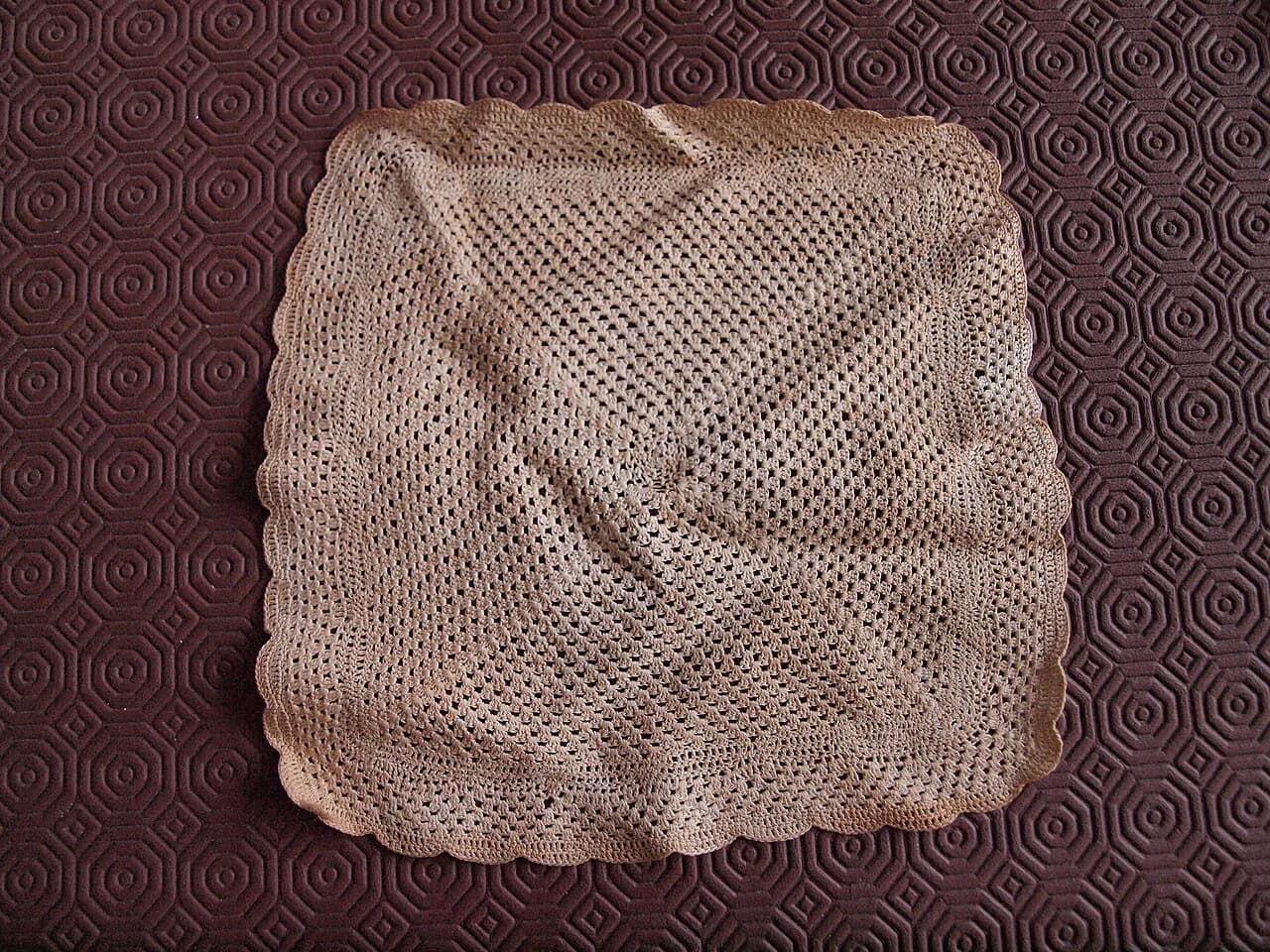
Irish Crochet Lace: Motifs, Mesh and Where to See It
Irish Crochet Lace joins separate motifs with a mesh background. Learn how it differs from other Irish laces, its history, and where its story is told.
On this page
Irish Crochet Lace is a form of handmade lace in which separate crocheted motifs, usually flowers, leaves and vines, are joined together by a background mesh. Because the maker chooses both the motifs and the style of mesh, each finished piece records the flair, innovative vision and technical skill of its creator. That is the most useful thing to understand before looking at a display case: you are seeing a composition, not a repeat pattern.
The craft is recognised on Ireland's National Inventory of Intangible Cultural Heritage, a national recognition record rather than a UNESCO World Heritage listing. It survives today at hobby scale, with small hubs in Dublin, Cork, Limerick and Monaghan and with practitioner groups rather than large manufacturers. Visitors should therefore look for exhibitions and specialist centres, not an industry to tour. This guide covers what the craft is, how it sits beside other Irish laces, and which named places genuinely help a visitor understand it.
Construction at a Glance: Motifs, Template and Mesh
The making process starts with the motifs, worked separately in fine cotton thread. They are then arranged on a template so the maker can judge the overall design, and the background mesh is worked between them to hold everything together. The template is removed at the end, leaving only thread.
Two details reward close looking. The background mesh can include small loops known as picots, and its different dimensions and patterning add texture and visual interest to areas that might otherwise read as empty space. Couching is used to give the finished piece a three-dimensional effect, so raised petals or leaves are a deliberate structural choice rather than a flaw.
Thread sizes for Irish Crochet Lace start around 20, with finer sizes also in use, so a single piece may combine several densities and surface levels. Reading it as one flat fabric misses the point. If a label is sparse, look for the raised couched elements and the joins between motifs before assessing the mesh.
How It Differs from Other Irish Laces
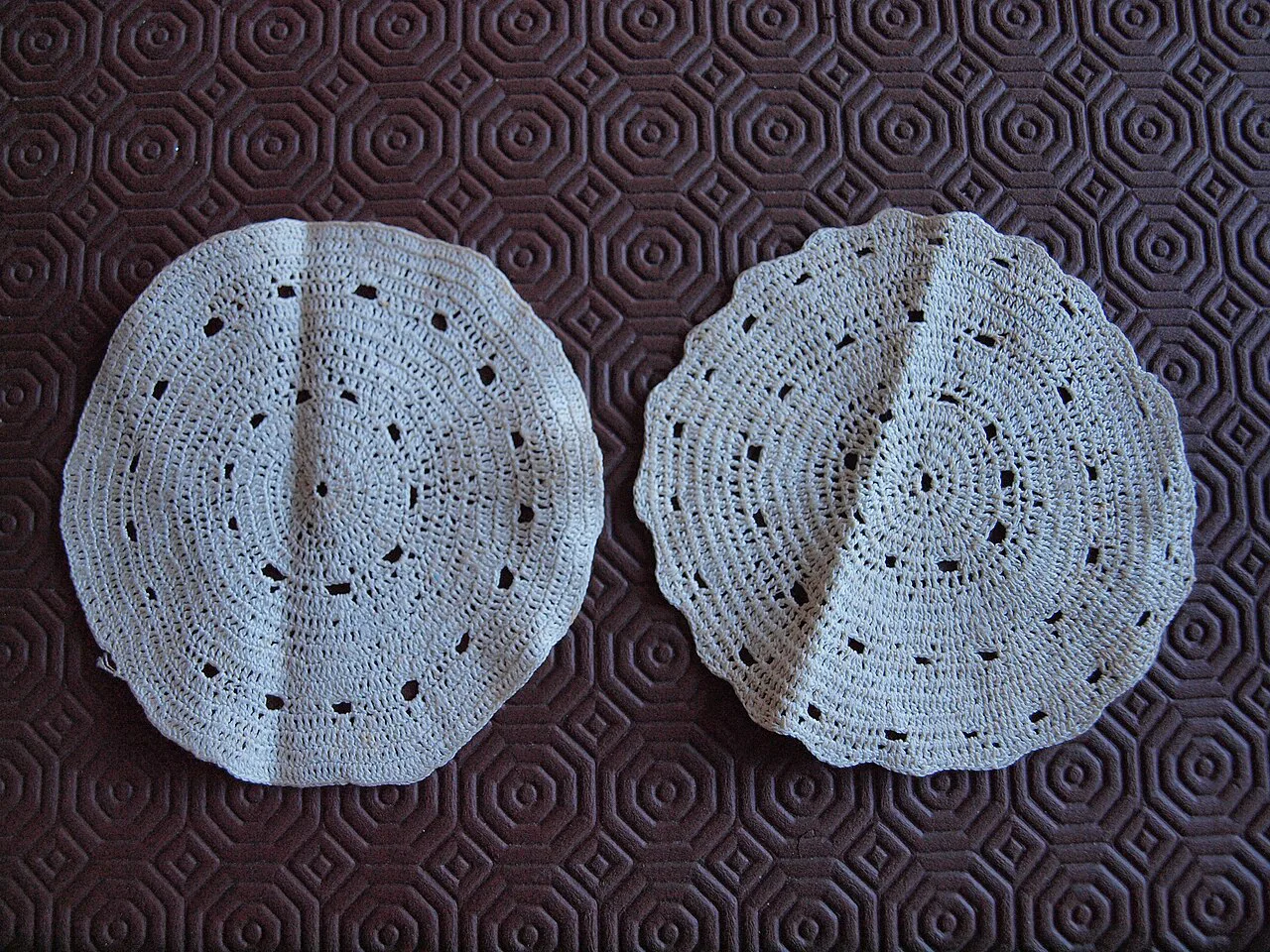
Irish lace is an umbrella term covering several distinct techniques, and conflating them is the most common mistake made by visitors. Kenmare and Youghal are needle-lace traditions, worked with a needle rather than a hook. Carrickmacross lace applies fine fabric or muslin to a machine-made net base and cuts away the surplus, which makes it an appliqué technique rather than a crochet one. Limerick lace is embroidered on net. For a broader orientation, the irish lace overview is a sensible starting point before you visit any collection.
A council-published study of Limerick's lace industry sets the wider chronology in three broad periods: hand production from the 1730s to the 1780s, a Golden Age from 1820 to 1914 when the classic Irish laces were developed and lacemaking became a major industry, and a long decline from 1914 onward. It classifies crochet alongside Carrickmacross, needlepoint and tatting as separate categories, which is exactly how a visitor should read a mixed display.
This matters because a case labelled simply "Irish lace" may hold none of the crochet you came to see. The honest position is that only Clones is presented here as an identified crochet tradition; the others are comparisons that sharpen your eye. If your interest is specifically Carrickmacross rather than crochet, that tradition deserves treatment on its own terms.
Origins and Spread: Pre-Famine Crochet and the 1840s Centres
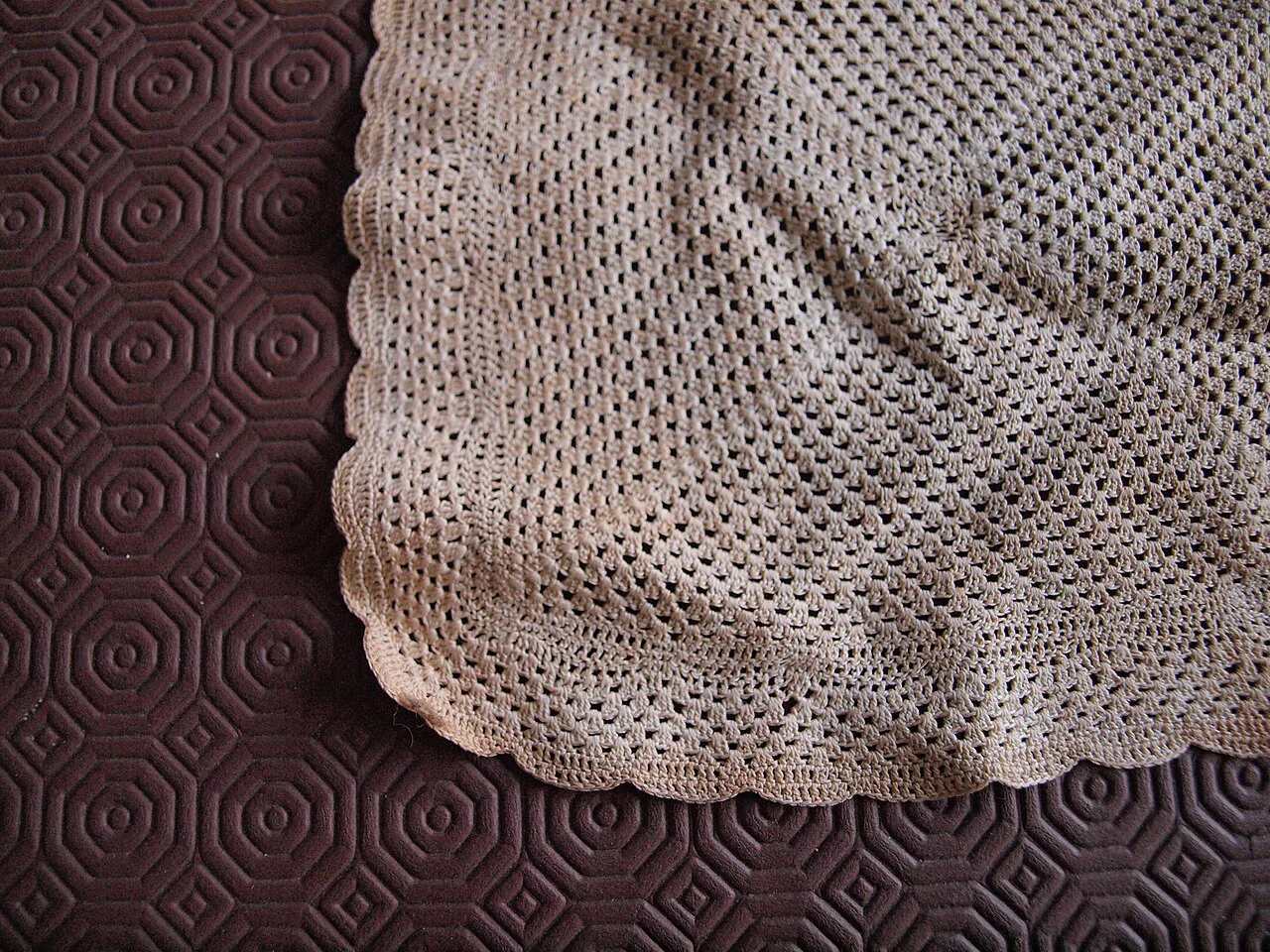
Crochet was made in Ireland before the Famine, but it became widespread in the 1840s from two centres. One was the Ursuline Convent at Blackrock in Cork city, where manufacture started in 1845 and spread through Munster via the convent network; if you are tracing that Cork thread on the ground, Blackrock, Cork: A Built-Heritage Guide to the Historic District covers the district itself. The other was Clones in County Monaghan, where crochet was introduced in 1847 by Mrs Cassandra Hand, wife of the local rector, after Mrs W. C. Roberts of Dunlavin, County Kildare, had begun teaching it as famine relief.
The Dunlavin industry later declined and disappeared, while Clones flourished and spread to other centres. The national inventory records that teaching spread particularly during and after the Great Famine of the mid-1840s as a way of providing income to distressed families, and that earnings for individual girls were often key to a family's survival. A specialist account credits Nano Nagle with starting the Cork crochet industry, but that attribution is not settled; the Limerick study places the 1840s spread at Blackrock. Treat the origin story as contested rather than fixed.
Different hubs produced recognisable local styles, and the inventory names Clones crochet lace as one of them. The specialist account notes that certain families were associated with particular motifs, such as the Quigley family's Lily motif, and that when a family died out or no women continued the work, a unique motif could be lost. Family-linked pattern identity is therefore part of the craft's history, not merely decoration.
Export, Fashion Prestige and the Point d'Irlande Name
Irish crochet was highly regarded in Britain and on the Continent, where it became known as Point d'Irlande. Its prestige was enhanced by use in dress design, including work by the Parisian couturier Jeanne Paquin and the Irish designers Irene Gilbert and Sybil Connolly. The specialist account adds that Irish Crochet Lace was popular in Paris and used on elaborate gowns and evening wear in the latter part of the 19th century. That fashion context explains why so much surviving material is garment trim rather than household linen.
Both Irish lace and Irish crochet lace became significant exports in the 19th century, and cottage industries were established around the country to meet world demand. The inventory records former centres in Cork, Limerick, Galway, Monaghan, Dublin and Borris, among others. A county name in that record is evidence of historical production, not proof that a museum or active maker survives there today, so do not build an itinerary around Borris or Muings Erris without checking locally first.
Decline and Survival: From World Industry to Hobby Craft
Mechanisation of lace production in the late 1800s and early 1900s, together with the erosion of world trade routes during the 1914 to 1918 war, caused demand for handmade Irish lace to fall into decline. The specialist account dates the end of commercial crochet production to 1912, citing cheaper machine-made lace and declining quality standards. There was a brief revival of interest from Irish fashion designers such as Sybil Connolly in the 1960s, but the craft never returned to industrial scale.
Today the inventory describes small creative hubs surviving in Dublin, Cork, Limerick and Monaghan, where the work continues more as a craft hobby. The Guild of Irish Lacemakers was founded in 1987 to assist practising lacemakers, and its stated objective is to develop lace and lace design through workshops, lectures and exhibitions. A corresponding revival movement began in Clondalkin, County Dublin, where practitioners formed a local Irish Crochet Lace group.
These groups are contacts for the craft, not confirmed drop-in attractions, and no visitor should assume a workshop or exhibition is running. If you want to meet makers, write to the organisation and ask what is currently open before planning a trip around it. The most reliable public access remains the dedicated museum and specialist centre described below.
Clones, County Monaghan: A Dedicated Crochet Lace Museum
The Ulster Canal Stores Visitor Centre in Clones is home to a museum the centre describes as Ireland's only dedicated museum to Clones Crochet Lace. Its exhibition leads through the story of this local craft from its origins following the Irish Famine of the 1840s right up to the makers of today. That narrative arc makes Clones the single most relevant stop for anyone following Irish crochet lace specifically.
The centre's own description lists full disabled access, free on-site car parking, an on-site restaurant and an adjacent playpark, and notes that groups and coaches are welcome by prior arrangement. A selection of local crafts is available to purchase. It does not publish museum opening hours on that page, so confirm current hours and any group booking requirements directly with the centre before travelling.
Clones is one named local tradition, not a synonym for every piece of Irish crochet ever made, so read the labels as local history rather than a national survey. The town is in County Monaghan, a county the inventory also identifies as a surviving creative hub. Allow time to look at the mesh joins rather than only the floral motifs; that is where construction and local style are most visible.
Kenmare, County Kerry: A Design-School Comparison, Not Crochet
Kenmare is worth a crochet visitor's time as a comparison, not an equivalent. The Poor Clare nuns arrived in Kenmare in 1861, brought by the parish priest to open a school, and convent lace work grew into a commercial success. The operator states that the original designs from the convent's design school can still be seen today at the Kenmare Lace and Design Centre.
The contrast is instructive. Kenmare is a needle-lace tradition, so the tools, stitch logic and training system differ from crochet even where the finished look is similarly fine. The 19th-century earnings figures and royal or papal commissions in Kenmare's story belong to that needle-lace history and should not be transferred to crochet. For the fuller Kenmare account, including the role of the Poor Clares, see the kenmare lace guide.
Off-season access needs arranging. Summer opening patterns are not a guide to late October or November, and the operator's off-season demonstrations are by appointment. Contact the centre in advance with your dates and ask what can be shown on the day rather than assuming a demonstration will coincide with your visit or that the centre will be open on a walk-in basis.
Limerick and the Wider Map: Reading the Recorded History
Limerick's contribution to this subject is a published document rather than a standing exhibition. The city and county council has made available a downloadable study of the Limerick lace industry, and it is the most useful single text for placing crochet within the wider chronology of Irish lacemaking. Read it before you travel and you will ask better questions of any display case you meet.
The same study describes crochet as occupying an intermediate position between lace and knitting: it is made with a single hook rather than two or more knitting needles and is generally heavier than fine lace. That technical description is a useful corrective to the assumption that all Irish lace is delicate and needle-worked. If you are following the Limerick story on the ground, the limerick lace material covers that separate tradition.
Beyond Clones and Kenmare, the specialist account associates crochet with Cork, Kilcullen in County Kildare, Rosslea in County Fermanagh, and Carrowmenagh and Moville in County Donegal, among other places. Treat these as history, not venues. A sensible approach is to pick one dedicated museum and one comparison centre, then use published histories to fill the gaps rather than driving between place names hoping for displays.
Reading a Piece of Crochet Lace in a Collection
Start with the motifs and work outward. Are the flowers and leaves distinct elements, or part of a continuous fabric? In crochet lace they are separate pieces brought together, and the joins are usually visible on close inspection. Then look at the background: a mesh with picots will show small looped bumps, while a plainer mesh reads as lines crossing open space.
Next, check for couched dimension. Raised areas where thread has been laid and stitched down indicate a deliberate three-dimensional effect, not wear or repair. Finally, ask what the label does not tell you: whether the piece is local, whether the motif is associated with a particular family, and whether the fine thread suggests an imitation of needlepoint lace. Those questions are the difference between looking at lace and reading it.
Before You Travel
Decide first whether you want an identified crochet collection or a broader lace comparison. Clones is the dedicated crochet stop, and its centre publishes facilities but not museum hours, so confirm times and group arrangements with the Ulster Canal Stores Visitor Centre directly. Kenmare is the design-school comparison, and off-season demonstrations there must be arranged in advance rather than assumed.
Use the Limerick study and the national inventory to prepare, and keep the distinction between recorded history and visitable places firmly in view. If you are combining a lace visit with other heritage stops, ancient sites ireland and castles in county galway offer context for the wider landscape rather than substitutes for a lace collection. Two confirmation emails, to Clones and to Kenmare, will do more for your trip than any number of assumptions.
Explore more Ireland guides
Frequently Asked Questions
What is Irish Crochet Lace and how is it made?
It is a handmade lace in which separate crocheted motifs, usually flowers, leaves and vines, are arranged on a template and then joined by a background mesh. The mesh may include small loops called picots, and couching can be used to give the finished piece a three-dimensional effect. Because the maker chooses both the motifs and the mesh style, each piece is individual.
How is Irish Crochet Lace different from other Irish lace?
Irish lace is an umbrella term covering several techniques. Crochet is worked with a single hook and is generally heavier than fine lace. Kenmare and Youghal are needle-lace traditions, Carrickmacross applies fine fabric to a net base and cuts away the surplus, and Limerick lace is embroidered on net. Only Clones is presented here as an identified crochet tradition.
Where can I see Irish Crochet Lace in Ireland?
The Ulster Canal Stores Visitor Centre in Clones, County Monaghan, is home to a museum dedicated to Clones Crochet Lace, with an exhibition running from post-Famine origins to present-day makers. The Kenmare Lace and Design Centre is a useful comparison but presents a needle-lace tradition rather than crochet. Check current opening arrangements with each operator before travelling.
Is the Clones lace museum about crochet?
Yes. The visitor centre describes its museum as dedicated to Clones Crochet Lace, covering the story from origins after the Irish Famine of the 1840s through to today's makers. The centre lists full disabled access, free on-site parking, an on-site restaurant and an adjacent playpark, and welcomes groups and coaches by prior arrangement.
Why does Kenmare matter to crochet visitors if it is needle lace?
Kenmare shows how a convent-run lace enterprise built a design school and kept its original designs, which helps a visitor understand the infrastructure behind Irish lace generally. Seeing needle lace beside crochet sharpens your eye for construction differences. The operator states that original designs can still be seen at the Kenmare Lace and Design Centre, and off-season demonstrations need to be arranged in advance.
Why did the Irish crochet industry decline?
Mechanisation of lace production in the late 1800s and early 1900s, together with the erosion of world trade routes during the 1914 to 1918 war, caused demand for handmade Irish lace to fall. A specialist account dates the end of commercial crochet production to 1912. Interest briefly revived in the 1960s through Irish fashion designers, and the craft now continues mainly at hobby scale.
Is Irish Crochet Lace still made today?
Yes, but at hobby scale rather than as a world industry. The national inventory records small hubs in Dublin, Cork, Limerick and Monaghan, and practitioner organisations such as the Guild of Irish Lacemakers and the Clondalkin-based Irish Crochet Lace Revival group support teaching and the craft's traditions. These are craft contacts rather than confirmed visitor attractions, so ask what is currently open before planning around them.
Sources
You might also like



Continue reading
More guides you'll find useful





