
Irish Coffin Ships: What the Term Means and Where to Learn the History
Irish coffin ships were Famine-era vessels linked to especially high mortality. Learn what the term means and where in Ireland to engage this history.
On this page
A coffin ship, in Irish Famine history, means an emigrant vessel associated with exceptionally high death rates, not simply any ship that carried Irish passengers across the Atlantic. That distinction matters because the best-documented surviving vessel on display in Ireland, the Jeanie Johnston, is remembered for the opposite record. Understanding the term properly means looking at mortality, provisioning and the individual voyage rather than assuming a single grim fate for all emigrant ships.
Why coffin ships is a term of mortality, not a synonym for every Famine vessel
The phrase belongs to ships where overcrowding and rudimentary sanitation produced death on a scale that shocked contemporaries. An independent history of medicine account notes that cholera and typhus were inevitable in packed vessels with the most basic sanitary arrangements, and that at least one in five of those sailing to the United States or Canada may not have survived, with some voyages far worse. Read the label as a description of outcome on particular ships, not as a blanket name for the whole emigrant fleet.
That reading shapes how you should approach any site that interprets the subject. A vessel with a comparatively low death toll is evidence that conditions could be managed, not evidence that the coffin-ship label was exaggerated. Keep the two ideas separate as you move between the historical context covered in our guide to The Great Irish Famine, 1845 and the specific ships discussed below.
The Famine in brief: blight, death and mass emigration
Potato blight reached Ireland in 1845 and the crisis is generally dated to the years 1845 to 1852. A University College Cork educational history estimates that over a million people died and a further million and a quarter left the country, while the population fell from nearly nine million to six million by 1861. Those are estimates from a teaching resource rather than a single agreed ledger, so treat round totals as indicative of scale.
The same account explains why so many people were vulnerable: more than three million depended on the potato as their staple food, and the poorest lived in one-roomed cabins on a small patch of land. Emigration in 1847 alone reached about one-quarter of a million people, with 200,000 or more leaving each year for the next five years. That volume of movement, rather than any natural maritime disaster, is the backdrop to the coffin-ship story.
The Atlantic passage: crowding, sanitation, disease and variable death rates
Passage conditions varied enormously by ship, which is exactly why the coffin-ship term cannot be generalised. The operator of Dublin's Jeanie Johnston notes that many passengers crossed in overcrowded and difficult conditions, with disease and poor nutrition contributing to high death rates on some vessels, and that ships associated with particularly high mortality became known as coffin ships. Nothing in that definition catches every emigrant vessel.
The medical history account describes the mechanics: passengers confined below for most of the crossing, minimal time on deck, an oaken bucket for sanitation, and food that often amounted to hardtack and salted meat. Because there was frequently no proper doctor aboard, causes of death were not always recorded and burial at sea was common. These details explain how a routine mortality rate could climb on badly run ships while other crossings arrived with losses far lower.
The Jeanie Johnston operator publishes figures that show what better management could achieve on the same ocean: crossings averaged 47 days, four passengers might share as little as six square feet below deck, and the captain avoided overloading, carried a doctor and issued basic rations such as bread, porridge, tea and molasses. Those provisions were not standard elsewhere. The contrast is useful only if you resist treating one well-run voyage as representative of the whole trade.
Documented case: the 1,490 Strokestown tenants and their four ships
The clearest documented example of vessels that earned the coffin-ship description concerns the Strokestown estate in County Roscommon. The National Famine Way records that 1,490 tenants forced to emigrate in 1847 travelled via Liverpool on four ships, Erin's Queen, Naomi, The Virginius and The John Munn, which were badly fitted out and poorly provisioned. Almost half of those who embarked died aboard or in the fever sheds at Grosse Isle in Quebec.
Treat that mortality figure as belonging to those four ships and that group of passengers, not as a general rate for coffin ships or for Famine emigration overall. The same source notes that the search for survivors and descendants of the 1,490 is an ongoing research project, which is a reminder that this history is still being reconstructed from records rather than settled once and for all. The interpretive trail that marks this journey is described further below.
Contrast, not example: the Jeanie Johnston's 16 crossings and no recorded passenger deaths
The Jeanie Johnston is often mislabelled as a coffin ship because it was a Famine-era emigrant vessel, but the operator's history is explicit on the point. The original ship was built in Quebec in 1847, purchased by the Kerry merchant family John Donovan and Sons, and made its first emigrant voyage from Blennerville near Tralee to Quebec in 1848 with 193 passengers aboard. Its emigrant career is framed as a high-survival contrast, not an example of the coffin-ship category.
According to the operator, the ship completed 16 transatlantic voyages carrying roughly 2,500 Irish emigrants, and no passengers died aboard during those emigrant voyages. That record is unusual for the period and is attributed largely to the care of Captain James Attridge, who avoided overloading, hired a capable doctor and issued basic rations. By 1858 the ship had left passenger service for cargo, and on a later timber voyage to Quebec it began taking on water; the crew tied themselves to the masts and were rescued after nine days by a Dutch vessel, the Sophie Elizabeth.
The ship moored in Dublin today is a modern authentic replica built as a memorial to Ireland's Famine emigrants, not the 1847 vessel itself. Boarding it gives you a sense of scale, deck layout and below-deck space that photographs cannot convey, but it cannot reproduce the crowded, unsanitary conditions of a badly provisioned crossing. Approach the visit as an introduction to the subject, then use documentary sources such as the Strokestown case to understand the worst of it. To place the quays and docklands in a longer story, our Dublin heritage guide covers the city's key historic sites.
Visiting in Dublin: the replica on Custom House Quay, tour format and access caveats
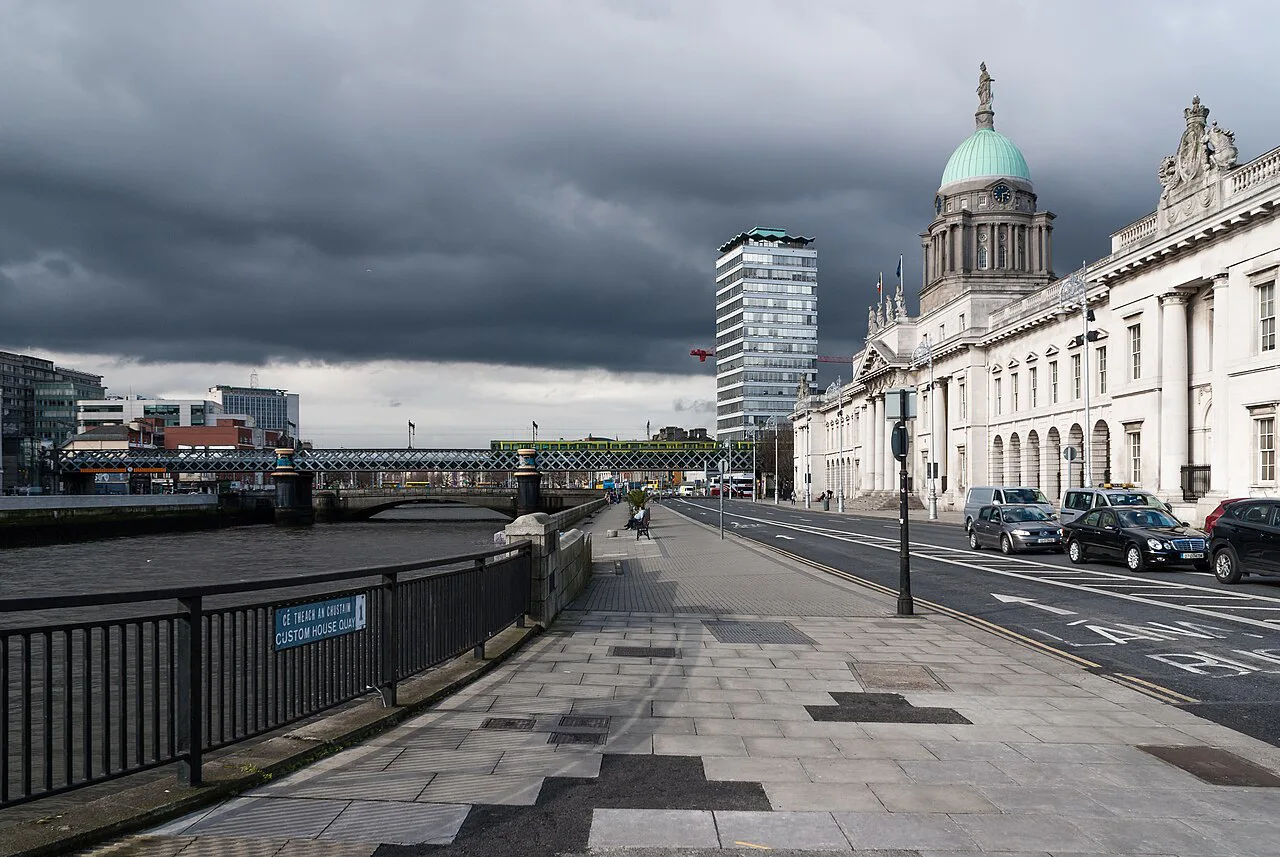
The replica is moored on Custom House Quay in Dublin 1, on the River Liffey in the Docklands. The operator describes it as roughly a 10-minute walk from O'Connell Street along Eden Quay, close to George's Dock Luas stop, and within walking distance of Connolly, Tara Street and Pearse Street stations. Arriving on foot along the quays gives you the riverfront context of the old dockland setting before you board.
Visits take the form of guided tours of about 50 minutes, run on a scheduled daily basis rather than as free-flow entry. The operator publishes tour times and a March to October schedule, but these are operator-published details that can change seasonally, so confirm current times and availability when booking. Advance booking is recommended, particularly in busy periods, because places on a given departure can be limited.
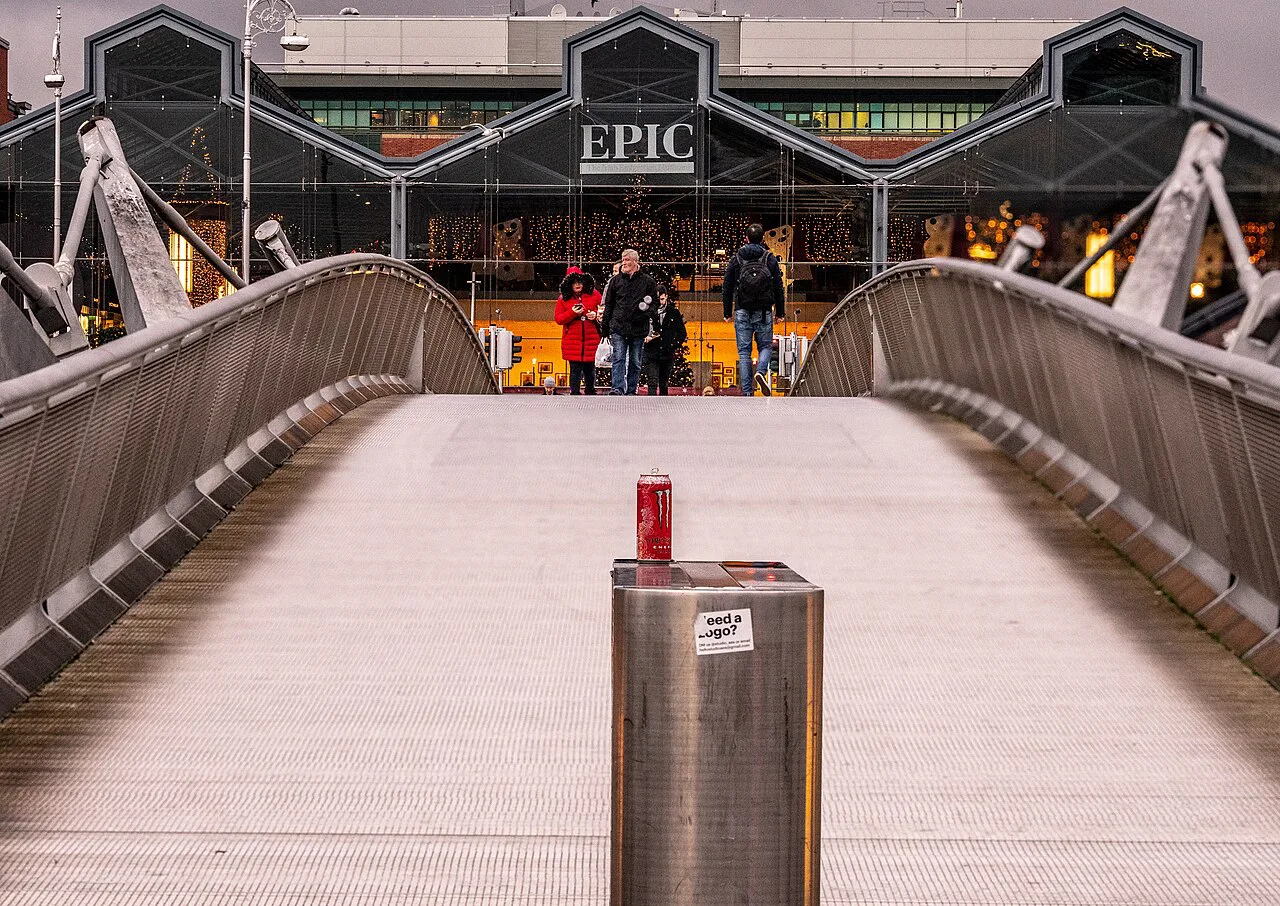
Access to the ship is via a gangplank, and the operator states plainly that there are accessibility limitations. Visitors with mobility requirements should read the access guide and contact the team before booking rather than turning up and hoping to board. It is also worth noting that the ship sits a short walk from EPIC The Irish Emigration Museum, which extends the emigration story beyond the vessel itself if you want a fuller day in the Docklands.
Beyond Dublin: the Dunbrody replica at New Ross and the Grosse Isle endpoint
New Ross in County Wexford holds another reconstructed Famine emigrant ship, the Dunbrody, described in the medical history account as a modern replica of an actual vessel that carried Irish immigrants to the United States and Canada. The same account mentions a visitor centre with an Irish Emigrant Wall of Honour, access to a database of Irish immigrants, and a memorial globe enclosing an eternal flame. Those details come from outside reporting rather than the operator, so check current opening arrangements and what is actually accessible before planning a trip around them.
The Canadian end of these crossings also has a physical memorial landscape. Grosse Isle, in the St. Lawrence River, was a quarantine station hastily set up to receive sick arrivals, and the account notes a monument dedicated there in 1997, with some 5,000 people believed buried on the island. If you are tracing a family connection through Quebec rather than travelling in Ireland, that is the place the records point toward.
The National Famine Way: a public trail marked by bronze shoe sculptures
The National Famine Way links this history into a walkable route rather than a single museum stop. According to its operators, the trail follows the story of the Strokestown Famine emigrants and is marked by bronze shoe sculptures along the way, bookended by the National Famine Museum Ireland at Strokestown Park in County Roscommon and, at the Dublin end, the Jeanie Johnston and EPIC The Irish Emigration Museum. That structure lets you encounter the subject at either end or on foot between them.
For visitors basing themselves in Dublin, the trail's city end is the practical starting point: the replica ship and the emigration museum sit close together in the Docklands. The Strokestown end requires a separate journey west and is best treated as its own visit rather than a detour. If you want more on the estate and museum setting, see our guide to strokestown park for the house and grounds context.
Reading the experience responsibly: estimates, humane framing and what the sites can and cannot show
Mortality and emigration totals for the Famine are estimates built from imperfect records, and the sources disagree in emphasis even when they broadly agree in scale. The University College Cork figure of over a million deaths sits alongside its estimate of about 1.25 million emigrants, while the medical history account offers a rough one-in-five transatlantic loss figure and warns that on some trips the rate was much higher. Present these as ranges and estimates rather than precise counts.
A replica ship can show you the physical dimensions of a crossing and a museum can interpret the records, but neither can reproduce the lived experience of a badly provisioned voyage. The most honest approach is to let the sites introduce the subject, then rely on documented cases such as the Strokestown ships for the mortality that gave the coffin-ship term its force. That keeps the Jeanie Johnston in its proper role as a contrast and avoids flattening very different voyages into one story.
Plan Your Visit
Build an itinerary around two anchors: the guided tour of the Jeanie Johnston replica on Custom House Quay in Dublin, and the National Famine Way interpretation that connects the Dublin Docklands with Strokestown in County Roscommon. Book the ship tour in advance and confirm the operator's published times before you travel, since the schedule is seasonal and subject to change. Visitors with mobility needs should check the gangplank access guidance first.
If your interest is specifically in coffin ships, treat the Dublin ship as the introduction and follow it with the documented Strokestown case and, where feasible, the New Ross replica. The subject rewards readers who keep asking which ship, which year and which passengers, because the term describes the worst voyages rather than the entire emigrant trade.
Explore more Ireland guides
Frequently Asked Questions
What does coffin ship actually mean in Irish Famine history?
It refers to an emigrant vessel associated with exceptionally high mortality during the Famine years, typically one where overcrowding, poor sanitation and disease killed many passengers. It is not a general name for every ship that carried Irish emigrants, and historians apply it to particular vessels and voyages rather than the whole emigrant fleet.
Was every ship that carried Irish emigrants during the Famine a coffin ship?
No. Death rates varied widely between ships and depended on provisioning, crowding, medical care and weather. Some vessels arrived with heavy losses, while others completed multiple crossings with very few or no passenger deaths, so the term should be attached to specific ships rather than assumed for all of them.
Why is the Jeanie Johnston described as a contrast to coffin ships?
The operator states that no passengers died aboard the Jeanie Johnston during its emigrant voyages, despite carrying roughly 2,500 people across 16 Atlantic crossings. Better management, including avoiding overloading and carrying a doctor, is credited with that record. It is therefore presented as evidence that outcomes varied, not as a typical coffin ship.
Is the Jeanie Johnston in Dublin the original ship?
No. The vessel on Custom House Quay is a modern authentic replica built as a memorial to Ireland's Famine emigrants. The original ship was built in Quebec in 1847. By 1858 it had left passenger service for cargo, and during a later timber voyage to Quebec it began taking on water; the crew were rescued by the Dutch vessel Sophie Elizabeth. Visiting the replica gives a sense of the vessel's scale and layout rather than a surviving historic hull.
Where in Ireland can visitors learn about coffin ships and Famine emigration?
The main starting points are the Jeanie Johnston replica and EPIC The Irish Emigration Museum in Dublin's Docklands, the National Famine Way trail with its Strokestown terminus, and the Dunbrody replica at New Ross in County Wexford. For the Canadian endpoint, Grosse Isle in the St. Lawrence River is the relevant memorial site.
How long does a visit to the Jeanie Johnston take, and do I need to book?
Tours run about 50 minutes and depart on a scheduled daily basis rather than as free-flow entry. The operator recommends booking in advance, especially at busy times, because places on a departure can be limited. Confirm current tour times and availability when you book, as schedules change seasonally.
Sources
You might also like



Continue reading
More guides you'll find useful





