
Clonmacnoise: A Guide to the Shannon-Side Monastery
Clonmacnoise, a sixth-century monastery in County Offaly, is fully closed to visitors until January 2027. Learn what survives and how to plan a future visit.
On this page
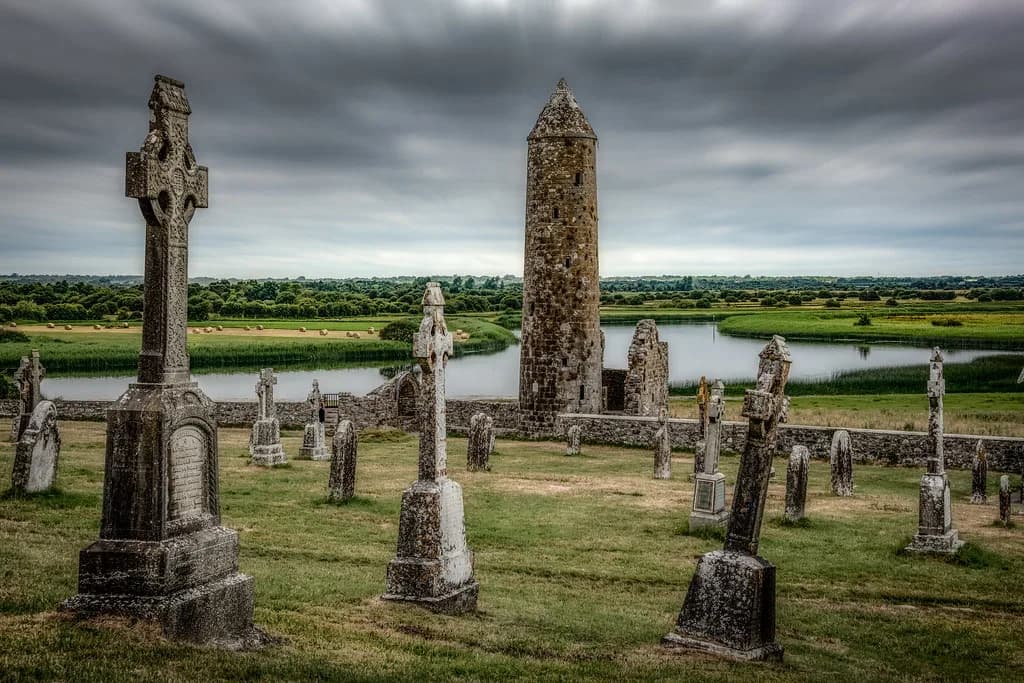
Clonmacnoise is an early Christian monastic site on the banks of the River Shannon in County Offaly, founded by St Ciarán in the 6th century and now a preserved ruin managed by the Office of Public Works. One fact comes first for anyone planning a day out: the operator's dated notice closes the site fully to visitors from 19 October until January 2027, because the carpark must close and there is no safe access. If you are weighing other options, our guide to monasteries in ireland covers sites with their own access arrangements.
What follows explains what stands inside the enclosure, why the monastery mattered, and how to prepare for a future visit without assuming a confirmed reopening day. The operator's notice is the governing document; tourism pages are useful context but do not manage access.
What Clonmacnoise Is and Where It Sits
The monastery occupies a riverside setting in County Offaly, and the operator describes St Ciarán founding it on the Shannon's banks in the 6th century. It grew into a great seat of learning, in the operator's phrase a university of its time, drawing students from across Europe. The Office of Public Works manages the site and publishes status through Heritage Ireland; Ballintubber Abbey in County Mayo and Ireland's other monastic houses appear in our monasteries in ireland guide for comparison.
Treat precise foundation years with care: Tourism Ireland states 544, while the operator and Fáilte Ireland's Discover Ireland stay at the century level. For orientation the century is enough. The surrounding midlands are marketed as Ireland's Hidden Heartlands, a useful label for building a longer trip rather than a description of what is on site. If your trip leans toward prehistoric monuments instead, ancient sites ireland covers the tombs and trackways that predate monasteries like this one.
Why the Monastery Mattered
Clonmacnoise was a centre of religion and scholarship for centuries. Discover Ireland describes it as an important centre of learning and religious life and notes that scholars from all over the world came here. Tourism Ireland frames the same point more broadly, describing a place shaped by faith, learning and creativity on the Shannon. Both are tourism bodies, so treat the claims as descriptive context consistent with the operator's account.
Discover Ireland also associates the monastery with manuscript production, naming the 11th-century Annals of Tighernach and the 12th-century Book of the Dun Cow as written here. Those are historical associations, not objects to expect on site; the manuscripts survive in other collections. Separating literary reputation from the stone monuments a visitor would walk among keeps expectations realistic.
What Survives Inside the Enclosure
The operator lists a Cathedral, two round towers, three high crosses and over 700 Early Christian graveslabs among the ruins, which gives a realistic sense of scale before you arrive. Discover Ireland describes the same complex as a preserved ruin under Office of Public Works management: an outdoor archaeological landscape rather than a roofed museum.
The sources disagree on how many churches stand within the enclosure: the operator page refers to nine churches while Discover Ireland counts seven. Rather than pick one figure, read the count loosely and expect a cluster of small stone churches rather than one dominant building. Tourism Ireland dates the Cathedral's original construction to 909, a specific year best treated as that source's dating.
Named Structures to Know Before You Arrive
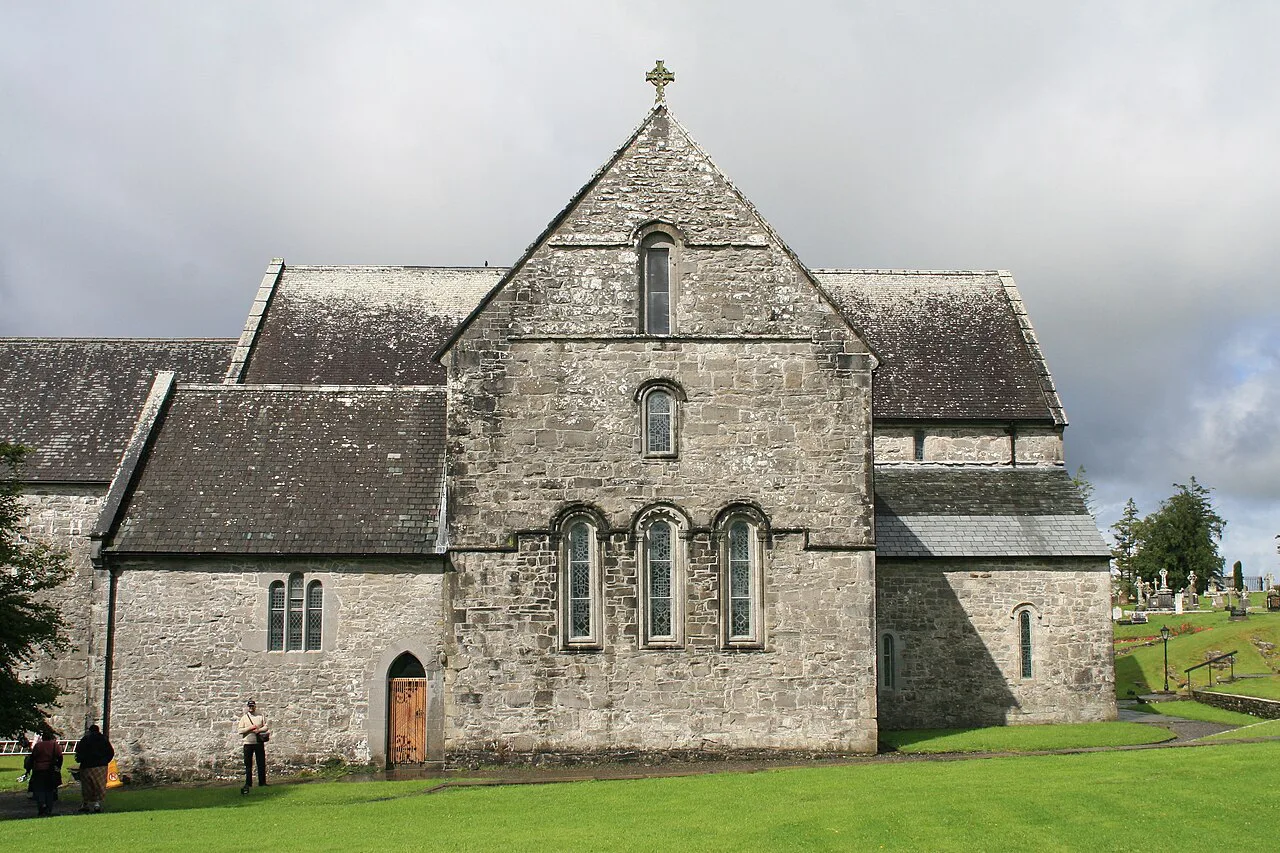
Discover Ireland identifies Temple Doolin, Temple Hurpan and Temple Melaghlin by name alongside the Cathedral, and knowing these labels makes a walk through the enclosure easier to follow. They are small churches grouped within the same walled complex, so you move between them on foot rather than travelling between separate sites. Advance reading turns a field of ruins into a legible sequence of buildings.
If you are comparing early monastic layouts, this cluster of churches has counterparts elsewhere, and a broader look at monasteries in ireland helps set expectations for what survives above ground at each. Clonmacnoise's distinguishing feature is density: churches, towers, crosses and graveslabs packed into one riverside enclosure. That concentration, more than any single building, rewards preparation.
The High Crosses and the Visitor Centre
The operator states that the original high crosses, including the Cross of the Scriptures, are displayed in a purpose-built visitor centre beside the monastic enclosure, and dates that cross to the 10th century. Prefer that dating over looser alternatives elsewhere. Because the centre is being redeveloped, do not assume any specific carved stone is currently on view indoors; check the operator's latest update before a future trip.
The distinction between originals held indoors and replicas standing outside matters for planning, since a future visit may involve both an outdoor enclosure and a separate interpretive space. Tourism Ireland separately notes the South Cross, a ringed sandstone cross with abstract decoration, as a monument to look for. Nothing published guarantees every cross is accessible on any given date.
The Graveyard and the Whispering Arch
Discover Ireland records that the graveyard surrounding the site remains in use and that religious services are held on site in a modern chapel. That changes the character of the place: it is living religious ground as well as an archaeological monument, so quiet and respect are appropriate. Do not treat graveslabs or marked graves as photo props.
The same source describes the Whispering Arch, where a murmur into one side can be heard on the other, and notes a tradition that it was used for confession during plague. Label that explanation as tradition rather than settled history; the acoustic effect is the reliable part. It is a small feature, easy to miss if you move quickly between the churches.
Current Access Status
The operator's notice is unambiguous: Clonmacnoise is fully closed to visitors from 19 October until January 2027. The stated cause is a contractor requirement to close the carpark entirely, which leaves no safe access to the site. This notice supersedes older descriptions of open access published earlier in the construction phase.
That means there is no legitimate way to walk the ruins during the closure, and no roadside workaround should be attempted given the safety reasoning. If you are in the area, plan the visit for a later trip rather than treating the enclosure as an open field. The operator's page remains the authoritative place to confirm status.
The Visitor Centre Redevelopment
The operator reports a contract signed on 1 April 2026 for a major redevelopment of the visitor centre, covering a new extension, refurbishment of the existing building, and a new interpretation and exhibition space with immersive audiovisual and digital elements. External works include a new entrance courtyard, improved coach and car parking, and better wayfinding and landscaping, supported by Fáilte Ireland's Regenerative Tourism and Placemaking Scheme with Government of Ireland and European Union funding.
Tourism Ireland indicates the centre is closed for renovation until spring 2027, which runs past the end of the operator's site-closure notice. Treat the two as separate questions: the carpark closure governs site access, while the centre's renewal has its own timeline. Earlier in construction the site stayed open with temporary toilets and a Welcome Hub, but that arrangement is superseded by the dated closure.
Reading the End Date Correctly
January 2027 marks the end of the operator's stated notice window; it is not a confirmed day on which visitors can return. No published source gives a specific reopening date for the monastic site, and the centre's spring 2027 target is a separate indicator. Anyone planning a trip around that period should check the operator's page shortly before travelling rather than booking on an assumption.
Keep one rule in mind: the operator's dated notice outranks generic opening information on tourism sites, which may not be updated in step. If a third-party page still describes the ruins as open, the notice should govern your decision. Re-checking close to your travel date is the only reliable approach.
Getting Oriented for a Future Visit
The operator signposts the site 21km from Athlone via the N62 and 20km from Ballinasloe via the R357, the published approaches to use when planning a future drive. Tourism Ireland puts the drive from Athlone at roughly 30 minutes by car. Treat both as orientation aids rather than guarantees, since road access and signage can change during redevelopment.
The operator publishes an adult admission rate of €8.00 on the same page, and that is the figure to reference when budgeting once the site reopens. Because admission and parking arrangements may be revised after the redevelopment, confirm the current rate and any booking policy before setting out. Do not rely on older trip reports for either.
Pre-Closure Practical Notes
Before the closure, the operator advised avoiding peak arrivals between 10:30 and 15:00, and noted that parking was highly limited for vehicles over five metres and reserved for official coach customers. Present these as historical guidance: they describe conditions at publication, not the redeveloped site. Large-vehicle groups in particular should not plan around the old arrangements.
The redevelopment explicitly includes improved coach and car parking, so the layout you encounter later may differ from these notes. Check the operator page for current conditions rather than carrying old advice forward. That applies to arrival timing as much as to parking space.
Local Context for a Wider Trip
Tourism Ireland describes Clonmacnoise as a short drive from Athlone and outlines river, greenway and heritage options across the surrounding midlands. This is background for building a longer itinerary, not a list of amenities at the monastery, and river transport is not a substitute for site access while the closure stands. Boat and food operators named on tourism pages should not be read as running in connection with the site.
If the closure affects your plans, other ecclesiastical sites with their own access arrangements are worth researching, and the wider set of monasteries in ireland shows how varied these landscapes are. In the south, The Rock of Cashel in County Tipperary combines a major ecclesiastical complex with its own visitor management. If you would rather widen the search beyond monastic ground, ancient sites ireland covers tombs, forts and trackways with their own access details, much as our guide to castles in county galway does for later stone monuments. These are alternatives for the same trip, not substitutes for Clonmacnoise itself.
What to Expect Once Access Resumes
Plan for an outdoor enclosure of exposed stone in a riverside setting, plus a separate visitor centre for interpretation once its redevelopment is finished. Weather protection is minimal among the ruins, so waterproof layers and sturdy shoes matter more than they would indoors. The operator publishes a downloadable social guide designed to help first-time visitors and families prepare.
Give the site enough time to move slowly between the Cathedral, the towers, the crosses and the graveslabs rather than treating it as a photo stop. Reading about the named churches beforehand makes the visit more legible, and the graveyard's continued use calls for quiet. Confirm opening arrangements shortly before you go, because the redeveloped site will not match older accounts.
Plan Around the Closure
Clonmacnoise remains one of Ireland's most substantial early Christian landscapes, but the practical answer for now is simple: the monastic site is fully closed to visitors from 19 October until January 2027 under the operator's notice, with the carpark closure cited as the reason. Use that window to read up on the Cathedral, towers, high crosses and graveslabs instead of planning a walk among them, and check the operator's page before any future trip rather than assuming a reopening day.
When access does resume, expect a riverside outdoor enclosure and a visitor centre whose interpretation spaces are being rebuilt, with the two timelines running separately. Verifying current status before you travel is a small effort compared with arriving at a closed gate.
Explore more Ireland guides
Frequently Asked Questions
Is Clonmacnoise open to visitors?
No. The Office of Public Works states that the monastic site is fully closed to visitors from 19 October until January 2027, because the carpark must close and there is no safe access. Check the Heritage Ireland page before planning any future trip, as the end of the notice window is not a confirmed reopening day.
Why is Clonmacnoise closed until January 2027?
The operator's notice cites a contractor requirement to close the carpark entirely, which leaves no safe route into the site. Separately, the visitor centre is being redeveloped under a contract signed on 1 April 2026, and Tourism Ireland indicates that building is closed for renovation until spring 2027.
What can you see at Clonmacnoise?
The ruins include a Cathedral, two round towers, high crosses, nine churches by the operator's count (Discover Ireland says seven), and over 700 Early Christian graveslabs. Discover Ireland notes the graveyard remains in use and services are held in a modern chapel. Original high crosses, including the Cross of the Scriptures, are displayed in the adjacent visitor centre, which is being redeveloped.
Who manages Clonmacnoise?
The Office of Public Works manages the site and publishes status and access information through Heritage Ireland. Tourism Ireland and Fáilte Ireland describe the monastery's history and significance, but they are context sources rather than site managers, so their pages do not govern whether you can visit.
How far is Clonmacnoise from Athlone?
The operator signposts the site 21km from Athlone via the N62 and 20km from Ballinasloe via the R357, and Tourism Ireland puts the drive from Athlone at roughly 30 minutes by car. These are published directions for orientation; confirm current arrangements before travelling.
Where are the original high crosses kept?
The operator states that the original high crosses, including the Cross of the Scriptures that it dates to the 10th century, are displayed in a purpose-built visitor centre beside the monastic enclosure. Because that centre is being redeveloped, do not assume any specific carved stone is on view; check the operator's latest information.
Sources
You might also like



Continue reading
More guides you'll find useful




