
Rock of Cashel: A Visitor Guide to the Medieval Hilltop Site
Plan a visit to the Rock of Cashel, the limestone outcrop above Cashel town crowned by a round tower, Cormac's Chapel and a Gothic cathedral.
On this page
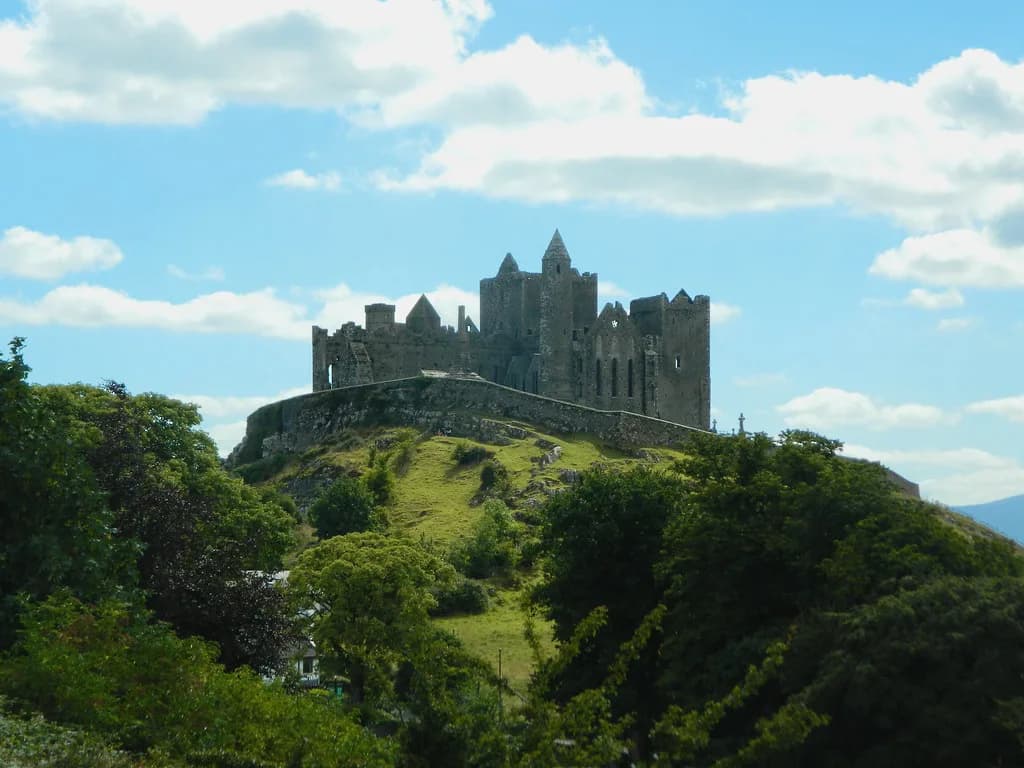
The Rock of Cashel is a dramatic outcrop of limestone rising above Cashel town in County Tipperary, and it carries one of the densest clusters of medieval buildings in Ireland: a round tower, a high cross, a Romanesque chapel, a Gothic cathedral, an abbey, the Hall of the Vicars Choral and a fifteenth-century tower house. Because the whole ensemble sits on one walled plateau, a single visit covers architecture from several centuries, and the site is reached on foot from the town centre.
Plan around two distinctions rather than treating the Rock as one undifferentiated attraction. Most of what you see is outdoors and open to ticket-holders, but the interior of Cormac's Chapel is shown by guided tour only, and the site is exposed enough that management may close it at short notice in bad weather. Those two facts shape how much time to allow and how firmly to fix your day.
What You Actually See on the Rock
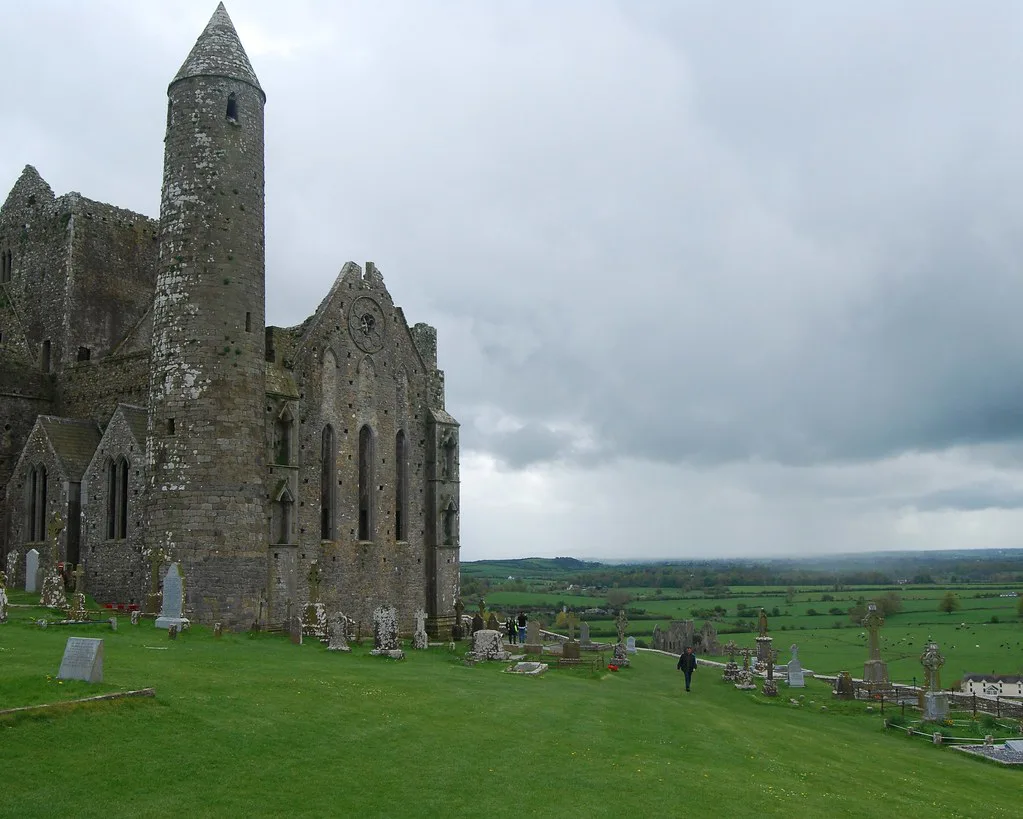
The buildings read as a sequence rather than a single monument. Both national tourism accounts identify the round tower as the oldest surviving structure on the Rock, though their datings differ: one places it at 1101, while another calls it twelfth-century. Treat the tower as the earliest layer and let the later buildings supply the chronology.
The Gothic cathedral is the largest element, a cruciform church built in the thirteenth century and now standing roofless; background history from a commercial directory dates the removal of the main roof to 1749. Around it lie the graveyard and high crosses, the fifteenth-century tower house, and the Hall of the Vicars Choral, where laymen once assisted with the cathedral services. If you want to place Cashel's medieval layers in a wider sequence, Dublin History: A Chronological Guide to the City's Key Sites covers the same span of church building elsewhere in Ireland.
You enter the ecclesiastical enclosure through the Hall of the Vicars Choral, which now houses a museum including the original Cross of St Patrick, and the site also includes an audio-visual show and exhibitions. If you want to see the cross and the displays rather than only the ruins, allow for that in your schedule rather than treating the hall as a doorway.
From Royal Seat to Church: Reading the History
Cashel began as a seat of the kings of Munster, and the site's importance as a fortress predates its churches. Tradition, rather than documented fact, links St Patrick with Cashel: legend holds that he came here to convert King Aenghus to Christianity, and one account dates the baptism to AD 432. Read those stories as tradition attached to a royal place, not as a dated event you can verify from the stones.
Brian Boru is also associated with Cashel, but even the date of his crowning is given differently: the operator's page says 978, while Discover Ireland says 990. Present it to yourself as a traditional association with the Rock and a contested date rather than a settled fact. The turning point that is not disputed is the grant of the site to the church in 1101, after which Cashel became one of the country's leading ecclesiastical centres.
Conflict also touched the site directly: background history reports that in 1647, during the Irish Confederate Wars, Cashel was sacked by English Parliamentarian troops under Murrough O'Brien, Earl of Inchiquin, and clergy and others were killed. That episode is context for the site's later ruin, but it is background history from a secondary directory, useful for understanding rather than for planning.
Cormac's Chapel and the Guided Interior Tour
Cormac's Chapel is the element most visitors come to see closely. Built in the twelfth century under Cormac, King of Munster, it is one of the earliest and finest Romanesque churches in Ireland, and it contains the only surviving Romanesque frescoes in the country. Those paintings are the reason the interior is controlled: the operator states that the chapel is visited by guided tour only, and that limited tickets for the interior tour can be bought only at the site.
Do not assume you can reserve a chapel slot in advance, and do not build a tight itinerary around one. The operator advises ringing ahead for tour times because they can change at short notice, and says tour times may shift because of weather or works inside the building. If the chapel interior matters to you, arrive early enough to secure a place and treat the rest of the Rock as your flexible time.
How Long to Allow and When to Go
The operator puts an average visit at one to one and a half hours, which is realistic if you concentrate on the buildings and the chapel tour. Add time if you want the museum in the Hall of the Vicars Choral and the audio-visual show, and add more if you are walking up from town rather than arriving by coach.
Opening follows a seasonal pattern rather than a single year-round schedule. The operator publishes separate seasonal opening times with a last admission and a last guided tour before closing, and notes the site is closed from 24 to 26 December inclusive. Check the published times for your own date rather than assuming one schedule carries across seasons; the winter line runs from 16 October to 16 March, with earlier cut-offs than the rest of the year.
Summer brings queues: the site is described as very busy, and visitors may face delays in the summer months. If your schedule allows it, arriving earlier in the day and doing the chapel tour first is a sensible way to sequence the visit. Other monastery and abbey sites across the country can fill out a wider church-history itinerary, as our guide to Monasteries in Ireland shows.
Weather, Exposure and Short-Notice Closures
The Rock is an extremely exposed place, and the operator warns that it is subject to closure at short notice. Visitors are advised to contact the site in adverse weather and to check its social media for updated closure information before travelling. That means a windy or wet forecast is a genuine planning factor here, not a minor inconvenience.
Build a fallback into the day: the town below and nearby sites mean a wasted climb need not end the trip. Practical choices like sturdy footwear and a waterproof layer matter more on an exposed limestone plateau than they would in a museum, and the walk between buildings is entirely outdoors.
Getting There and the Walk from Town
The Rock sits about 500 metres from the centre of Cashel, off the Dublin Road, so the final approach is on foot and uphill. By public transport, take the X8 bus to Cashel and walk from the town centre. Tour operators are asked not to drive to the site but to use the nearby car park, and all groups must be pre-booked.
Do not count on refreshments at the top: one national tourism account states there is no café at the Rock itself, so eat in Cashel town before or after your visit rather than planning on facilities on the plateau. The town is only minutes away, which makes a simple arrangement: park or arrive centrally, walk up, and return to town afterwards.
Beyond the Rock: Nearby Places and Wider Context
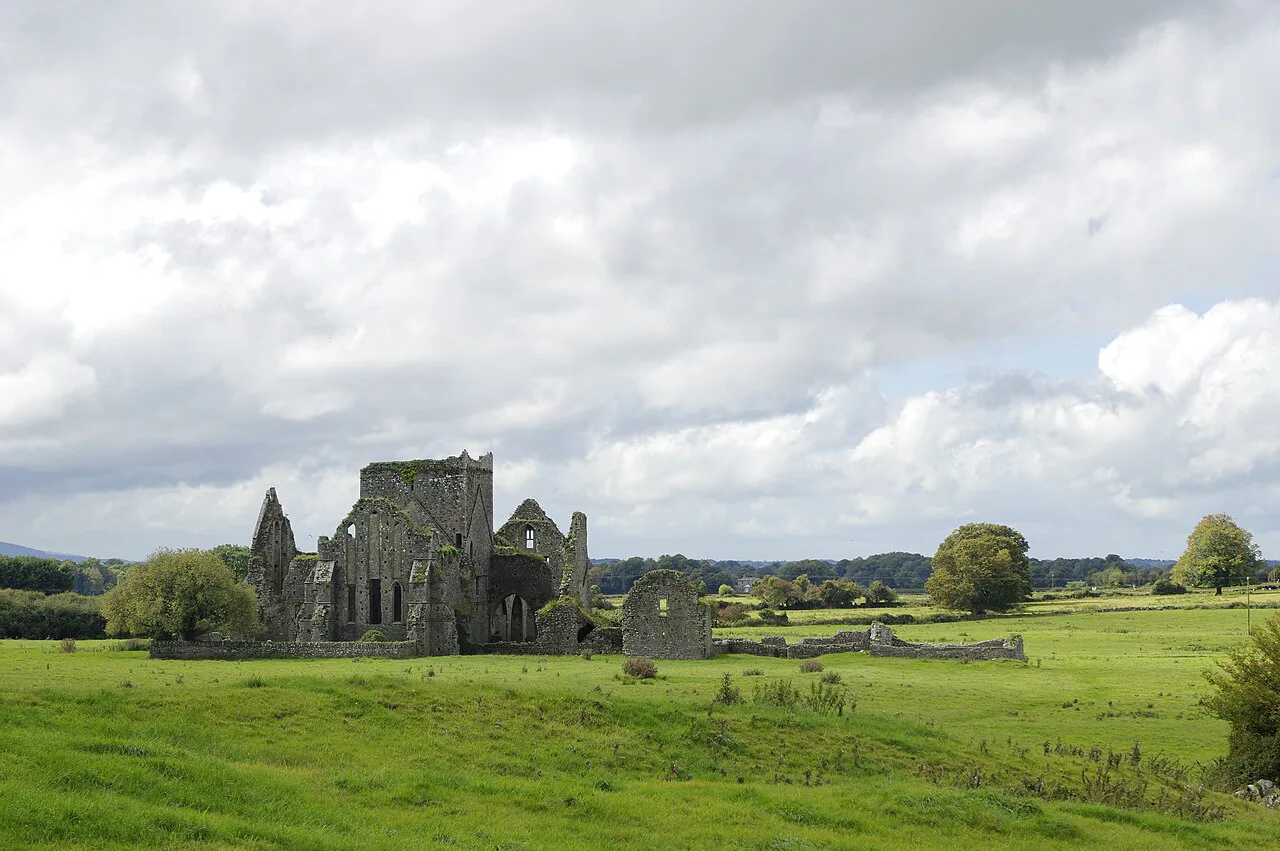
From the top of the Rock you can look across to the ruins of Hore Abbey, the last medieval Cistercian monastery in Ireland, though it is a separate site with its own access. Do not treat it as part of the Cashel visit. The same caution applies to the wider landscape of Irish monastic ruins, from the round tower and crosses of Glendalough to larger complexes elsewhere.
Two other nearby options are Cahir Castle, one of the largest and best-preserved castles in Ireland, and the Swiss Cottage, a nineteenth-century cottage orné outside Cahir; the two can be paired, walking between them along the banks of the River Suir. Both are distinct visits with their own arrangements, so give them their own half-day rather than folding them into the Rock.
For a broader view of Irish religious architecture, Cashel's Romanesque chapel is a good starting point for reading the country's church building across different periods. Elsewhere in Ireland, kylemore abbey offers a contrasting visit, though it is a very different building and community and belongs to a separate day.
Plan Your Visit
The Rock of Cashel rewards a visit planned around two fixed points: the walk up from town and the guided tour of Cormac's Chapel. Build your day around those, allow one to one and a half hours on the plateau, and check the operator's seasonal opening times and weather advice before you set out, since the site can close at short notice.
If you have time left, the town below, the view to Hore Abbey and the separate attractions around Cahir make a natural second half of the day. Keep the visits distinct in your mind and you will read each place more clearly.
Explore more Ireland guides
Frequently Asked Questions
Do you need a guided tour to see inside Cormac's Chapel?
Yes. The chapel interior is visited by guided tour only, and the limited tickets for that tour can be bought only at the site, not in advance. The operator advises ringing ahead for tour times because they can change at short notice due to weather or works, so arrive with enough flexibility to take a place when one is available.
How long does a visit to the Rock of Cashel take?
The operator puts an average visit at one to one and a half hours. That covers the main buildings and, if you secure a place, the chapel tour. Allow extra time for the museum and exhibitions in the Hall of the Vicars Choral, and for the walk up from Cashel town if you are coming on foot.
Is the Rock of Cashel open in bad weather?
Not reliably. The site is extremely exposed and the operator warns it may close at short notice in adverse conditions, advising visitors to contact the site and check its social media for updated closure information before travelling. There is no way to confirm conditions far in advance, so treat a weather warning as a reason to check before you set out.
How do you get to the Rock of Cashel from Cashel town?
The Rock is about 500 metres from the centre of Cashel, off the Dublin Road, and the final stretch is on foot. By public transport, take the X8 bus to Cashel and walk from the town centre. Tour operators are asked to use the nearby car park rather than driving to the site, and all groups must be pre-booked.
When is the Rock of Cashel closed?
The operator lists closure from 24 to 26 December inclusive. Otherwise the site follows seasonal opening times with a last admission and a last guided tour before closing, and the winter line runs from 16 October to 16 March with earlier cut-offs. Check the published times for your own date rather than assuming a single year-round schedule.
What is there to see near the Rock of Cashel?
From the top you can see the ruins of Hore Abbey, a separate Cistercian site. Further out, Cahir Castle and the Swiss Cottage make a natural pairing, with a walk between them along the River Suir. All of these are separate visits with their own arrangements, not part of the Rock of Cashel itself.
Sources
You might also like



Continue reading
More guides you'll find useful



