
Kells Priory, Co. Kilkenny: A Visitor's Guide to the Walled Ruin
Kells Priory is a walled Augustinian ruin and National Monument in County Kilkenny. Plan around limited access and read the defensive ruins with confidence.
On this page
Kells Priory is a ruined Augustinian monastery beside the King's River just outside the village of Kells, roughly 15 km south of Kilkenny city. It is a National Monument in the guardianship of the Office of Public Works, and the official Heritage Ireland listing currently carries a Limited Access label.
That label matters more than any romantic description of towers and cloisters. The visit is a walk around a large fortified enclosure in open country, not a tour of furnished rooms, so the best preparation is understanding what you are looking at before you arrive.
Treat this as an outdoor heritage stop rather than a museum. Bring weatherproof layers, expect uneven ground, and plan your day around the ruins and the surrounding countryside; the reward is one of the more unusual monastic layouts in the country.
What Kells Priory Is and Where It Stands
The priory occupies a walled precinct of just over three acres on low ground beside the King's River, beside the village of Kells and about 15 km south of Kilkenny city. The site is in the guardianship of the Office of Public Works and is identified as a National Monument, which places it within the state heritage system rather than under private care.
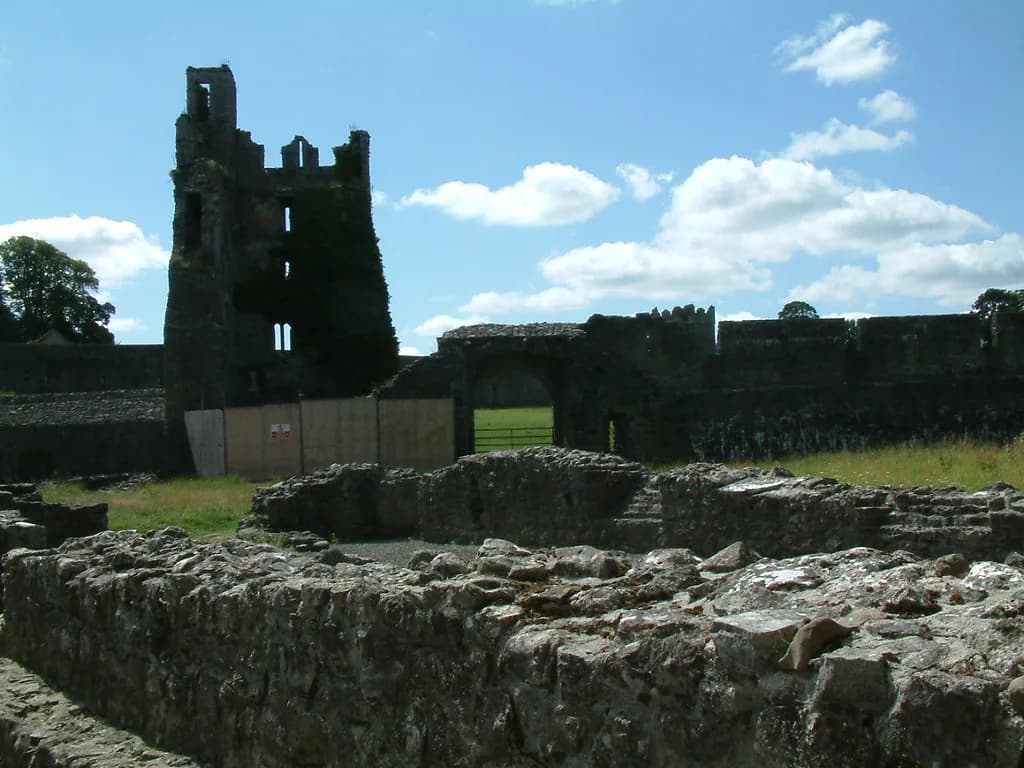
What survives is extensive but unroofed: the walls of the church and its associated buildings stand within a ring of defences, and the enclosure is the first thing that registers when you approach on foot. Because the official listing currently carries a Limited Access label, read the site from the outside in, starting with the perimeter and then moving to the church remains.
The King's River setting is not decorative background. Water, pasture and a nearby village explain why a monastic community could be planted here and why its defences faced open country rather than a town wall; keep that geography in mind as you walk the boundary.
Foundation: Geoffrey FitzRobert and Medieval Kells
Heritage Ireland attributes the foundation to Geoffrey FitzRobert, a household knight and trusted companion of William Marshal, and dates it to around 1193. The same account frames the priory as one element in FitzRobert's establishment of the medieval town of Kells, so the religious house and the settlement should be understood together.
This is Anglo-Norman consolidation of Leinster rather than an early Christian wilderness foundation. European traveller accounts of Irish monasteries can help put that in context, but for Kells itself the official framing is the foundation by FitzRobert as part of the medieval town of Kells. Knowing that helps you read the architecture: a house planted as part of a new lordship had reasons to look defensible, and the precinct's military character follows from that context.
Later episodes in the priory's history, including the tradition of repeated attacks and its eventual suppression, are recounted in secondary accounts but are not detailed on the official listing. Treat those stories as background colour and verify them through published local history if they matter to your visit.
Why It Looks Like a Fortress: The Seven Castles of Kells
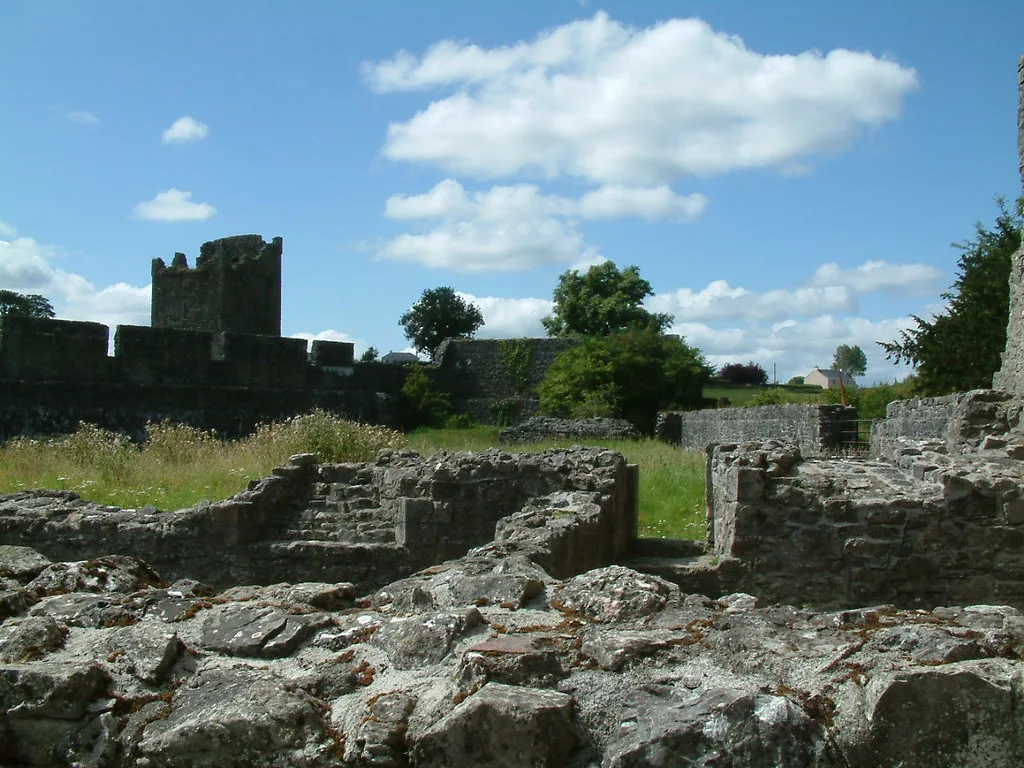
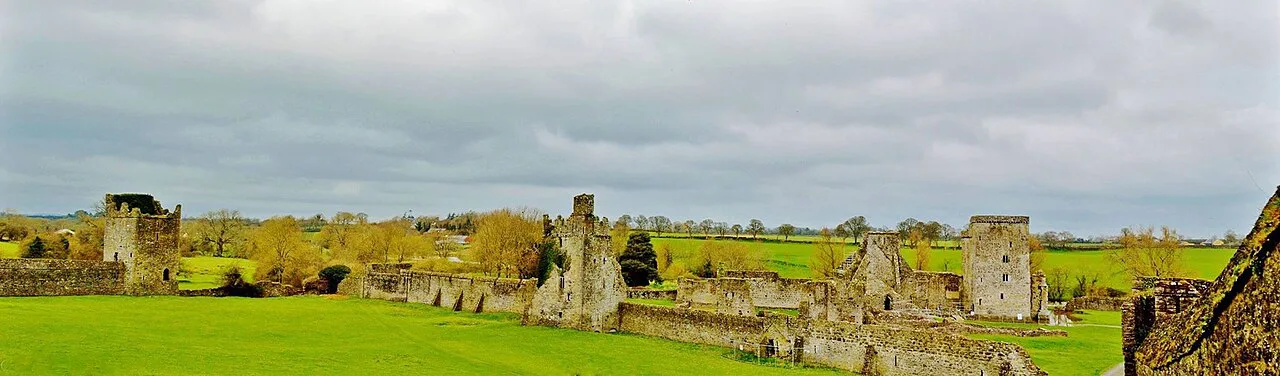
The most distinctive feature is a series of medieval tower houses spaced along and within the enclosing walls. Heritage Ireland notes that these defences surrounding the whole precinct underline the site's military aspect and gave rise to its local name, the Seven Castles of Kells.
The name is a description of the defended enclosure, not evidence that seven intact castles survive. What you see are ruined tower structures and stretches of curtain wall; the value of the walk is in tracing how the towers punctuate the boundary, which is easier to grasp by circling the outside before stepping through the entrance.
Independent accounts describe the layout as fortress-like rather than church-like from the approach, which matches the official emphasis on the precinct defences. Plan on taking in the walls and towers as an ensemble, which reads more powerfully than any single fragment close up.
Reading the Surviving Fabric
Heritage Ireland lists the standing remains in some detail: a nave, chancel, lady chapel, cloister and associated buildings, plus the remains of the infirmary, workshop, kitchen, bread oven and mill. That list is useful because it turns a field of masonry into a set of identifiable functions you can look for as you move through the site.
Start with the church, where the nave and chancel walls give the clearest sense of scale, then look for the cloister range that organised the community's daily movement. The service buildings, including the mill and bread oven, are the reminders that this was a working estate as much as a place of prayer.
Secondary descriptions add features such as a crossing tower and a prior's tower, but do not expect to climb or enter them. Use such details as a map of what to look for in the upstanding walls, not as a promise of interior access.
Archaeology and What It Revealed
Excavation in the later twentieth century made Kells one of the more thoroughly investigated rural monastic sites in Ireland, and secondary travel accounts report a large artefact assemblage. Those excavation details and any counts come from a secondary travel page rather than a primary archaeological publication, so treat the scale of the finds as indicative rather than confirmed.
For visitors, the payoff is conceptual rather than a display: the site was a decorated church and a working community, not simply a defensive shell. Knowing that makes the plain upstanding walls more legible than the ruins alone would suggest, and it is a reason to bring some background reading with you.
Current Access: Limited Status and the End of the 2026 Guide Service
Heritage Ireland marks the site as Limited Access and states that the on-site guide service has ceased for 2026. Plan on a self-directed walk around the exterior of the ruins, and do not build a day around a tour, a visitor centre or interior openings.
The official page offers a downloadable social guide intended to help first-time visitors, families and people with developmental and learning disabilities prepare for a visit. It is preparation material rather than an assurance about paths or facilities, so read it in advance and judge for yourself.
The selected sources do not establish opening hours, seasonal schedules, admission arrangements or reopening dates, and secondary claims about round-the-clock access or free guided tours conflict with the official notice. Check the Heritage Ireland listing again shortly before travelling rather than relying on older trip reports.
Approaching Kells Priory
Kells is a small village reached by road from Kilkenny city, and the priory sits beside the King's River just outside it. Visitor accounts describe a car park near the village and a short walk down to the walls, while noting that satellite navigation can direct drivers toward unsuitable gated tracks.
Follow local signage rather than the last few metres of a navigation app, and park considerately in or near the village if the entrance area is unclear. These are anecdotal observations rather than published arrangements, so allow a little time to orient yourself on arrival.
Once at the walls, walk the perimeter first to take in the scale of the defences, then move to the church remains, where the nave and chancel give the clearest reading of the plan. This sequence costs little time and makes the interior ruins much easier to interpret.
Pairing Kells Priory with Nearby Heritage
The priory sits within a rich Kilkenny circuit. Secondary accounts place Jerpoint Abbey, a Cistercian house, a short drive east, and Kilkenny Castle in the city centre. Kilree round tower and high cross lie a few kilometres southeast, though the tradition attached to its burial ground comes from a dated blog post and should be treated cautiously.
Placing Kells in a wider comparative frame helps. If you want to see how Irish monastic sites differ in scale and survival, the Monasteries in Ireland guide sets out several contrasting foundations, and a visit to The Rock of Cashel in County Tipperary shows an ecclesiastical complex with a very different, more elevated character.
Driving makes these connections practical, and the quiet country roads around Kells reward a slower route rather than a quick dash from Kilkenny. Allow more time than a single stop deserves; the priory is best understood when you have seen one or two other Irish monastic layouts the same week.
Honest Trade-Offs Before You Go
Expect an exposed, roofless ruin with uneven ground underfoot and no guarantee of interior or tower access. Visitors with limited mobility should assume challenging surfaces and read the official social guide before committing to the walk, since the sources describe the terrain rather than promise accessibility.
Interpretation on site may be minimal while the guide service is suspended, so bring your own context: the official structure list and the defensive story will do more for your understanding than any panel. A short printed summary on your phone is often enough.
The reward for that preparation is a rare thing in Irish heritage: an entire walled monastic precinct you can read as a single designed landscape, defences, church and working buildings together. Approach it as a landscape to decipher rather than a building to enter, and the visit repays the effort.
Plan Your Visit
Kells Priory suits travellers who enjoy reading ruins rather than touring restored interiors. Confirm current access on the Heritage Ireland listing before you go, since the Limited Access notice and the end of the on-site guide service for 2026 shape what you can expect on the ground.
Build the stop into a wider County Kilkenny day with Jerpoint Abbey or Kilkenny Castle, and allow time to circle the walls before considering the church remains. With realistic expectations and a little background reading, the Seven Castles of Kells offer one of the most distinctive monastic landscapes in the south-east.
Explore more Ireland guides
- Ballintubber Abbey
- Clare Abbey
- Clonmacnoise
- Cong Abbey
- Corcomroe Abbey
- Ennis Friary
- Fore Abbey
- Glendalough Monastic City
- Kylemore Abbey
- Old Mellifont Abbey
- Quin Abbey
- Scattery Island
- Skellig Michael (Sceilg Mhichíl)
- Sligo Abbey
- Abbeyknockmoy Cistercian Abbey
- Askeaton Franciscan Friary
- Athenry Dominican Priory
Frequently Asked Questions
What is Kells Priory and why is it called the Seven Castles of Kells?
Kells Priory is a ruined Augustinian monastery beside the King's River near Kells, County Kilkenny, and a National Monument in the guardianship of the Office of Public Works. It takes its local name from the medieval tower houses spaced along and within the walls enclosing the whole precinct. Heritage Ireland explains that these defences give the site its military aspect, and the name describes the defended enclosure rather than seven surviving castles.
Can you go inside Kells Priory's towers and buildings?
Do not plan on entering towers or roofed interiors. The official Heritage Ireland listing currently labels the site Limited Access, and the remains are largely roofless walls. Plan to read the ruins from outside, walking the precinct boundary. If close-up or step-free access matters to you, review the official social guide before travelling.
Are guided tours available at Kells Priory in 2026?
Heritage Ireland states that the on-site guide service has ceased for 2026, so the visit should be planned as self-directed. Older trip reports that mention seasonal tours predate that notice and should not be relied on. Check the official listing again before you travel, since access arrangements can change.
How do you get to Kells Priory from Kilkenny city?
The priory lies roughly 15 km south of Kilkenny city, just outside the village of Kells. Driving is the practical option, and visitor accounts suggest following local signage rather than the final stretch of a satellite navigation route, which can point toward unsuitable tracks. Sources do not publish parking charges or formal opening times, so confirm arrangements in advance.
What else can you see near Kells Priory?
Secondary accounts place Jerpoint Abbey a short drive east and Kilkenny Castle in the city centre, while Kilree round tower and high cross lie a few kilometres southeast. Together they make a coherent Kilkenny heritage day by car. Treat exact drive times in older accounts as rough guidance and check each site's own access information.
Is Kells Priory suitable for visitors with limited mobility?
Expect an exposed outdoor ruin with uneven ground and no guarantee of interior access. The site's official page offers a social guide designed to help first-time visitors and people with learning disabilities prepare, but it is preparation material rather than a promise of accessible paths. Visitors with mobility concerns should read it carefully and judge whether the terrain suits them.
Sources
You might also like



Continue reading
More guides you'll find useful



