
Kylemore Abbey: Victorian Estate and Walled Garden Guide
Plan a visit to Kylemore Abbey in Connemara: Victorian rooms, a neo-Gothic church and the six-acre Walled Garden, plus woodland trails and a car-free option.
On this page
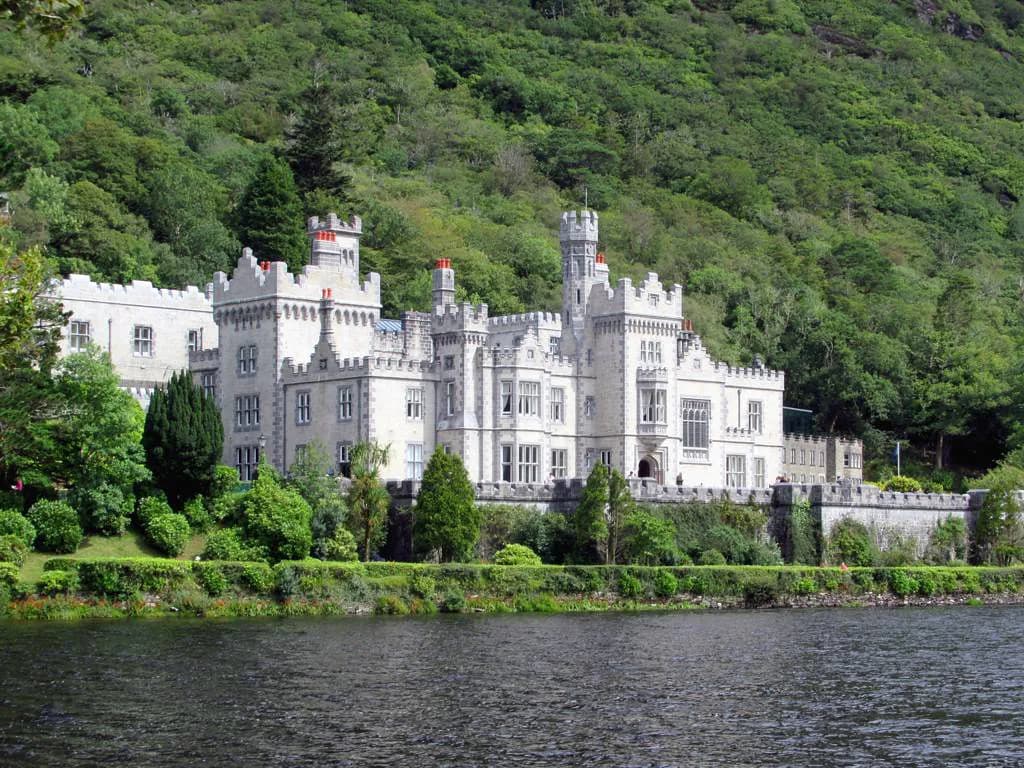
Kylemore Abbey is a Victorian lakeside estate in the Connemara valley of County Galway and has been home to a community of Benedictine nuns since 1920. For visitors, the visit divides into three clear parts: the restored house rooms and exhibition, the small neo-Gothic church beside the water, and the Victorian Walled Garden a walk away from the main buildings.
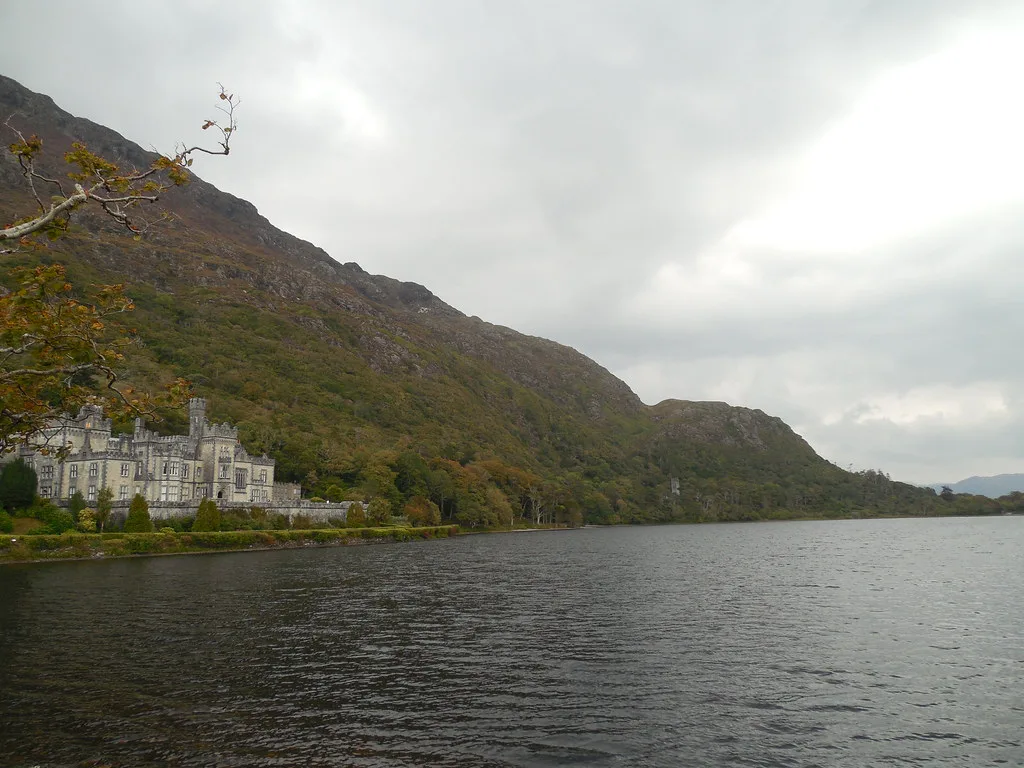
The setting explains much of the estate's character. The Kylemore valley holds old oakwoods terracing the mountainside, and angling takes place on the three Kylemore loughs, with the house standing at the edge of the lake among woodlands. Knowing that layout helps you plan: the buildings, the church and the garden sit at different points on the estate, so time and footwear matter as much as the ticket.
Mitchell Henry's Lakeside Estate
According to Ireland.com, the estate began in the 1860s, when politician and businessman Mitchell Henry built a lakeside castle for his wife Margaret as a retreat framed by mountains and water. Connemara Ireland dates the building to 1868 and describes it as a house raised in memory of his late wife. The building presents as neo-Gothic, and that period's character still shows in the house today.
The couple's story shapes how the property is presented, but the fixed date to hold on to is the 1868 building of the house in memory of Margaret, as Connemara Ireland frames it. Everything else in the visitor narrative builds outward from that fact, so treat family detail you encounter on site as part of the display rather than a chronology to memorise.
Margaret's Memorial Church
Margaret died in 1874 and the estate's future was shaped by that loss; the delicate neo-Gothic church by the water was built in her honour and still stands quietly there. Connemara Ireland calls this miniature cathedral the estate's most famous feature, known locally as the Gothic church. Read the two descriptions together and you have the essentials: a small, finely detailed memorial building rather than a second abbey.
Give the church its own slot in the day instead of treating it as a photo stop between the house and the car park. The lakeside position is the point, so a slow look at the exterior rewards more than a quick circuit, and it sits naturally between the house and the garden path.
From Victorian Home to Monastery
The nuns who live here fled their convent in war-torn Belgium in 1914 and bought Kylemore in 1920, according to Connemara Ireland, which notes the order had run a girls' school for more than 300 years before re-establishing it here. Ireland.com confirms the community has been on the estate since 1920 and records that the girls' boarding school closed in 2010. Today the nuns run the Kylemore Trust and continue gardening, making craftwork and welcoming guests.
That recent history is why the interior reads as a Victorian home with a monastic layer rather than a museum frozen at one moment. If you are comparing religious sites across the country, this is a working community rather than a ruin, which gives it a different character from the monastic heritage covered in our guide to monasteries in Ireland.
Inside the House: Rooms and Exhibition
Inside, Ireland.com describes restored rooms filled with art, furnishings and personal touches that reflect the Henrys' ambition and taste. Connemara Ireland adds that the visitor centre includes an exhibition housed in the main reception rooms of the house and a video that takes visitors through the history of the building and its occupants. Plan the house as a single indoor sequence: exhibition, film, then the restored rooms.
What you will not find in public descriptions is a room-by-room inventory, so resist arriving with a checklist. The useful approach is to read the exhibition panels for context first, watch the film if it is running, and then walk the restored rooms with that background in mind. Budget most of your indoor time here and leave the garden and trails for the outdoor half of the visit.
The Victorian Walled Garden
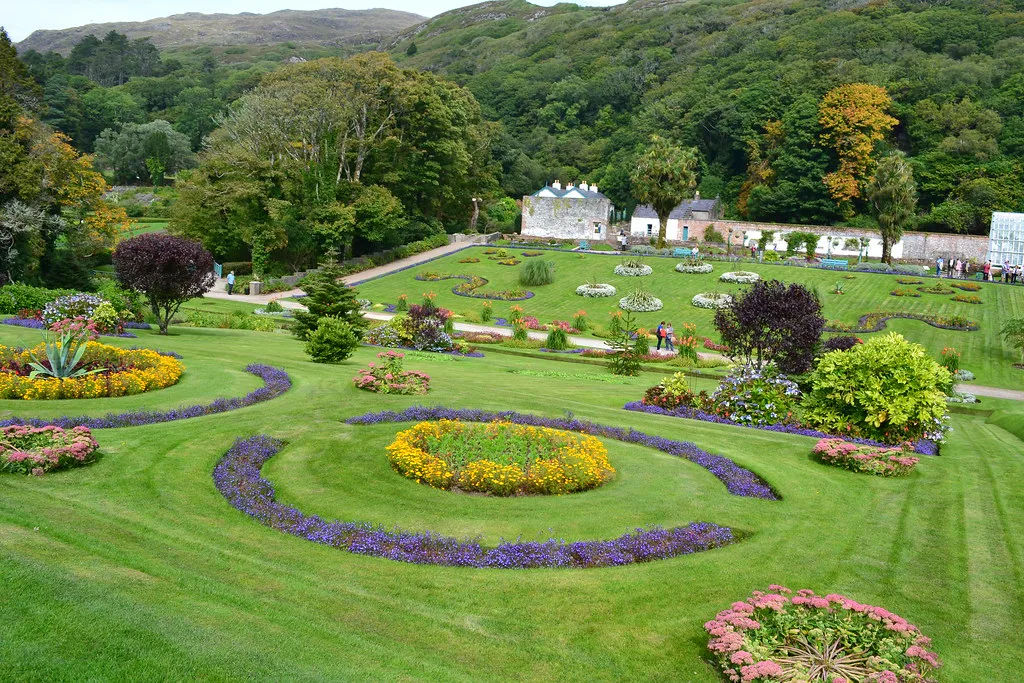
Ireland.com's car-free guide describes the Walled Garden as a striking contrast to the rugged landscape beyond its stone walls, once a productive estate garden and now restored; its attractions page adds formal flowerbeds, glasshouses and seasonal colour, while the car-free guide gives the scale as about six acres split in two by a mountain stream, with a vegetable garden, flowers and a shaded fernery. Read together, the garden is clearly a designed landscape to walk through, not a single walled enclosure to glance at.
The trade-off is distance. The same account puts the garden about a 20-minute walk from the main buildings, with a seasonal shuttle as the alternative. Treat the walk as part of the visit if the weather is reasonable and take the shuttle when it suits; neither source promises the shuttle runs in any particular month, so confirm access before you travel.
Grounds and Walking Trails
Ireland.com lists several waymarked routes on the estate: the Dawros River Walk, which takes around 30 minutes, the short Horse Chestnut Loop, a Tree Trail featuring 25 tree species, and the Sruffaunduff Waterfall walk. It also states that ticket entry includes access to these woodland, lakeshore and riverside walks. Pick one or two rather than all four, because the garden already consumes a solid block of time.
The old oakwoods terracing the valley make the grounds worth more than a quick loop, and the lake setting frames both the house and the church. If you enjoy comparing early monastic and estate landscapes, the compact scale here contrasts with larger complexes such as the Rock of Cashel in County Tipperary.
One Car-Free Way to Arrive
Ireland.com's car-free Connemara guide names Lally Tours, a family-run company operating from Galway since 1988, as one supported option: a full-day coach that collects passengers about 300 metres from Eyre Square, with the option of hotel pickup arranged in advance. If you are staying in the city beforehand, our guide to Eyre Square, Galway: A Guide to the City's Central Park explains the pickup landmark. The fare includes entrance to Kylemore Abbey and the Walled Garden, and the stop at Kylemore lasts around two hours. That is one named route rather than the only way to reach the estate without a car.
Two hours suits the house, church and a quick look at the garden, but it is tight if you also want a woodland trail. If the grounds are your priority, a longer independent stop makes more sense than a coach day built around several other stops. Check current departure points, timing and what the fare includes directly with the operator before booking.
Opening Notes and Practical Framing
Connemara Ireland states that the visitor centre and exhibition, the Gothic church and the craft shop are open all year. It does not extend that assurance to the walled garden, the shuttle or the walking trails, so treat those as separate questions. Ireland.com's touring account also names Mitchell's Cafe, which serves traditional dishes using recipes from the Benedictine nuns and produce from the Walled Garden, without fixing its hours or menu.
This is one of the two points at which checking ahead pays: garden access and the seasonal shuttle, and cafe opening. The estate's own operator publishes current times and ticket arrangements, and that is the place to confirm them rather than relying on an article or an old leaflet. Admission prices and booking rules are not published in the tourism accounts here, so ask the operator before you set out.
Who Kylemore Suits
Gardeners and grounds-lovers get the most from Kylemore: the six-acre Walled Garden with its glasshouses and fernery, plus the named trails and a lakeside church, fill an unhurried half-day. Visitors who want a short indoor stop should think twice, because the house exhibition and the garden sit far enough apart that a rushed visit covers neither well.
If your interest is monastic heritage specifically, Kylemore works best as one stop in a wider circuit rather than a destination in itself; elsewhere in the country, sites such as Corcomroe Abbey offer different angles on religious architecture and community life.
Planning the Day
Build the visit around the three core experiences in order: the house rooms and exhibition, the neo-Gothic church by the water, and the Walled Garden. Allow roughly 20 minutes each way for the garden on foot, or use the seasonal shuttle, and leave at least one trail if the weather holds.
Confirm garden and shuttle access before travelling, since the all-year description covers only the visitor centre, exhibition, church and craft shop. Then choose the arrival that fits: the named Galway coach with entrance included, or your own transport with a longer stop for the grounds.
Explore more Ireland guides
Frequently Asked Questions
What can you actually see at Kylemore Abbey?
Three distinct parts: the restored Victorian rooms and the exhibition in the main reception rooms, the small neo-Gothic church beside the water built in Margaret Henry's memory, and the Victorian Walled Garden about a 20-minute walk away. The grounds also carry several named walking trails, and ticket entry covers them according to Ireland.com. Decide in advance which of the three you will give the most time, because they are spread across the estate.
How far is the Walled Garden from the main buildings?
Ireland.com puts it about a 20-minute walk, with a seasonal shuttle as the alternative. Neither tourism source promises the shuttle operates in a given month, so confirm garden and shuttle access with the operator before you travel. Walking both ways costs about 40 minutes of your day, which is worth budgeting alongside a look around the six acres.
Can you reach Kylemore Abbey without a car?
One supported option is the Lally Tours full-day coach from Galway, described by Ireland.com as collecting passengers near Eyre Square, with hotel pickup if arranged in advance and abbey and Walled Garden entrance included in the fare. The Kylemore stop lasts around two hours. It is one named route rather than the only car-free choice, so check current departure details with the operator.
Who built Kylemore Abbey and why?
Mitchell Henry built the lakeside house from 1868, and Connemara Ireland describes it as raised in memory of his wife Margaret, who died in 1874. The memorial church by the water was built in her honour. Those two dates are the fixed points of the story; treat further family detail on site as part of the exhibition rather than something to verify elsewhere.
Is the Gothic church the same as the abbey?
No. The abbey is the Victorian house itself, while the Gothic church is a separate, much smaller memorial building by the water that Connemara Ireland calls the estate's most famous feature. Give it its own slot rather than passing it on the way to the garden, since the lakeside setting is a large part of what makes it worth the stop.
Is Kylemore Abbey open all year?
Connemara Ireland describes the visitor centre and exhibition, the Gothic church and the craft shop as open all year; that statement does not cover the walled garden, the shuttle or the trails. Garden and trail access should be confirmed before travelling, and the operator publishes current times and ticket arrangements. Admission prices are not published in the tourism accounts, so ask when you book.
How much time should you allow at Kylemore?
An unhurried half-day covers the exhibition and restored rooms, the church and the Walled Garden with its walk each way. Add more if you want one of the named trails, such as the Dawros River Walk of around 30 minutes. A coach day with a two-hour stop fits the three core sights but leaves little room for woodland walking.
Sources
You might also like



Continue reading
More guides you'll find useful


