
Glendalough Monastic City: A Visitor Guide to the Wicklow Glen
Plan a visit to Glendalough's early medieval monastic city in County Wicklow, with its round tower, stone churches and ticketed interpretive centre.
On this page
Glendalough is an early medieval monastery in County Wicklow, founded according to Heritage Ireland in the sixth century by St Kevin and described by the operator as one of the most famous religious centres in Europe. Its ruins, known as the Monastic City, are spread across a glaciated valley rather than grouped in one enclosure, so a visit is a walk between monuments as much as a stop at a single building.
The practical split matters: the outdoor remains across the glen are one experience, while the interpretive centre with its exhibition and museum sits alongside them and carries its own admission charge. Read the sections below in order if you are planning a first visit, and finish with the access and facilities notes before you set out.
The Glen Setting: A Valley Between Two Lakes
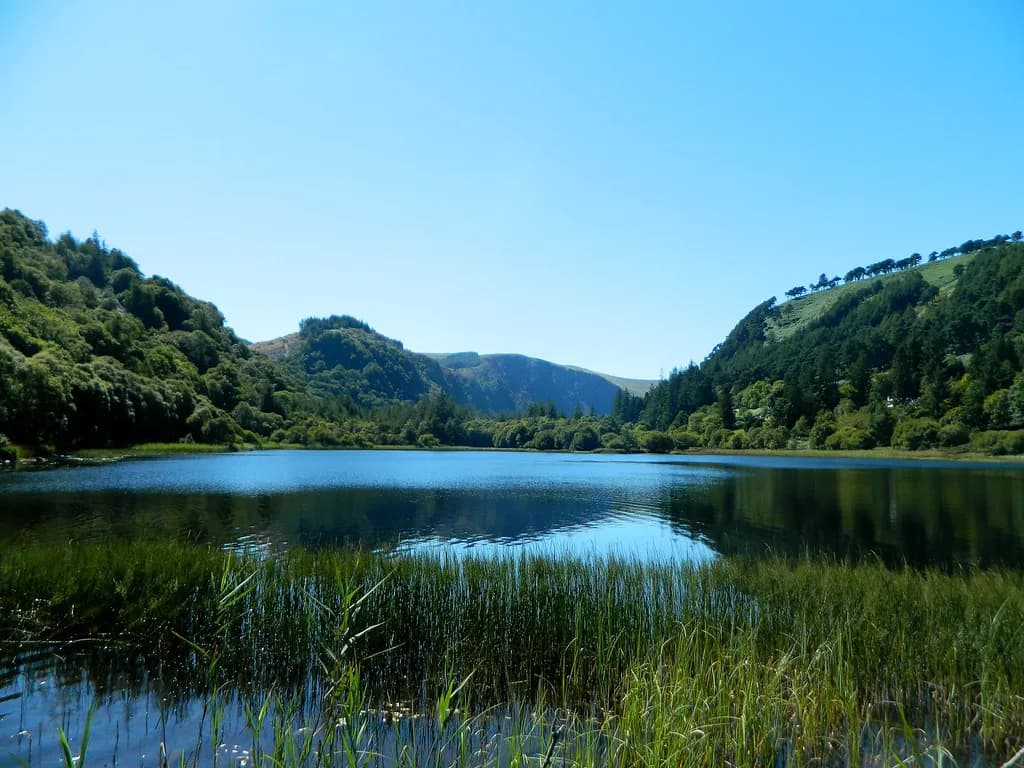
Glendalough occupies a valley formed by glaciation in County Wicklow, and the operator's description links the site directly to that landscape rather than to a town centre. The remains lie at different points across the glen, which is why the sources speak of a Monastic City 'dotted across the glen' rather than a single walled precinct. Expect to move between monuments on foot, and wear footwear suited to uneven ground.
One traveller's published account places the village inside Wicklow Mountains National Park in what the writer calls the valley of the two lakes, and describes entering the monastic enclosure across a twin-span bridge beside a hotel before passing through a double-arched stone Gateway. Treat that account as one visitor's impression of the approach and setting; it is useful for picturing the walk in, but its historical and measurement claims are not a substitute for the operator's own description.
The two lakes give the glen its shape, and the monuments sit at different points relative to them, with St Kevin's Bed high above the Upper Lake. Plan your route knowing that the further monuments involve more walking on uneven surfaces, and that the operator rates walkways as uneven. If you are comparing this glen with other Irish monastic landscapes, the wider collection of monasteries in Ireland is a reasonable starting point for context.
St Kevin and the Sixth-Century Foundation
Heritage Ireland attributes the monastery's foundation to St Kevin in the sixth century and describes how the community at Glendalough grew into one of the most famous religious centres in Europe. That framing belongs to the operator, and it is the safest basis for understanding the site's early status without adding dates for individual monuments that the source does not supply.
The medieval remains that survive are the product of a long religious presence rather than a single building campaign, and the operator groups them as the Monastic City. When you read about the cathedral, churches or crosses elsewhere, check whether a construction date is being given by an official source before repeating it. This guide deliberately gives no dates for the individual ruins because the operator page does not provide them.
Readers who want to see how Glendalough fits into a wider pattern of Irish monastic settlement can compare it with other sites, including the Rock of Cashel in County Tipperary, which is a separate place with its own history and access arrangements. The comparison is about context, not continuity: the two sites are not connected as one visit.
Reading the Monastic City: Tower, Churches and Crosses
According to the operator, the surviving remains include a round tower, a number of medieval stone churches and some decorated crosses, all distributed across the glen. These are the core of what you come to see outdoors, and they reward a slow circuit rather than a quick photograph at the entrance. Because the monuments are separate structures, allow time to walk between them and to read the site as a whole.
The traveller's account adds a walker's-eye view of the same remains: a Gateway of two stone arches at the enclosure entrance, a roofless cathedral described as the valley's largest ruin, and a round tower with its doorway set above ground level. It also mentions a stone-roofed church with a bell-cote and a graveyard of old headstones. Use this for atmosphere and orientation only, since the measurements and dates in that post are the writer's own and are not confirmed by the operator.
Treat the ruined buildings as structures to view from the paths rather than interiors to explore, and keep to the marked routes where ground is uneven. Look, read and photograph from outside, and allow time for the separate monuments. If you are building a wider itinerary of comparable ruins, Sligo Abbey and Jerpoint Abbey in County Kilkenny are other named sites with their own visitor arrangements, and our castles in Kilkenny guide covers how to plan around the county's larger heritage stops as well.
St Kevin's Bed Above the Upper Lake
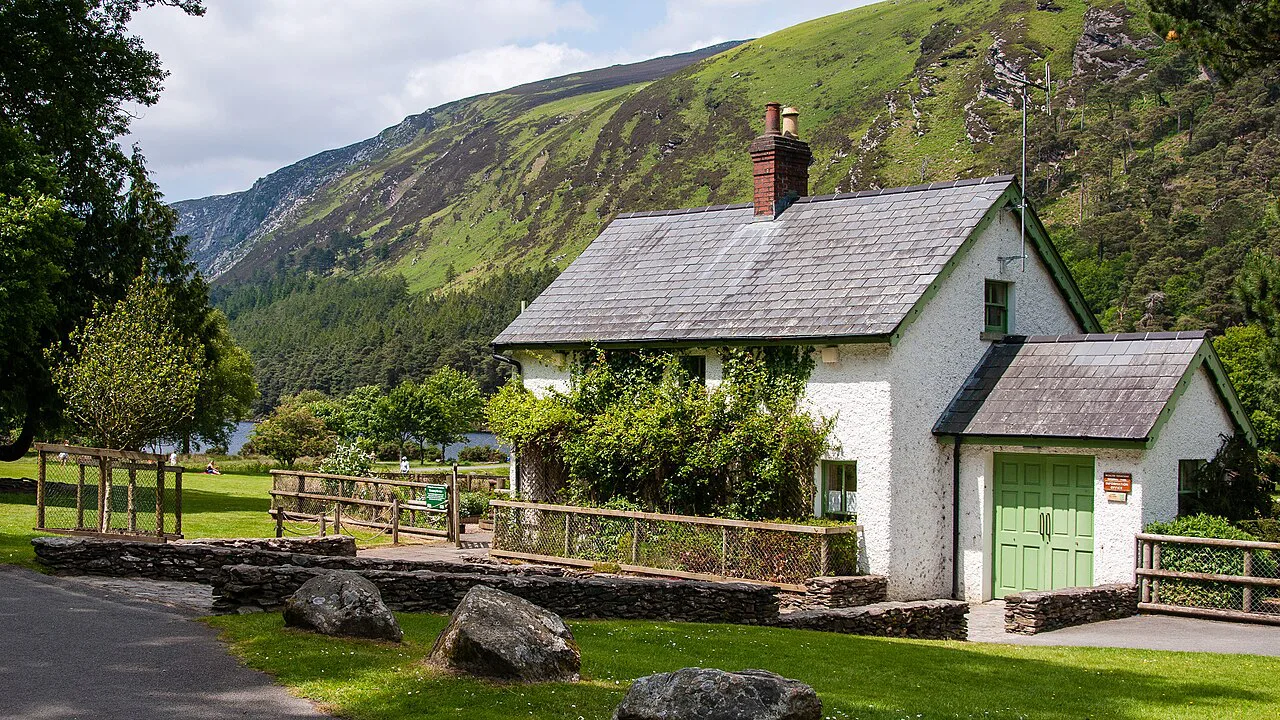
St Kevin's Bed is described by Heritage Ireland as a small man-made cave in the cliff face above the Upper Lake. Tradition holds that Kevin lived and prayed there, but the operator notes that it may instead be a prehistoric burial place that long predates him. Present the devotional story as tradition and the burial interpretation as a possibility, because the source does not settle the question.
You should not plan on entering the cave; it sits in a cliff face and the operator makes no provision for access to it. Treat it as a feature to locate and understand from the valley rather than a stop on a walking route. Its position above the Upper Lake also means that seeing it depends on how far along the glen you walk.
The Interpretive Centre Before You Walk
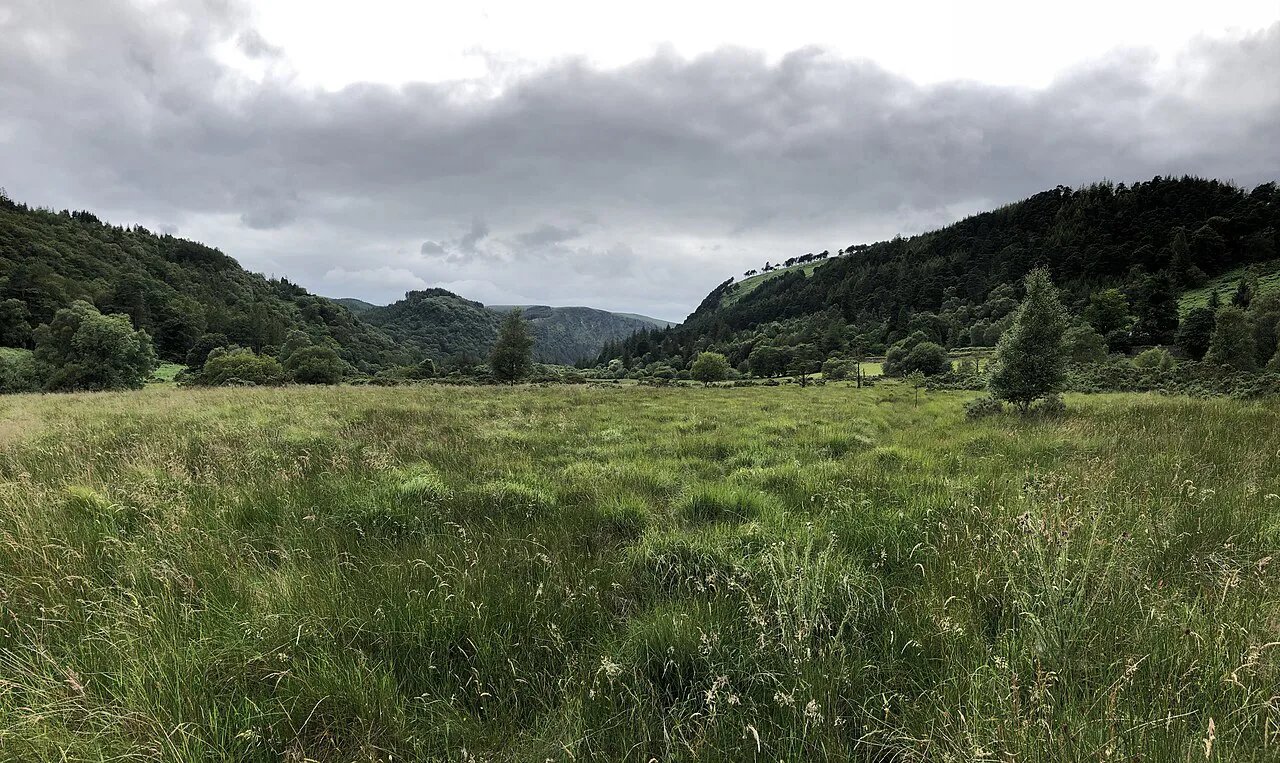
The operator recommends the interpretive centre as the place to learn about the site before exploring it, and the listed facilities include an exhibition, an interpretive exhibit, a museum, a bookshop, guided tours and a brochure. Starting here gives the outdoor remains a framework, especially if you are unfamiliar with early medieval monastic layouts. Pair the indoor introduction with your own circuit of the glen rather than treating either half as optional.
The operator does not publish a guaranteed tour schedule, so ask at the centre on arrival whether a guided tour is running that day rather than planning around a fixed time. A downloadable social guide is also offered to help first-time visitors and families prepare for the visit, which is worth reading before travelling if anyone in your group needs predictability.
Admission and the Parking Arrangement
The operator publishes admission categories for the visitor centre, including adult, group or senior, child or student, and family rates, which were listed when these details were retrieved. Check the current figures on the operator page before you travel, since charges can change. The outdoor remains across the glen are described separately from the centre in the operator's own text, so budget for the indoor element specifically.
The key practical detail is that paying for parking in the Glendalough Visitor Centre car park entitles you to one free admission to the visitor centre itself. If you are arriving by car and intend to see the exhibition, treat parking and admission as one transaction rather than two separate decisions, but note that the free admission applies to the centre, not to a separate charge for walking the outdoor remains. Those arriving by other means should check the admission terms directly with the centre.
Seasonal Opening and the December Closure
The site is open all year, but the operator states that it is closed from 23 to 29 December inclusive. The operator also works to two seasonal blocks, from mid March to 14 October and from 15 October to mid March, with winter hours in the second block. Rather than relying on a remembered clock time, check the current seasonal table before setting out.
Last admission to the buildings and toilets is 45 minutes before closing, so a late arrival can mean the centre is unavailable even though the glen itself is outdoors. Build that cut-off into your plan if the exhibition is the main reason for your trip. The operator gives an average visit of one to one and a half hours for the site.
Allowing more than the stated average is sensible if you intend to walk to the further monuments, since the ruins are spread across the glen rather than clustered at the entrance. A short stop suits the centre and the nearest monuments, while a longer stay suits a full circuit including the Upper Lake area. Decide which of those you want before you arrive.
Access, Terrain and Dogs
Heritage Ireland states that the visitor centre is fully accessible for visitors with disabilities, but that access to the graveyard is very difficult for wheelchair users, and the site lists uneven walkways among its restrictions. That contrast is the most important access fact about Glendalough: the indoor experience and the outdoor circuit are not equivalent in difficulty. Plan the visit around the centre if mobility is limited, and treat the graves and outlying ruins as a separate decision.
Dogs must be kept on a lead across the site, which matters on a working landscape with uneven paths and other visitors. Good footwear is a practical requirement rather than a formality given the ground conditions the operator notes. The downloadable social guide is designed to help first-time visitors and families prepare for exactly this kind of environment.
Toilets and Who Manages What
There are two car parks, and the toilets at the Upper Lake car park are operated by Wicklow County Council rather than the Office of Public Works. That division of responsibility is worth knowing if you have a query or a problem at the Upper Lake facilities, because the OPW is not the body managing them. The centre's own toilets fall under the last-admission rule, closing 45 minutes before the buildings do.
Plan toilet stops around the centre's hours: the centre's toilets are subject to the 45-minute last-admission rule, and the Upper Lake facilities are run separately by Wicklow County Council, so do not assume they follow the same timetable. If you are walking to the far end of the glen, that timing affects how you sequence the day. The operator's social guide covers practical preparation for families and first-time visitors.
Separate County Wicklow Options
Two other OPW properties in County Wicklow are sometimes mentioned alongside Glendalough, but neither is part of the monastic site. The National Botanic Garden of Ireland at Kilmacurragh is a separate garden with free admission, its own seasonal hours and free guided tours at set times during part of the year. It suits a different kind of visit and should be planned as its own stop.
Dwyer McAllister Cottage is likewise distinct: a thatched cottage associated with Michael Dwyer and the 1799 fighting, restored after a long period in ruins. Access requires contacting the site in advance to arrange a visit, and opening is seasonal. Do not fold either property into a Glendalough itinerary without checking its own arrangements first.
For travellers comparing monastic sites across the country, Corcomroe Cistercian Abbey in County Clare is an entirely separate visit with its own history and access details. It is useful context for understanding what makes an Irish monastic ruin, not a substitute for Glendalough.
Plan Your Glendalough Visit
Glendalough rewards a visit that separates its two halves: the ticketed interpretive centre with its exhibition and museum, and the outdoor Monastic City of round tower, stone churches, decorated crosses and the cave above the Upper Lake. Decide in advance whether you are coming for the centre, the circuit, or both, because the timing and access considerations differ.
Check the current admission figures and seasonal hours on the operator page before travelling, and note the December closure and the 45-minute last-admission rule. If anyone in your group uses a wheelchair, plan around the fully accessible centre and treat the graveyard as a separate decision given the difficult terrain.
Explore more Ireland guides
Frequently Asked Questions
What can you see at Glendalough's monastic site?
The operator lists a round tower, several medieval stone churches and decorated crosses spread across the glen, plus St Kevin's Bed, a small man-made cave in the cliff above the Upper Lake. The visitor centre adds an exhibition, museum, bookshop and guided tours. The monuments are outdoors and separate from one another, so seeing them involves walking on uneven ground rather than touring a single building.
Do you need to pay to visit Glendalough?
The visitor centre has published admission categories, and paying for parking in the Visitor Centre car park includes one free admission to the centre. Check the operator's current figures and the parking terms before you travel, since charges are not fixed permanently. Arriving without a car means confirming admission terms directly with the centre.
How long does a visit to Glendalough take?
The operator gives an average visit of one to one and a half hours. That figure covers a fairly compact engagement with the site; if you want to walk to the further monuments and up towards the Upper Lake, allow more time. Last admission to the buildings and toilets is 45 minutes before closing, so late starts limit the indoor part of the visit.
Is Glendalough accessible for wheelchair users?
The visitor centre is described as fully accessible, but access to the graveyard is very difficult for wheelchair users and the walkways are uneven. That makes the indoor and outdoor parts of the visit quite different in practice. Plan around the centre if mobility is limited, and treat the graves and outlying ruins as a separate choice.
What is St Kevin's Bed?
It is a small man-made cave in the cliff face above the Upper Lake. Tradition links it to St Kevin as a place where he lived and prayed, but the operator notes it may actually be a prehistoric burial place predating him. It is a feature to understand from the valley; the operator makes no provision for entering it and it sits in a cliff face.
Are Kilmacurragh and Dwyer McAllister Cottage part of Glendalough?
No. Both are separate OPW properties in County Wicklow with their own arrangements. Kilmacurragh is a botanic garden with free admission and its own seasonal hours and guided tours, while Dwyer McAllister Cottage requires advance contact to arrange access and opens seasonally. Plan each as its own visit rather than an extension of Glendalough.
Sources
- Glendalough Monastic Site and Visitor Centre | Heritage Ireland
- Glendalough, One of the Most Beautiful Places in Ireland - Paperblog
- National Botanic Garden of Ireland – Kilmacurragh | Heritage Ireland
- Glendalough Monastic Site and Visitor Centre | Heritage Ireland
- Dwyer McAllister Cottage | Heritage Ireland
You might also like



Continue reading
More guides you'll find useful




