
Ballintubber Abbey: Visitor Guide to a Mayo Monastery
Ballintubber Abbey in County Mayo is a working church and medieval monument. See its history, Hiberno-Romanesque carving, pilgrim path and visit options.
On this page
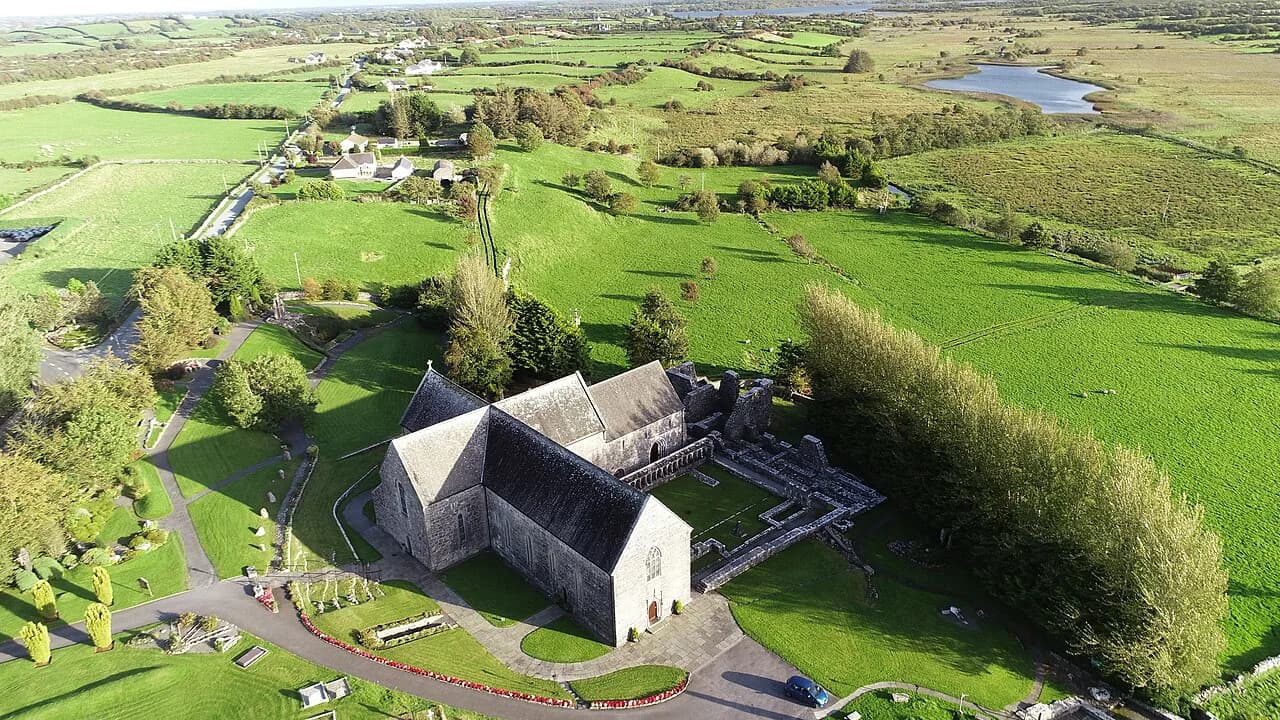
Ballintubber Abbey is an active place of worship and a medieval monument in County Mayo, not a preserved ruin. Its church survives in part from the thirteenth century, has been restored in stages, and the site today offers guided tours and walks alongside regular religious life, as the abbey's own site sets out. This guide explains what the building is, how to read its fabric, and which visit options are listed where, so you can plan around confirmed access rather than assumption.
Where Ballintubber Sits
Ballintubber village sits at the foot of the Partry Mountains near Lough Carra, within the Joyce Country and Western Lakes Geopark. The abbey is just off the main N84 road and is signposted, so it works easily as a stop between Castlebar and Westport rather than a detour into remote country. The abbey's own published travel times put Castlebar about ten minutes away, with Westport, Ballinrobe and Claremorris each within roughly half an hour.
The name translates from Irish as 'village of the well', a reminder that the site's significance long predates the medieval church. If you are touring Mayo's ecclesiastical remains, this is a useful counterpoint to the roofless abbeys and high crosses gathered in our guide to monasteries in ireland, because here the church is still roofed and in use. Allow time for the grounds as well as the interior, since the outdoor devotional features are part of the visit.
The 1216 Augustinian Foundation
The present church dates from 1216, when Cathal O'Conor, king of Connacht, founded an abbey for the Canons Regular of St Augustine. The building is cruciform, with a nave, a crossing with transepts, and a rib-vaulted chancel flanked by two side chapels. A regional tourism page describes it as founded by an Irish king, and a hotel's attraction page calls it the only church in Ireland still in use that an Irish king founded; these are the pages' framing rather than independently checked facts, so treat the wording as a reported claim.
Reading the Medieval Fabric
Look first at the eastern end. The three-light east window, with its foliate capitals and chevron archivolts, is characteristic of the Hiberno-Romanesque style, and the carving is attributed to a group known as the School of the West, with the finest work ascribed to an unnamed craftsman called the Ballintubber Master. Knowing this in advance helps you spot details that are easy to walk past.
The plan itself tells a story. A fire almost destroyed the church in 1265, and the stone vaulting over the chancel and side chapels appears to have spared the eastern portion; repairs around 1270 brought pointed Gothic arches alongside the earlier Romanesque openings. You can therefore read two building phases in one visit, which is unusual in a church of this scale.
Survival Through Destruction
Legislation of the 1530s aimed at dissolving monasteries began the abbey's slow decline, and in May 1653 Cromwellian forces set the church alight and demolished the domestic buildings. The vaulted roof over the chancel withstood that second attempt at destruction, and Mass continued to be celebrated in ad hoc fashion over the following two centuries. The survival of the eastern end is the physical reason there is a medieval church to visit at all.
By the late eighteenth century the ivy-cloaked remains had attracted antiquarian attention, and a sketch by Angelo Maria Bigari was used to illustrate the first volume of The antiquities of Ireland in 1791. That detail is worth holding onto: the building you see now is the product of centuries of attention, neglect and return, not a single moment of preservation.
Restoration in Three Stages
Restoration came in fits and starts. Work begun in 1846 was suspended in 1848 as the Great Hunger took its toll on parishioners; a second campaign, completed in 1889–90 to designs by G.C. Ashlin, was deliberately limited to the eastern T of the church. The third, carried out in 1963–66 under Percy le Clerc, Inspector of National Monuments, re-roofed the nave with Westmorland green slate and restored the interior as it may have appeared in the thirteenth century, while accommodating the liturgical changes of the Second Vatican Council.
That long record of survival, including worship continuing through periods without a roof, is why the abbey is sometimes called the abbey that refused to die. The phrase is a piece of popular memory rather than an official title, but it captures what makes the building distinctive among Irish monastic sites, and it stands apart from the ruined and conserved monuments described elsewhere, such as the rock of cashel.
The Tóchar Phádraig and the Holy Well
Ballintubber marks the start of the Tóchar Phádraig, an ancient path that finishes some 22 miles west at Croagh Patrick. The route pre-dates Christianity but took on religious significance in 441 when, according to tradition, St Patrick carried out a baptism at a druidic well, established a church and made a pilgrimage to the mountain. The abbey site lists a St Patrick's Well among its features, and a village well nearby is said to bear the imprint of the saint's knee; these are traditions, not documented events, and are best understood as part of the site's living devotional character.
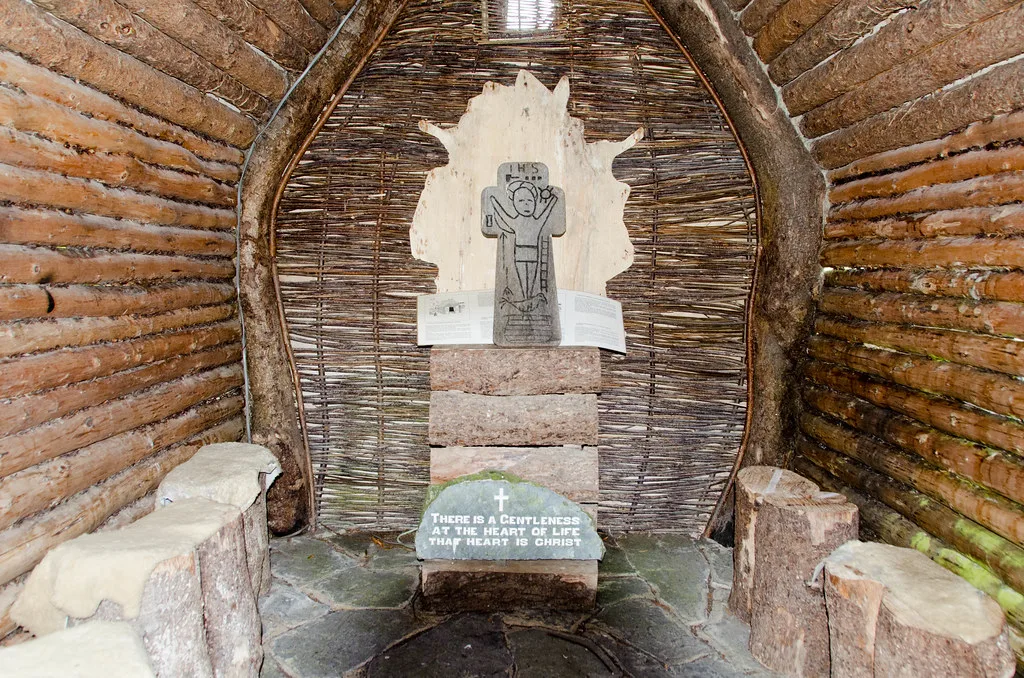
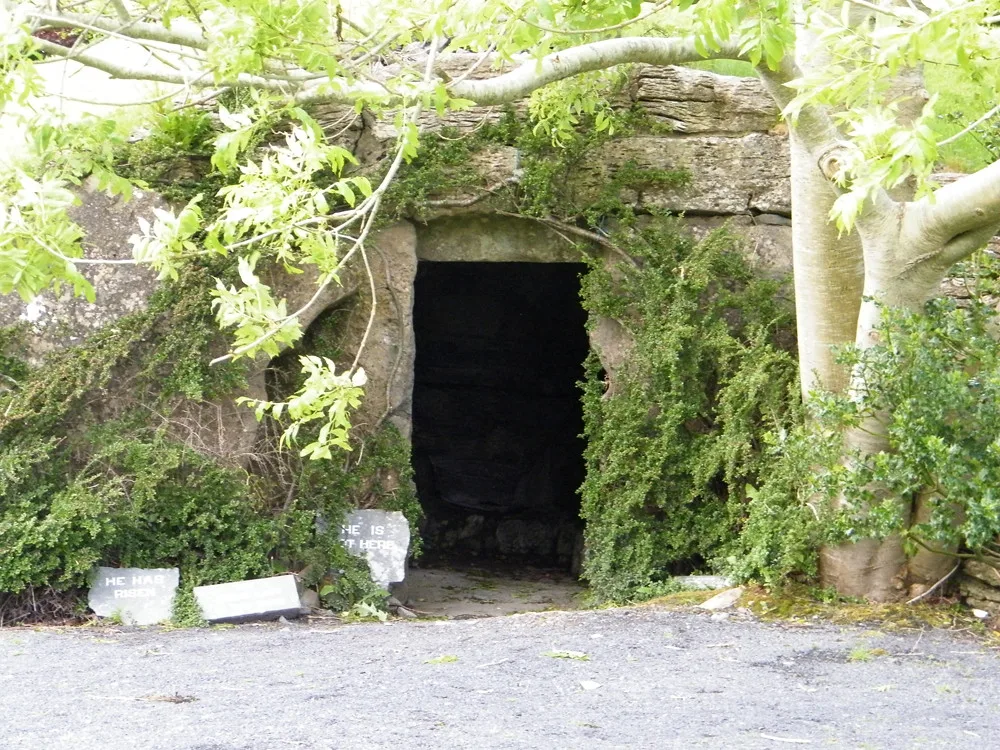
Beyond the well, the grounds hold a modern abstract Way of the Cross, an underground crib and a Rosary Way, all described as outdoor features, so the grounds can be part of a visit whether or not you join a tour. They also make the site a reasonable stop for pilgrims building up to Croagh Patrick, though the full route is a long day's walk rather than a short stroll.
Lore, Memory and Burials
Folklore supplies the abbey's most-quoted origin story. As told on a hotel's attraction page, Cathal O'Conor, in exile, promised to build a church for a kind man named Sheridan, but the first church was mistakenly built in a similarly named place in Roscommon, and the king vowed a church seven times more magnificent at Ballintubber. It is a legend, not a record, and the page presents it as local folklore. The same page notes that Cathal's father, Turloch O'Conor, was a patron for whom the Cross of Cong was designed.
Documented memory sits alongside the stories. A regional tourism page records that Tiobaid na Loinge, son of Risteárd an Iarainn Bourke and Granuaile (Gráinne Ní Mháille), is buried at the abbey, a link between a west Mayo church and the powerful Burkes of Connacht. For visitors tracing the region's castles, our guide to castles in county galway gives context for the families who patronised sites like this one.
Choosing a Visit Experience
The abbey lists three practical options on its own site: a historical abbey tour, a guided group walk and a self-guided walk. Guided formats suit first-time visitors who want the building's phases explained on the spot; self-guided visitors can work through the interior and the outdoor stations at their own pace. Which is available on a given day depends on the abbey's own schedule, so confirm before setting out.
Seasonal guidance on tours is not fully published by the abbey in the sources reviewed here. A hotel's nearby-attraction page states that guided tours run from May to September between 10am and 6pm, with off-peak visits by appointment, but that note is on a third-party page and should be checked directly with the abbey before you rely on it. If your trip falls outside summer, ask about appointment-based access.
Events run at the abbey as well. Its site advertises a concert for Sunday 25 October 2026, which is worth bearing in mind only as an example of its programming, not as evidence of regular opening hours. If music in a historic setting appeals, check the abbey's own event listings for what is scheduled around your dates.
Practical Planning
Treat Ballintubber as a working church first. The grounds, the well and the outdoor devotional features (the Way of the Cross, the underground crib and the Rosary Way) are the elements the sources describe in most detail, while interior arrangements during services should be respected. The abbey does not publish admission charges in the material reviewed, so ask on arrival or check ahead rather than assuming a fee or free entry.
Because the abbey sits off the N84 with signage and within easy reach of Castlebar and Westport, it fits readily into a wider monastic itinerary. The Tóchar Phádraig carries walkers towards Croagh Patrick, and the grounds' stations offer a shorter reflective circuit for anyone with less time. If you are extending the trip eastward, our Museums in Galway City: Two Places Worth Your Time covers urban heritage stops that contrast with this rural monastic setting.
Plan Your Visit
Ballintubber Abbey rewards a little preparation more than most Irish monastic stops. Knowing that the chancel survived two destructive episodes, that the nave was re-roofed in the 1960s, and that the eastern carving belongs to a named school of craftsmen gives the building a narrative you can follow on foot. Pair a tour or self-guided walk with the well and the outdoor stations for a rounded visit.
Before travelling, confirm the day's tour arrangements and any event with the abbey itself, since the only seasonal note available comes from a third-party page. The operator's own Plan Your Trip pages carry the transport details and current listings you need.
Explore more Ireland guides
Frequently Asked Questions
Is Ballintubber Abbey a ruin or a working church?
It is both a working place of worship and a medieval monument. Parts of the thirteenth-century church survive, the nave was re-roofed in the 1963–66 restoration, and the site continues to host regular religious life and events. It is not a roofless ruin like many Irish abbeys, and its grounds hold outdoor devotional features.
What can I see of the original 1216 building?
The cruciform plan is substantially medieval, and the rib-vaulted chancel with its flanking chapels is the best-preserved section. The three-light east window and its carving, attributed to the School of the West, are the highlight for many visitors. Later restorations added the current nave roof and interior treatment.
What is the Tóchar Phádraig and does it start at Ballintubber?
The Tóchar Phádraig is an ancient route that leads about 22 miles west to Croagh Patrick, and Ballintubber marks its starting point. The path is older than Christianity but became associated with St Patrick, who by tradition baptised converts at the well here. Walking the full route is a long undertaking; a short reflection at the well is a simpler option.
Do I need a guided tour to visit Ballintubber Abbey?
No. The abbey lists a historical tour, a guided group walk and a self-guided walk, so independent visitors have an option too. A guide helps interpret the building's construction phases, which are easy to miss. Check the abbey's own listings for what operates on your date.
How far is Ballintubber Abbey from Westport and Castlebar?
The abbey's travel notes put Castlebar roughly ten minutes away by car and Westport within about thirty minutes, with Ballinrobe and Claremorris also within that half-hour band. The site is just off the N84 and signposted from the road. Allow extra time if you plan to visit the grounds as well as the church.
Is the story of the abbey's founding a legend?
The tale of Cathal O'Conor promising a church to a man named Sheridan, and the first church being built in the wrong place, is local folklore rather than documented history. The 1216 foundation by Cathal is treated as historical, but the colourful Sheridan story should be enjoyed as legend.
Sources
You might also like



Continue reading
More guides you'll find useful



