
Jerpoint Abbey: A Visitor Guide to the Cistercian Ruins
Plan a visit to Jerpoint Abbey near Thomastown, County Kilkenny. See the medieval carvings, cloister arcade and visitor centre, and check seasonal hours.
On this page
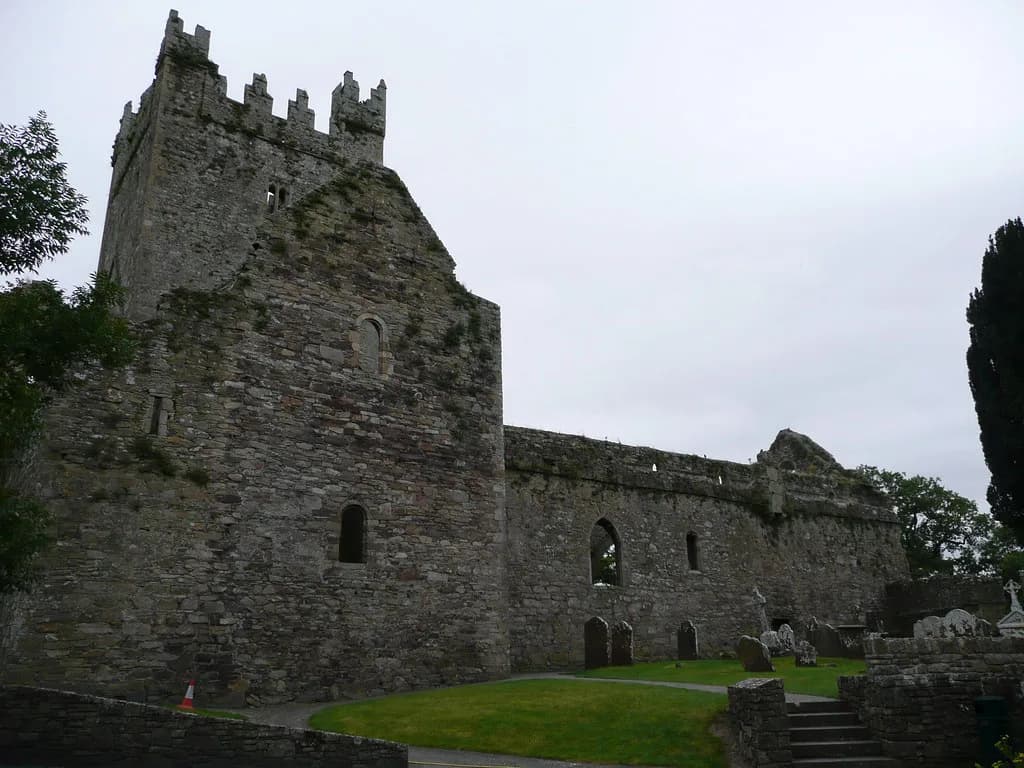
Jerpoint Abbey stands about 2.5km south-west of Thomastown in County Kilkenny, close to the River Nore, and is managed by Heritage Ireland. The church is largely intact, with its tower and cloister dating to the fifteenth century. A small visitor centre holds an exhibition, and guided tours are offered. Plan for roughly an hour on site, which makes the abbey a focused stop rather than a full-day outing.
What Jerpoint Abbey Is and Where It Stands
Jerpoint is a Cistercian abbey founded in the twelfth century, and Heritage Ireland describes it as one of the best examples of a medieval Cistercian abbey in Ireland. The church was built in the late twelfth century; the tower and cloister date to the fifteenth century. Monastic Ireland likewise treats the church as largely intact and places the site among the most complete Irish Cistercian monasteries. The practical result is that much of the story is read from standing stonework rather than from foundations. For a very different early Christian landscape, our guide to Skellig Michael is a useful contrast.
Foundation and the Kings of Ossory
The abbey was probably founded under the patronage of the Mac Gilla Pátraic kings of Osraige, the kingdom broadly corresponding to the later diocese of Ossory. Monastic Ireland records scholarly disagreement over the founder: either Domnall Mac Gilla Pátraic, who died in 1176, or Domnall Mac Gilla Pátraic II, who died in 1185. Discover Ireland attributes the foundation to the King of Ossory in 1158, while Monastic Ireland says the abbey may have existed from the 1160s and was formally affiliated to the Cistercian order only in 1180. Both accounts are worth holding together rather than choosing one. Jerpoint takes its name from a bridge over the River Nore, 'ori pons', and the abbey stood near the settlement of Newtown Jerpoint.
Cistercian Family Ties
Formal affiliation in 1180 made Jerpoint a daughter house of Baltinglass, County Wicklow, founded in 1148. Monastic Ireland places the abbey in a small group of Irish Cistercian churches that combine Burgundian and West Country English influences, with detailing particularly close to Baltinglass. In 1227, the English Cistercian visitor Stephen of Lexington transferred Jerpoint from Baltinglass to Fountains Abbey in England, citing lax practices. These links help explain the architecture and sculpture on site. For comparisons across the country, see our guide to Monasteries in Ireland.
Reading the Architecture
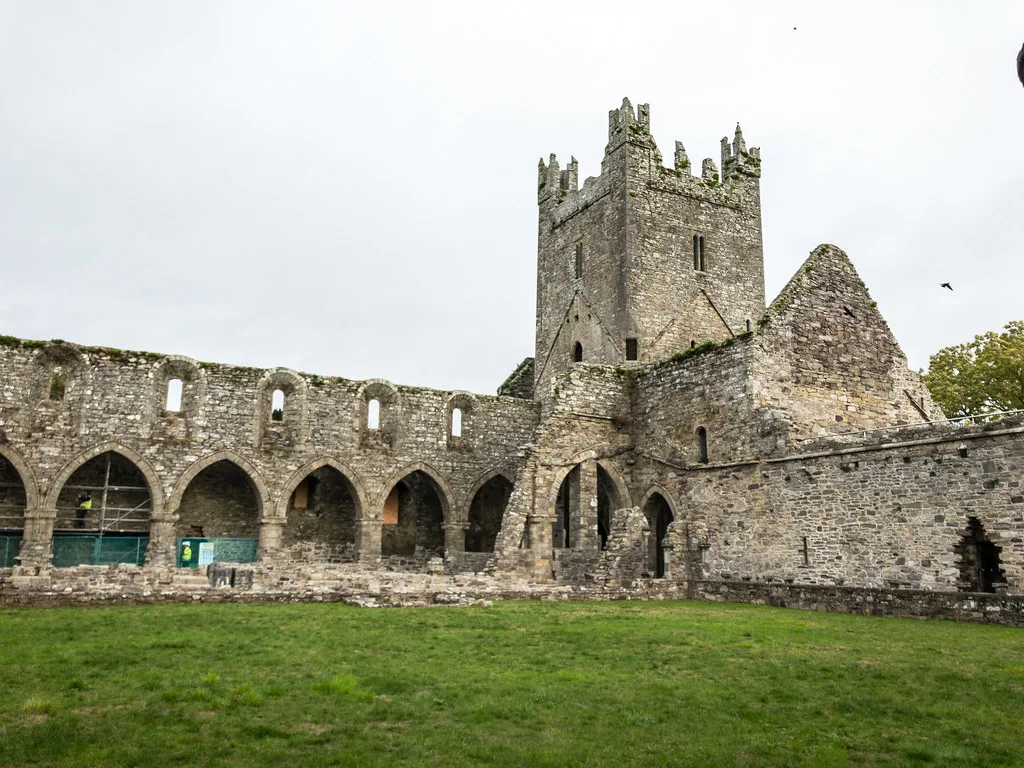
Begin with the church. Heritage Ireland notes that its late-twelfth-century construction reflects the transition from Romanesque to Gothic architecture, so its proportions and details record a shift in style as well as in engineering. Monastic Ireland describes the fifteenth-century crossing tower as dominating the surrounding landscape, and the cloister of the same period frames the courtyard. Because the main phases are spread across the twelfth and fifteenth centuries, a walk through the site traces centuries of rebuilding rather than a single moment of construction. The visitor centre exhibition helps sort the sequence. If you enjoy reading monastic layouts, compare it with our guide to Clonmacnoise.
The Carved Stones
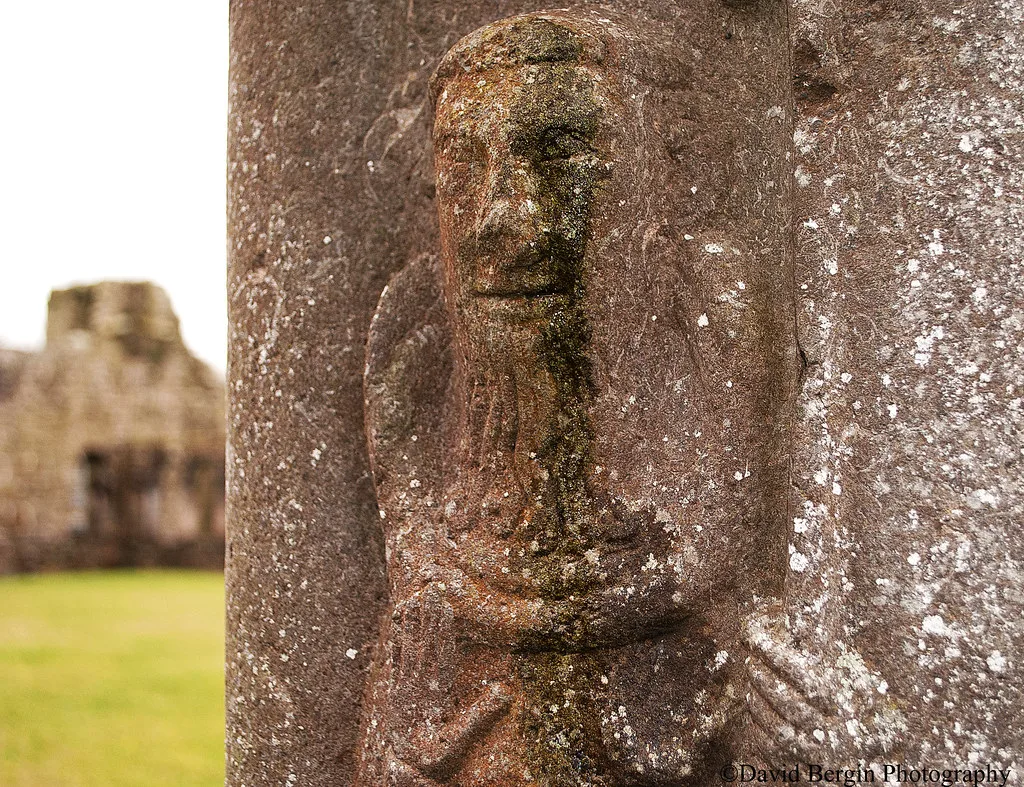
Jerpoint is renowned for its detailed stone sculptures, including mensa tombs from the O'Tunney school, an incised depiction of two thirteenth-century knights, decorated cloister arcades, and other effigies and memorials. Heritage Ireland dates the carvings across the thirteenth to sixteenth centuries. Pause at the arcades: Monastic Ireland calls the reconstructed sculptured cloister arcade unique among Cistercian cloister arcades for its rich array of carvings. Monastic Ireland also notes sculpted tombs in the church, including carvings of saints and apostles linked to the sixteenth-century O'Tunney school. A children's treasure hunt, available in the visitor centre, sends younger visitors looking for saints, patrons, knights, exotic animals and mythological creatures.
Monastic Life and Later History
Hospitality was a fundamental Cistercian obligation, and Monastic Ireland records that by 1374 continual wars between the Irish and English left the monastery unable to maintain its guesthouses and care for those seeking refuge. Monastic Ireland also documents the community's troubles: in 1217 the abbot was deposed for causing the 'riot of Jerpoint' during an official visitation, and in 1441 the abbey was granted an indulgence to help pay for repairs to the cloister, dormitory and bell tower. The abbey was dissolved in 1540, when the property was granted to James Butler, earl of Ormond; the abbot, Oliver Grace, surrendered on 18 March that year. These episodes give the ruins a longer, more turbulent context.
At the Site: Visitor Centre and Tours
The small but informative visitor centre houses an exhibition that helps interpret the architectural and sculptural details. Children can collect the treasure hunt there before exploring the abbey. Guided tours are offered, according to Discover Ireland, so ask at the visitor centre whether one is running during your visit. Schedules can vary by season. If you prefer to wander independently, the exhibition and on-site interpretive material support that approach.
Practical Access and Timing
Jerpoint is 2.5km south-west of Thomastown on the R448, reached via Exit 10 on the M9; follow signs for Thomastown. Discover Ireland publishes seasonal opening guidance: early March to September daily 09.00–17.30; October daily 09.00–17.00; November to the start of December daily 09.30–16.00; December to March pre-booked tours only; and closed for the Christmas period from mid-December to early January. Treat these as published guidance and check current times before travelling. The winter note means access depends on booking ahead, not that the site is fully shut. Barbecues are strictly forbidden.
Where to Stop Nearby
If you are building a monastic itinerary, Heritage Ireland lists nearby sites including Kells Priory, St Mary's Church Gowran and Kilkenny Castle. These are separate sites with their own access arrangements, so plan them as distinct visits. For a contrasting setting in County Tipperary, The Rock of Cashel offers a very different kind of Irish ecclesiastical site. With roughly an hour needed at Jerpoint, nearby stops fit naturally into a wider day's route.
Plan Your Visit
Jerpoint Abbey suits travellers who want to read a largely intact Cistercian monastery without a long detour. Its late-twelfth-century church, fifteenth-century tower and carved cloister arcade reward close looking, and the visitor centre helps decode what you see. Allow about an hour, check the seasonal hours before setting out, and confirm whether a guided tour is running. It works best as a focused heritage stop paired with other nearby sites. For another heritage guide, read about Glendalough.
Explore more Ireland guides
Frequently Asked Questions
How long should I allow for a visit to Jerpoint Abbey?
Discover Ireland suggests an average visit of about one hour. That allows time to see the church, tower, cloister arcade and carvings, plus a short while in the visitor centre exhibition.
Was Jerpoint Abbey founded in 1158?
Discover Ireland attributes the foundation to the King of Ossory in 1158. Monastic Ireland says the abbey may have existed from the 1160s and was formally affiliated to the Cistercian order in 1180. It also notes scholarly uncertainty over whether the founder was Domnall (d.1176) or Domnall II (d.1185).
What carvings should I look for at Jerpoint Abbey?
Look for the O'Tunney school mensa tombs, the incised depiction of two thirteenth-century knights, and the decorated cloister arcades with their carved pillars. Other effigies and memorials are found through the church. The visitor-centre exhibition helps identify specific carvings.
Can I visit Jerpoint Abbey in winter?
Discover Ireland lists December to March as pre-booked tours only, with closure from mid-December to early January. Access depends on booking ahead, and hours are seasonal published guidance. Check current arrangements with the site before travelling.
How do I reach Jerpoint Abbey from the M9?
Leave the M9 at Exit 10 and follow signs for Thomastown. The abbey lies about 2.5km south-west of Thomastown on the R448.
Sources
You might also like



Continue reading
More guides you'll find useful


