
Scattery Island: Monastic Site, Ferry Access and What to See
Scattery Island is closed for the 2026 season, with a return expected in 2027. Plan around the Kilrush ferry, the monastic core and the southern circuit.
On this page
Scattery Island is closed for the 2026 season. The Office of Public Works, which cares for the island's National Monument, states on its Heritage Ireland page that it looks forward to welcoming visitors again in 2027, without giving a reopening date. Anyone planning a trip should treat this as a guide to how a visit works rather than a promise that boats are sailing now, and should reconfirm season dates, sailings and tour arrangements before booking anything.
Where Scattery Island Sits in the Shannon Estuary
Scattery lies in the Shannon Estuary just off Kilrush in County Clare, and the Irish name Inis Cathaigh is rendered by the ferry operator as Island of the great battle. It is a low, grassy island rather than a dramatic rock, and almost everything a visitor comes to see sits within walking distance of the landing point. That compactness is what makes a half-day visit workable.
The whole island was acquired for the State in 1991 and is now a National Monument in State Care under the Office of Public Works, which also records that admission to the site is free. Free admission applies to the OPW site itself; the official material gives no figures for a ferry crossing or any guided or audio tour, so budget for those separately and check current charges with the operator you book through.
If you are building an itinerary of early religious sites, Scattery belongs on a shortlist with the Monasteries in Ireland covered elsewhere on this site, but it differs from inland ruins in one important way: the estuary setting and the boat crossing are part of the experience, not just the approach. For the inland end of that comparison, the ancient sites in Ireland guide covers tombs, forts and trackways in the same spirit. Plan the island as a half-day with a fixed departure, not a place you can drift into and out of at will.
Reading the Island Before You Land
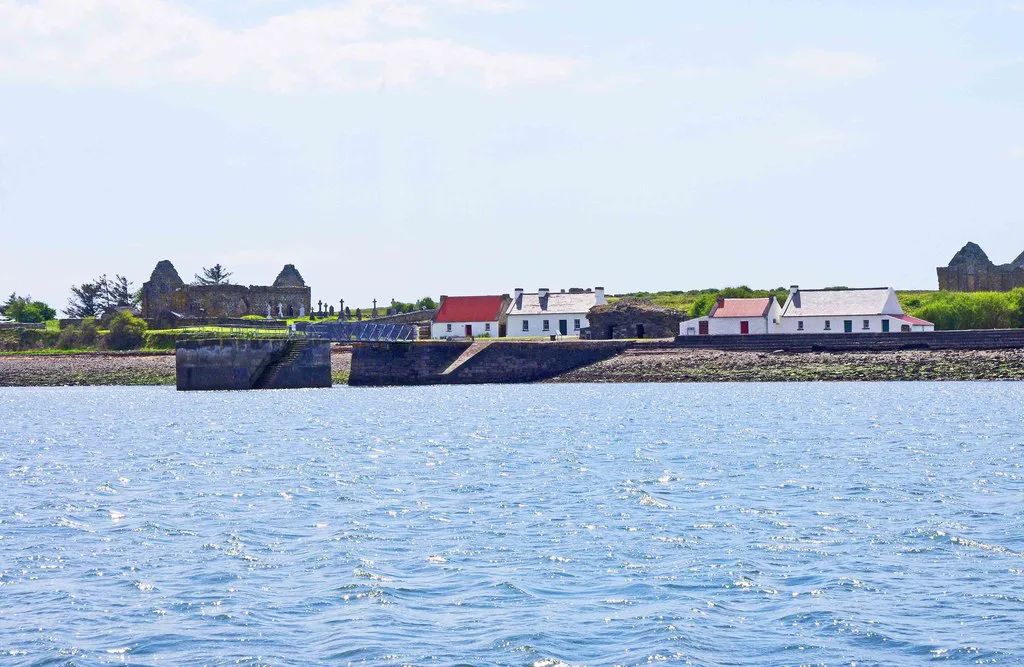
Scattery is best understood as three zones rather than one site. The monastic core holds the round tower, the cathedral and several medieval churches; the southern end holds the lighthouse and a Napoleonic artillery battery; and between them sits the Street, the restored village where the island's pilots once lived. The official description presents all of these as parts of the same visit, which is why time budgeting matters more than a single checklist.
The OPW describes a visit that begins with a guided walking tour of the ecclesiastical remains, continues with an exhibition at the visitor centre, and then an audio-guided route south past the Street to the lighthouse and battery. Tourism Ireland's destination page gives a broadly compatible shape, adding that the river pilots and their families lived on the island until it was abandoned in 1978. Knowing that sequence in advance helps you decide how much of the southern route to attempt.
The Monastic Core: Round Tower, Cathedral and Churches
The heart of the island is its early monastic remains, and the OPW frames the settlement's founding around St Senan in the early sixth century. The sources also carry the well-known story of Senan banishing a serpent called the Cathach from the island, and Tourism Ireland dates the monastery's establishment to 534 after that victory. Treat this as tradition and legend rather than documented history, and enjoy it as the kind of story that accumulated around important monastic founders.
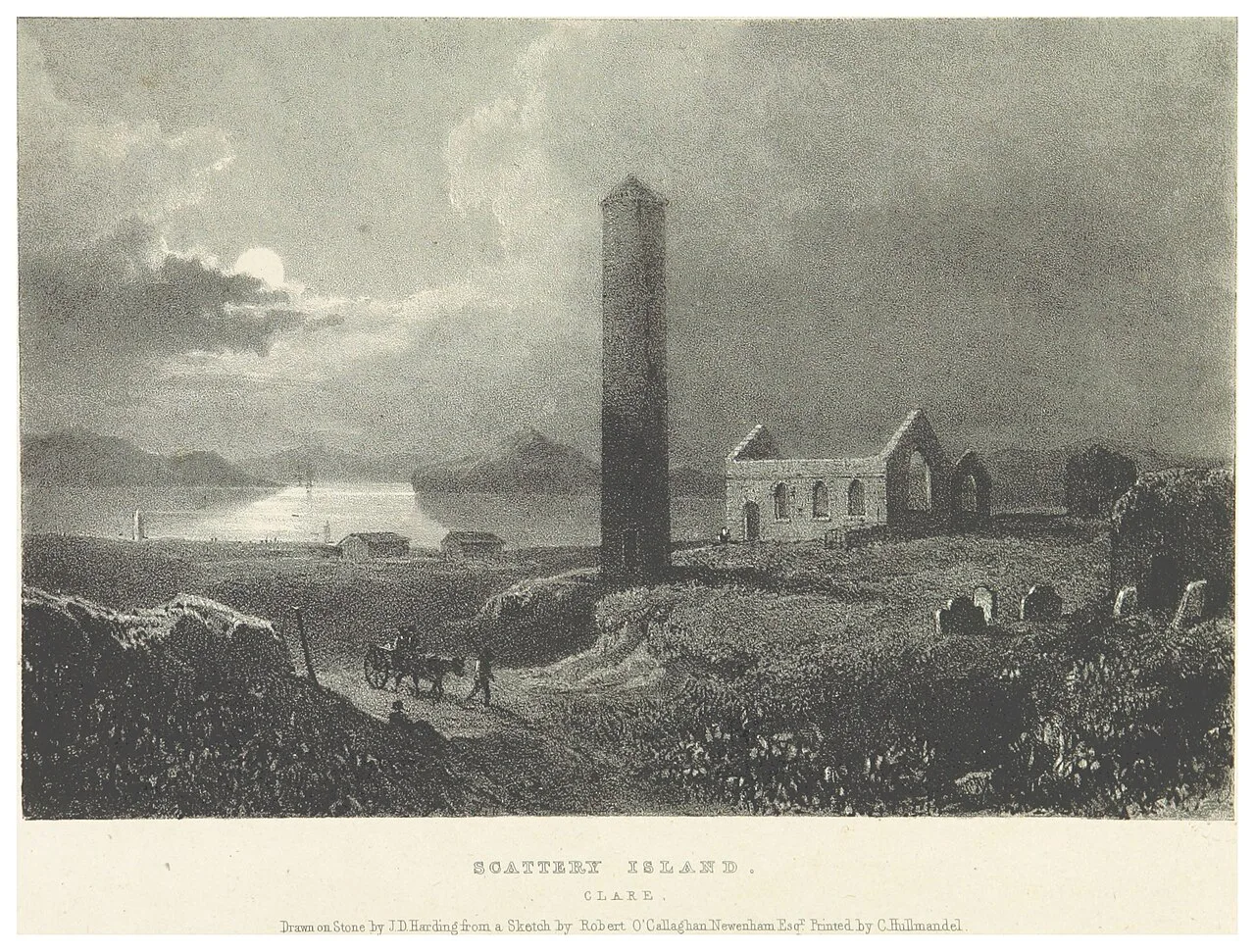
Among the standing structures, the OPW names a round tower, the Cathedral of St Mary and several medieval churches, and notes that conservation work has included repairs to the cathedral. Seeing a round tower on a small estuary island, with the churches and village close by, makes the scale of the original settlement easier to picture than a plan drawing does.
The guided walking tour is led by OPW guides and is the clearest way to make sense of the sequence of buildings, since masonry alone does not explain which structure came first or how the community lived. The OPW also offers a downloadable audio guide in French, German, Italian and Spanish as described on its page; availability in any future season should be confirmed rather than assumed. The visitor centre exhibition near the pier rounds off the monastic story and offers drinking water, according to the same source, and the OPW notes WCs beside the castle.
The Southern Circuit: Street, Lighthouse and Artillery Battery
South of the monastic core, the audio route passes the Street, the restored village where the island's pilots lived, then continues to the lighthouse and finally the Napoleonic artillery battery. The OPW describes the Street as recently restored and notes that it once housed the pilots and the island's post office. This is maritime working history rather than decorative ruin, and it explains why a tiny island in a wide estuary mattered to shipping.
Tourism Ireland's context page describes the lighthouse as around 150 years old and still guiding ships through the estuary, and places the artillery battery among coastal batteries built by the British to guard against a French invasion. The battery is an outdoor position rather than a visitor building, and the sources describe no shelter there. Read the two features together and you get the island's double role: prayer and pilotage, defended approaches and a working light.
The OPW describes the option of walking the entire circumference of the island after the audio tour, which it says adds about an hour and a half and gives panoramic views across the estuary towards Kerry. That is the main time trade-off on the island: the circuit rewards those with a longer stay, but it should not be attempted if your ferry return is tight or the weather is closing in.
Island Life and the 1978 Abandonment
The restored Street is the clearest illustration of Scattery's modern story. The OPW records that the island was finally abandoned in 1978, and that the Street had been home to the Scattery pilots and the post office before that. Photographs of freshly limewashed cottages and tidy exteriors, which the official page mentions, show a community that was maintained to the end rather than left to decay gradually.
That detail changes how you read the village. The OPW records that four houses opposite the pier were restored and adapted for new uses in 2002, by which time they were mostly roofless. A cottage now serves as a staff room, with the interpretative centre next door. What you see is a conserved landscape with a clear curatorial hand, not an untouched ghost village, and the story lands harder for it.
The human context also explains the community interest that persists today. The OPW notes that mainland groups, including former islanders and their extended families, retain a keen interest in how the island's heritage is presented. For a visitor, that is a reminder to treat the Street as someone's family history as well as a heritage attraction, and to follow leave-no-trace guidance without being asked twice.
Nature and Conservation on the Island
Scattery is not only a monument. Tourism Ireland describes it as a designated Special Area of Conservation with salt marsh, coastal gravel banks, grassland and scrub, and notes that otters and grey seals use the surrounding waters. The OPW likewise describes clean estuary waters and grassland that supports a range of plant and animal life. With soft ground in places, choose footwear accordingly and keep to the paths around the heritage remains.
Scattery Island Tours states that visitor numbers to the island are limited to 25,000 per season, which it links to the island's conservation designation. That figure is the company's own description rather than an official regulation, but the underlying point stands: this is a small, sensitive place with limited daily capacity, so booking early matters more here than at a large inland ruin.
The OPW asks visitors to bring home all unwanted food and rubbish and to leave no trace, which is more than boilerplate on an island with no waste collection and no tea or coffee facilities. Pack out everything you carry in. If you are comparing Scattery with larger monastic landscapes such as The Rock of Cashel in County Tipperary, expect far fewer facilities here and a correspondingly stronger sense of exposure to weather and tide. For a wider choice of comparable ruins, the castles in county galway guide sets out access and current opening details. If your tastes run more to early Christian remains than to Norman towers, the ancient sites in Ireland guide is the better companion.
Getting There: The Kilrush Ferry Crossing
Access is by ferry from Kilrush Marina. The OPW describes the crossing as taking around 30 minutes each way, with the boat passing through the marina's lock gates into the sheltered estuary and past the village of Cappa and the smaller Hog Island before Scattery's round tower and cottages come into view. Those are general figures rather than a timetable, and departure times vary with the weather.
Scattery Island Tours, a family-run operator based in Kilrush, provides the boat trips and describes its connection to former islanders, alongside guided walking tours delivered with OPW guides and other tour products. Because it is a commercial operator rather than a heritage authority, use its site for booking and sailing practicalities and the OPW page for what the site itself contains.
The OPW states plainly that access to the island depends on tidal and weather conditions. Build slack into your day, keep a mainland alternative in mind, and do not schedule a tight onward connection after a crossing that can shift. No operator can guarantee a landing on a given tide, so treat any itinerary as provisional until the boat is confirmed.
Shaping the Day: Timing, Footwear and Food
The OPW gives a typical stay of about two and a half hours on the island, with an approximately four-hour stay offered every two weeks. Confirm anything like this with the operator for the season you travel, because the pattern is guidance rather than a published schedule. If you want the full circumference walk, you need one of the longer stays or a very disciplined pace through the southern circuit.
The official page advises sturdy footwear such as boots or strong walking shoes because conditions underfoot are not ideal in places, and it warns that there are no tea or coffee facilities on the island, with drinking water available at the visitor centre. Bring a packed lunch and arrange your own water supply if you want more than that. Do not assume shops or cafes anywhere along the route.
Where the sources do not describe something, plan conservatively. The official page says nothing about step-free or wheelchair access, so anyone with mobility needs should contact the OPW and the ferry operator directly before relying on a visit. That is a practical question worth asking early rather than discovering at the pier.
Planning for 2027 and Beyond
The closure notice on the official page does one thing clearly: it tells you the OPW site is closed for the 2026 season and that the OPW looks forward to welcoming visitors in 2027. It gives no date, no season length and no guarantee about which tours will run. Read it as a firm closure and a soft reopening year, and check the page again close to your travel dates for the updated position.
Before booking, confirm four things: whether the island has reopened for the season you plan to travel, what the ferry timetable actually is for your dates, whether guided and audio tours are running, and what the crossing and any tour will cost you. The official pages answer the heritage questions; the operator answers the sailing ones. Cross-check both rather than relying on an old blog post or a cached timetable.
If your interest is monastic architecture more broadly, pair a Scattery visit with inland sites that carry different stories and easier access. The County Mayo foundation at ballintubber abbey, for example, works as a contrasting day, while the riverside ruins at clonmacnoise show how a large monastic city functioned on a major inland waterway rather than a tidal estuary. If you would rather weigh Scattery against other early sites on the same trip, the ancient sites in Ireland guide covers tombs, forts and trackways to compare.
Plan Your Visit
Scattery Island rewards preparation more than most Irish heritage sites because the tide, the boat and the season all sit between you and the ruins. The monastic core, the pilots' Street and the lighthouse and battery together tell a story of prayer, pilotage and defence in one estuary landscape, and the OPW's guided tour is the thread that holds them together. Go when the island is open again, go with sturdy shoes and a packed lunch, and confirm the boat before you build a day around it. For another heritage guide, read about Cong Abbey.
Explore more Ireland guides
Frequently Asked Questions
Is Scattery Island open to visitors now?
No. The Office of Public Works states that the Scattery Island site is closed for the 2026 season, so there is no access to the monument at present. Check the Heritage Ireland page for the current notice before making any plans, since the status changes with the season.
When is Scattery Island expected to reopen?
The official page says the OPW looks forward to welcoming visitors again in 2027, but it does not give a reopening date, a season start or an end date. Treat 2027 as an intended year rather than a fixed date and reconfirm closer to the time with the OPW and the ferry operator.
How do you get to Scattery Island?
Access is by ferry from Kilrush Marina in County Clare. The OPW describes a crossing of around 30 minutes each way, passing through the marina's lock gates into the Shannon Estuary. Departure times vary with weather, and landings depend on tide and conditions, so book with the operator and check sailing details for your dates.
How long do you spend on Scattery Island?
The OPW gives a typical stay of roughly two and a half hours, with a stay of about four hours offered every two weeks. Walking the full circumference of the island adds around an hour and a half. These are guidance figures rather than a published timetable, so confirm the pattern with whoever runs the boat for your season.
Is there a cafe on Scattery Island?
No. The official page states there are no tea or coffee facilities on the island, and that drinking water is available at the visitor centre. Bring a packed lunch and your own water, and take all unwanted food and rubbish back to the mainland with you.
What can you see on Scattery Island?
The island holds a round tower, the Cathedral of St Mary and several medieval churches, along with a lighthouse, a Napoleonic artillery battery and the restored Street where the island's pilots and post office were based. A visitor centre exhibition near the pier adds context, and a guided walking tour covers the monastic core.
Do you need a guide on Scattery Island?
The OPW guided walking tour covers the monastic core, and a downloadable audio guide covers the southern route past the Street to the lighthouse and battery. Confirm which options are running for your season, and in which languages, before you travel.
Is Scattery Island free to visit?
The OPW describes admission to the heritage site as free. That does not cover the ferry crossing or any guided or audio tour, for which the official material gives no figures. Check current charges with the ferry operator before booking, and budget for the crossing separately from the site itself.
Sources
You might also like



Continue reading
More guides you'll find useful




