
Ennis Friary: A Visitor Guide to the Franciscan Friary and Its Carvings
Plan a visit to Ennis Friary in County Clare: its O'Brien foundation, limestone carvings, sacristy, graveyard stones and what to confirm before you go.
On this page
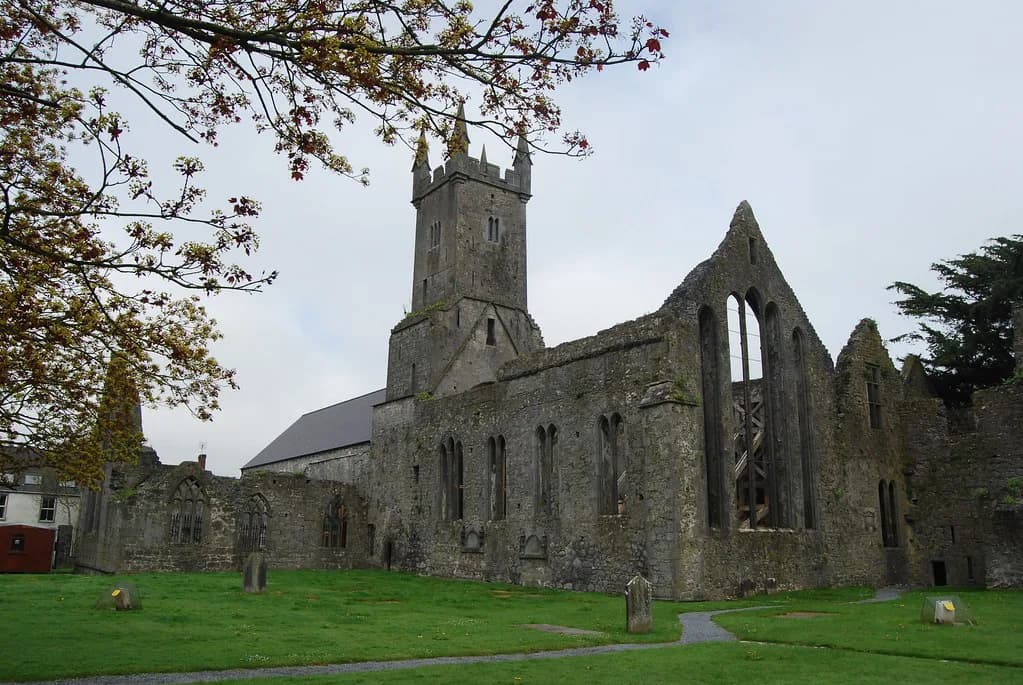
Ennis Friary is a medieval Franciscan foundation in Ennis, County Clare, presented by Heritage Ireland. It rewards close looking rather than a quick circuit: the surviving fabric holds fifteenth- and sixteenth-century sculpture in local hard limestone, a five-lancet east window lighting the chancel, and a walled graveyard with hundreds of inscribed stones. Field records describe the site as having been taken into care of the Office of Public Works.
Treat it as a place to read stone by stone, not as a romantic ruin. The operator's own material points visitors toward the carvings, the sacristy and the chancel window, while independent field records add detail on the cloister fragments and the figures tucked into niches. Allow the interiors to set your pace, and check the operator's page for current hours and any notice before you set out.
Foundation and O'Brien Patronage
The O'Briens of Thomond, who once ruled much of north Munster, founded this Franciscan friary, according to the Heritage Ireland operator page. That page also records the tradition that the house grew rapidly into a very large foundation, with 350 friars and a famed school of 600 pupils by 1375. Read those numbers as the operator's account rather than independently verified statistics, and note that the sources do not agree on an exact foundation year.
The same operator page describes Ennis as the very last school of Catholic theology to survive the Reformation, a claim that gives the site its particular place among Irish friaries. For context on how other Irish monastic houses fared across the same centuries, the wider guide to Monasteries in Ireland is a useful companion read. Ennis stands out less for picturesque ruin than for the density of carving that survived the upheavals.
Reading the Building: Chancel, Tower and Cloister
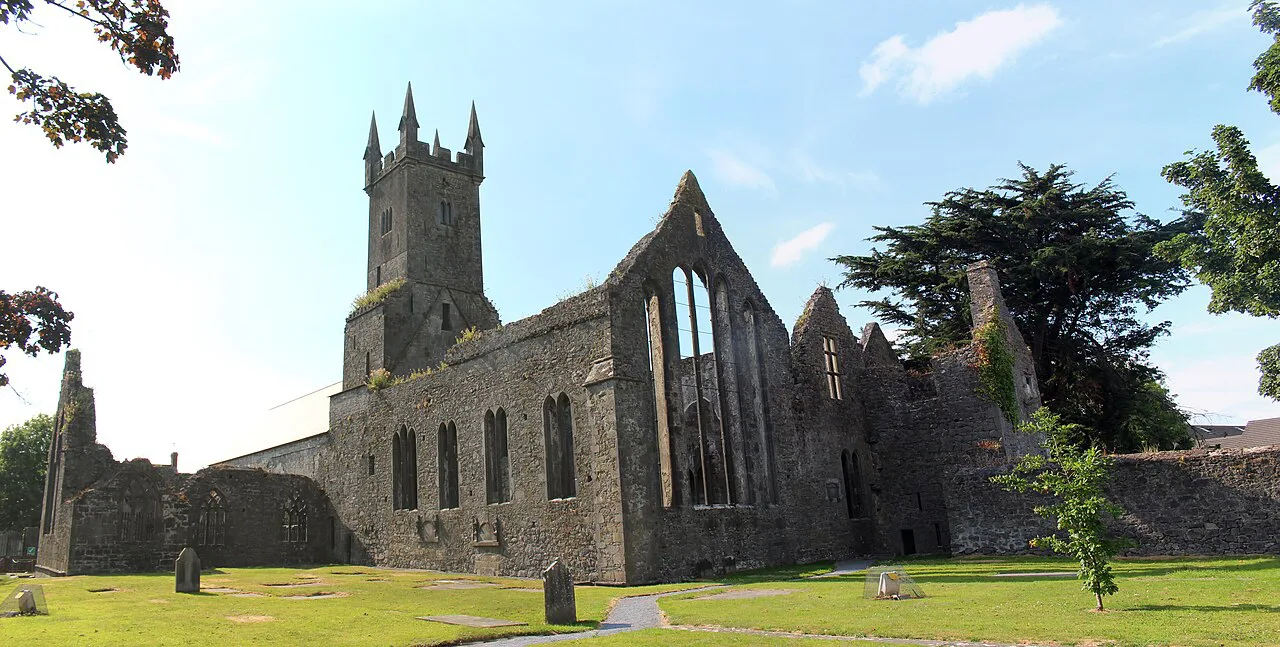
Start with the chancel and its east window, which the operator describes as having five lancets; it is the architectural set piece of the site. An independent field record of Irish stonework describes the chancel's large east window with five tall lancets and additional two-light windows in the south wall, and places the central tower and south transept in the fifteenth century. Use that sequence as a field observer's reading of the fabric, not as an official chronology.
Look for the cloister arcade, which the operator lists among the features worth photographing. The same field record notes that the cloister is incomplete, with only two segments surviving at the northwest corner, so expect a fragment rather than a full walkway. That partial survival is precisely what makes the site legible: you can see how the ranges once enclosed a court without the reconstruction filling in every gap.
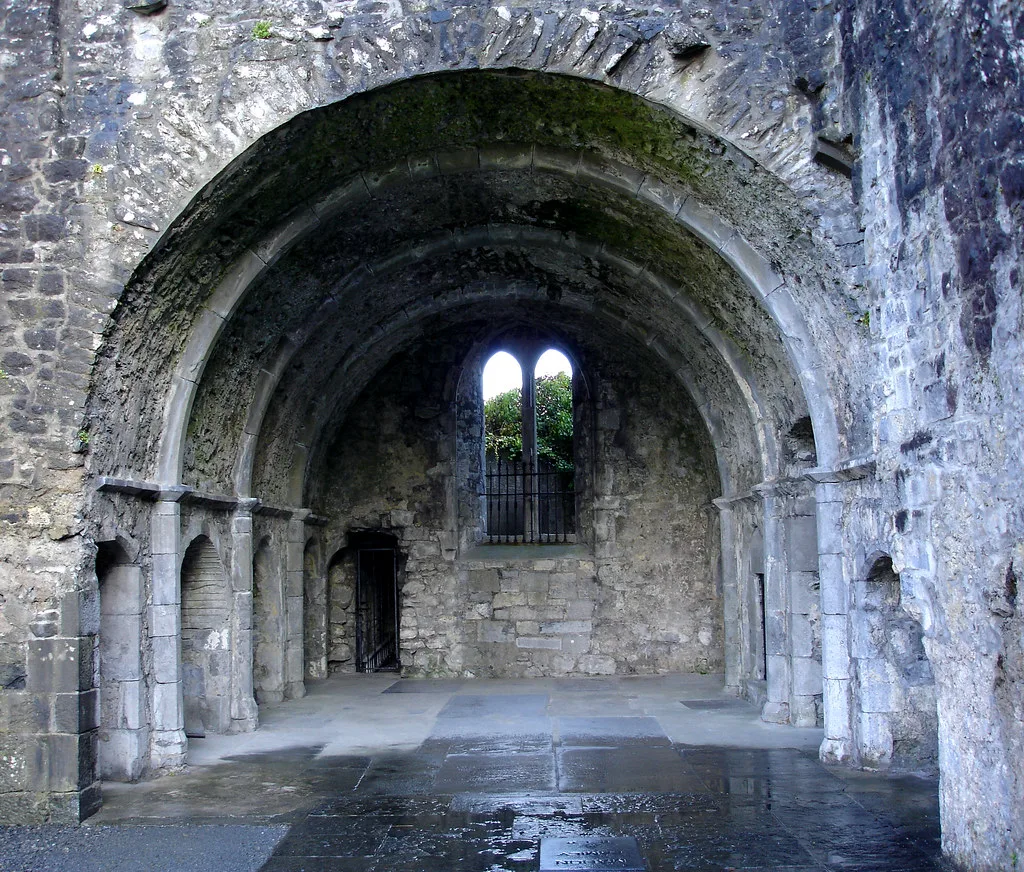
Visitors often remark on how the roof over the nave changes the experience of the carvings, protecting the stone from direct weather. One travel account describes grey stone walls, Gothic arches and carved limestone panels, with the added roof keeping the interior dry. That impression is useful for expectation-setting only; the site's own material is the place to check what interiors, facilities and access conditions apply on the day.
The Sculpture Trail: Francis, the Bound Christ and the Tower Figures
The operator singles out the fifteenth- and sixteenth-century sculpture carved in local hard limestone, including a St Francis displaying the stigmata. It also points to an arch between the nave and transept bearing an image of Christ with his hands bound. Plan your circuit around those two fixed points, then work outward to the smaller carvings rather than trying to see everything at once.
The bound-Christ panel is usually identified as an Ecce Homo, the scene in which Pilate presents Christ to the crowd. A 2013 devotional blog post describes the panel in the nave and reads its surrounding symbols, including nails and dice, as instruments of the Passion intended to prompt reflection. The operator's own page independently mentions an arch between the nave and transept bearing a remarkable image of Christ with his hands bound. Treat the blog's devotional reading as interpretation, and do not rely on the post for the carving's present condition or access.
Under the central tower, the field record lists a niche carving of St Francis holding a cross-staff, along with a bishop, the Virgin and Child, a crowned head and two rams' heads. These are the details most easily missed on a first pass, because they sit low and to the side rather than at eye level in the main light. Bring the operator's visual guide if you want a structured way to find them.
Sacristy, Vaulting and the Creagh Tomb
Do not skip the sacristy, which the operator calls an impressive structure with a ribbed, barrel-vaulted ceiling. The field record adds that tombs lie beneath that vault, making the room a compact lesson in how sculpture and architecture were combined. Allow a few minutes of quiet looking rather than a hurried glance from the door.
In the chancel the field record notes a replica of the Creagh Tomb, with the original kept in the nave under the roof. It dates the tomb's erection to 1843 using fragments from two earlier tombs of about 1470, showing scenes from the Passion and Christ with the Apostles. Present those dates as that source's account; where copy and original stand is the kind of detail to confirm with on-site guides.
The Graveyard and Its Inscribed Stones
The operator records more than 300 inscribed stones in the friary graveyard, the earliest from the 1600s and most from the eighteenth and nineteenth centuries. Local stonemasons carved them, and the decorative detail carries the stories of townspeople as well as friars and priests. If you want to read inscriptions rather than simply scan them, the stones kept in the sacristy are described as best preserved and easiest to make out.
Photographers are directed by the operator toward the graveyard's copper beech and the wide view back across the whole site. That advice is practical: the stones are easier to understand when you step back and see how the burial ground wraps the church. Since the graveyard forms part of the monument, plan your stone-reading within the same visit rather than as a separate stop.
After the Friars: Suppression, Later Use and State Care
The friary's later history explains why the building reads as a patchwork. The field record states that the friars found protection under Murchadh Ua Briain, later named 1st Earl of Thomond, and were not expelled until 1570; it also notes that the church was adapted for Anglican worship at the end of the seventeenth century. Those shifts left a building used, altered and partially abandoned rather than simply ruined.
The same record describes the tower being remodelled at the start of the nineteenth century with spiked pinnacles at each corner, and the site falling into ruin after 1871 before passing into Office of Public Works care. A 2013 blog post likewise mentions later Church of Ireland ownership and repair. Neither source is an institutional history, so treat the sequence as a field observer's summary and look to the on-site display and guides for the fuller account.
Planning the Visit
The operator publishes opening times with a last admission earlier than closing. Those times and any dated notice can change, so confirm them on the Ennis Friary page on the day you travel rather than relying on a planning note written weeks earlier. Admission arrangements and site facilities are set out on the same page, which is the place to check them.
Guides at the friary answer questions about the history and features, which is the fastest way to resolve uncertainties about individual carvings. The operator also provides a downloadable visual guide for first-time visitors, families and people with developmental and learning disabilities, useful for preparing children or anxious visitors before arrival. Bring art materials if you like, since the operator invites sketching, and check notices and the operator's guidance for events such as Drawing Day and other programmed days rather than assuming fixed dates.
Events around Heritage Week, Culture Night and Positive Aging Week are programmed rather than fixed, so ask on site or check the operator's notices rather than assuming annual dates. If you are building a wider monastic itinerary, The Rock of Cashel in County Tipperary offers a contrasting, larger-scale visit that pairs well with a Clare stop. For the earlier prehistoric layer of Ireland's ceremonial landscape, the guide to ancient sites ireland covers the tombs and trackways that predate these monastic foundations. If your travels swing west afterwards, the castles in county galway give a later medieval layer to set beside the friary's carved limestone and cloister fragments.
Making the Most of Ennis Friary
The friary rewards a slow, ordered visit: the chancel window first, then the nave and transept carvings, the tower niches, the sacristy and finally the stones outside. Keep the operator's page open for hours and notices, and use the guides on site to check details that field records describe but cannot guarantee.
Because the sculpture is the reason to come, budget more time for the carved limestone than for the architecture alone. Read devotional panels as interpretations of faith rather than as documented events, and let the graveyard stones close the visit by connecting the medieval foundation to the townspeople buried around it.
Explore more Ireland guides
Frequently Asked Questions
Is Ennis Friary worth visiting?
Yes, if carved stone interests you. The friary holds fifteenth- and sixteenth-century sculpture in local limestone, a five-lancet east window lighting the chancel, a vaulted sacristy and a graveyard with hundreds of inscribed stones. It suits travellers who prefer close reading of a compact site to a quick photo stop.
What can you see inside Ennis Friary?
The operator highlights a St Francis displaying the stigmata and an image of Christ with his hands bound on the arch between the nave and transept, plus the sacristy with its ribbed barrel-vaulted ceiling. A field record adds carved figures under the central tower, cloister fragments and a Creagh Tomb replica with the original kept in the nave.
Who founded Ennis Friary?
The O'Briens of Thomond, who once ruled much of north Munster, founded the Franciscan friary according to Heritage Ireland. The operator also records a tradition of rapid growth, with a large community and a famed school. The sources do not agree on an exact foundation year, so treat precise dates with caution.
What is the Ecce Homo carving at Ennis Friary?
The operator describes an image of Christ with his hands bound on the arch between the nave and transept, and this is usually identified as the Ecce Homo scene in which Pilate presents Christ to the crowd. A devotional reading treats its surrounding symbols as instruments of the Passion meant to prompt reflection; that interpretation comes from a personal blog rather than an institutional source.
Are there gravestones at Ennis Friary?
Yes. The operator records over 300 inscribed stones in the graveyard, the earliest from the 1600s and most from the eighteenth and nineteenth centuries, carved by local stonemasons. The stones kept in the sacristy are described as the best preserved and easiest to read.
Do I need to book or check hours before visiting Ennis Friary?
Check the Heritage Ireland page for current opening times, last admission and any dated notice before you travel, since published hours can be superseded. Admission arrangements and facilities are set out there too. Guiding formats and group bookings are not detailed in the operator's highlights material, so enquire directly if you need them.
Sources
You might also like



Continue reading
More guides you'll find useful



