
Fore Abbey: A Visitor Guide to the Westmeath Monastic Site
Plan a visit to Fore Abbey in County Westmeath, where St Feichin founded a monastery. See what survives, the Fore crosses and the Seven Wonders.
On this page
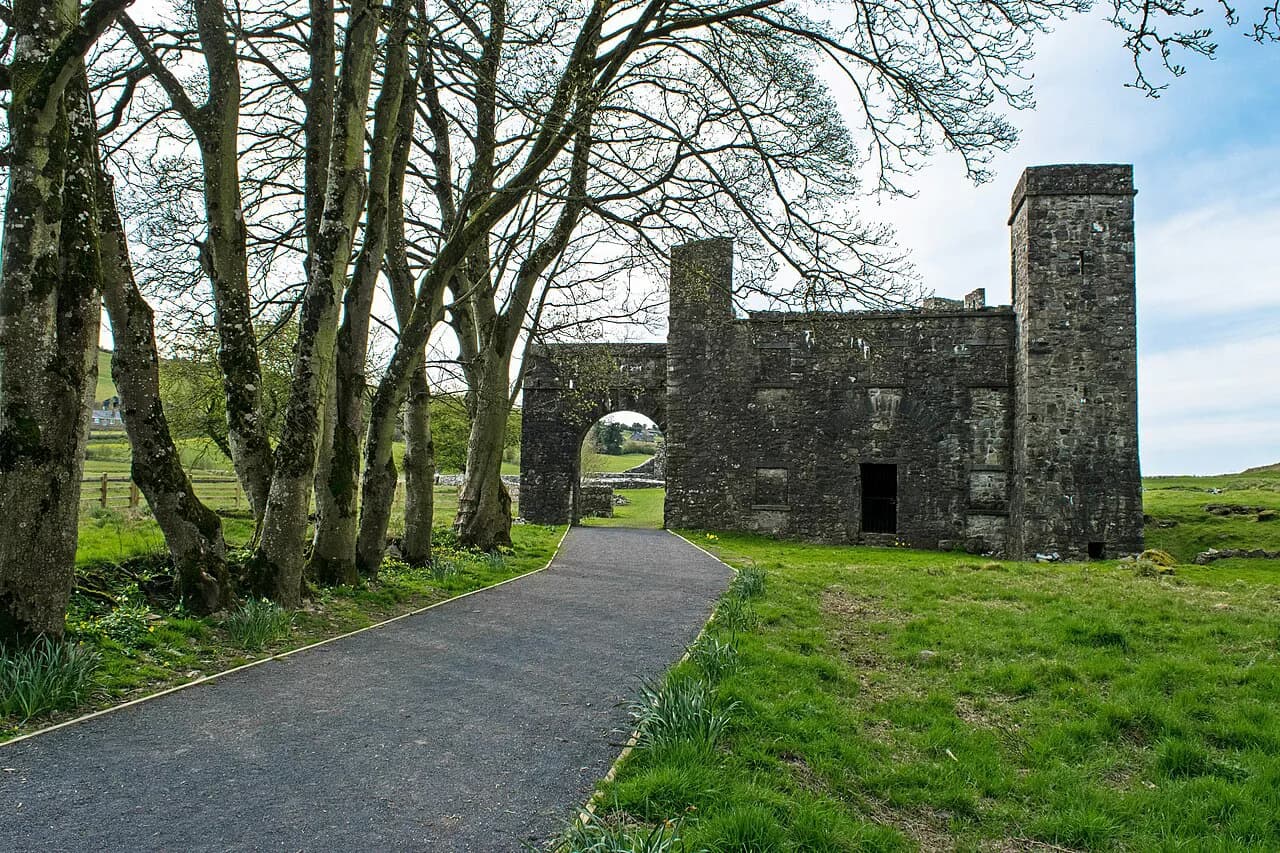
Fore Abbey is a monastic site in the village of Fore, County Westmeath, where St Feichin founded a Christian monastery in the seventh century AD. The Office of Public Works manages it through Heritage Ireland, and the visitable elements are not all in one walled enclosure. A church built around AD 900 stands among the remains, while the 18 Fore crosses lie spread out over 10 kilometres on roadways and in fields, which means a proper visit involves walking rather than a single stop.
Three things shape a visit: the standing monastic remains, the dispersed crosses, and the legendary features known as the Seven Wonders of Fore. The cross count and their 10-kilometre spread come from the state heritage page, so treat cross-hunting as a landscape walk rather than a museum circuit. Expect uneven ground and changeable weather; the operator advises weather-protective clothing and walking shoes.
Where Fore Is and How It Fits a Route
Fore sits in a quiet, green valley in north Westmeath, about a 30-minute drive from Mullingar, according to Heritage Ireland. The regional tourism body Visit Westmeath puts the village 4 kilometres from Castlepollard, which makes the town a sensible orientation point if you are approaching from that side. Both distances describe the same rural setting rather than a town-centre attraction. If your route also takes in the west of the country, the castles in county galway are plotted the same way, by drive times between scattered sites, just as the tombs and forts in this guide to ancient sites ireland are spread across the map.
Because Fore is a small village rather than a visitor complex, build the day around the site itself and the surrounding lanes. Opening times, admission arrangements and any current notices are published on the operator's own Fore Abbey page; check those before setting out, since they are the details most likely to change your schedule. If your wider trip is a circuit of Irish monastic ruins, you can compare Fore with others gathered in this guide to monasteries in Ireland before fixing your route.
St Feichin's Seventh-Century Foundation
Heritage Ireland identifies St Feichin as the founder of the Christian monastery at Fore in the seventh century AD. The same page records a tradition that 300 monks lived in the community before Feichin's death. That figure belongs to tradition rather than to documented accounting, so read it as an indication of how significant the foundation was remembered to be, not as a headcount.
Visit Westmeath adds that the monastic site is said to have been set on fire 12 times, a striking claim that the tourism body presents as part of the site's story. Neither source sets out a sequence of those events, so the practical takeaway is simpler: Fore's importance rests on a long, disturbed history rather than a single intact building phase. For visitors, that helps explain why the remains read as fragments across a landscape rather than a complete abbey.
What Survives on Site
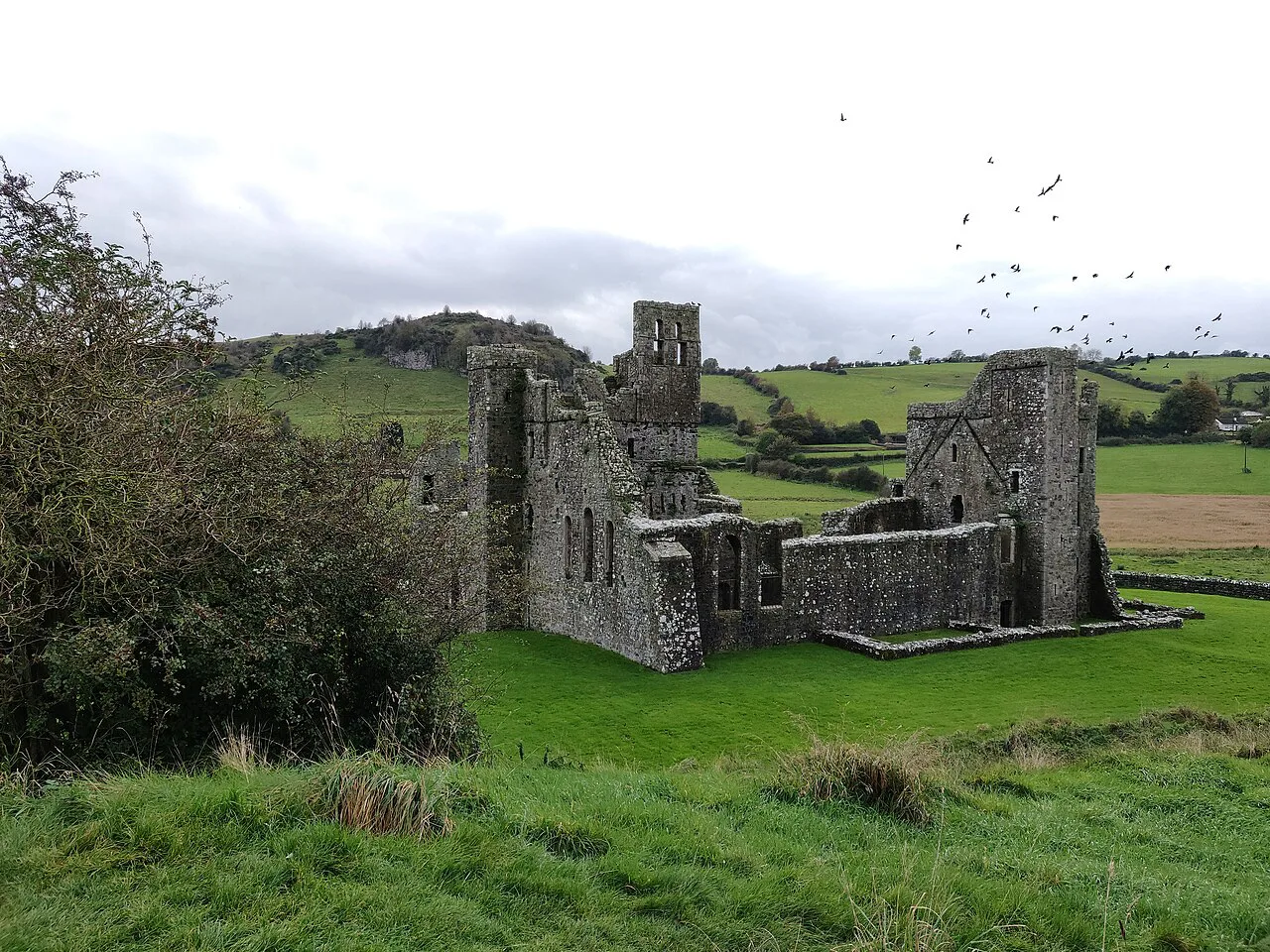
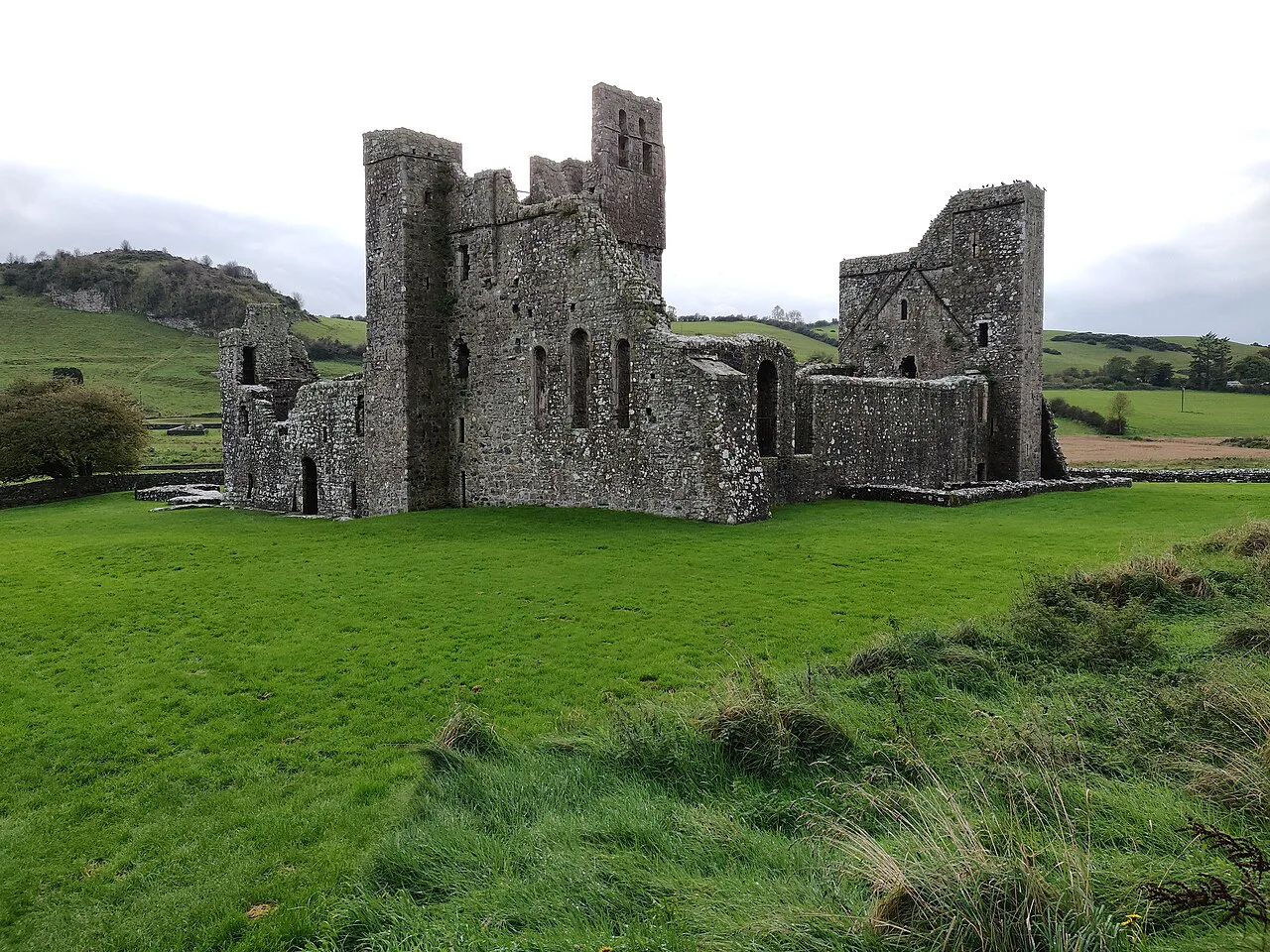
Among the standing remains, Heritage Ireland singles out a church built around AD 900. That date places the surviving masonry several centuries after Feichin's foundation, which is worth keeping in mind as you walk: you are looking at a later medieval layer of a much older monastic story. The operator's page is the authority for what is currently visible, and it is the place to confirm any notice about access to individual structures.
Beyond that, the sources describe a spread of remains rather than a single set-piece ruin. Visit Westmeath refers to St Fechin's church remains in the same period, using an alternative spelling of the saint's name. Allow time to walk the graveyard and surrounding earthworks slowly; the interest is cumulative, not concentrated in one photogenic wall.
The Eighteen Fore Crosses
Heritage Ireland records 18 Fore crosses, spread over 10 kilometres on roadways and in fields. That single fact should reset your expectations: this is not a cluster of crosses inside one enclosure but a dispersed group embedded in the surrounding countryside. Plan on a half-day if you want to make a serious attempt at several of them, and accept that many sit on roadsides or in farmland where you view from a safe, lawful position rather than up close.
The regional tourism page frames finding the crosses as a search through the region, which reinforces the point that they belong to the wider landscape around the village. If you have only an hour, concentrate on the monastic remains and pick off whatever crosses are close at hand rather than trying to complete the set. Walkers who enjoy old stonework will find the dispersed approach rewarding; those wanting a compact monument should adjust their plan.
The Seven Wonders of Fore: Legend in the Landscape
Seven features at Fore have acquired legendary status. Heritage Ireland lists a monastery built on a bog, a mill without a race, and a lintel stone said to have been raised by St Feichin's prayers. These are traditions attached to the site, not verified engineering facts, and they should be treated as such when you read them on an information panel or hear them told.
Visit Westmeath gives the fuller set, naming a monastery in the bog, the mill without a race, water that flows uphill, a tree with three branches that will not burn, water that will not boil, an anchorite in a stone, and the lintel raised by St Fechin's prayers. Lists of this kind vary in wording between tellings, so treat the tourism page's version as one account of the legend rather than a fixed inventory. The pleasure lies in matching each story to a feature you can actually see.
The legends are rooted in the valley itself, with its bog, watercourses, trees and stone. That is why the stories make more sense on foot than in a summary, and why a short stop at the church alone will leave the site feeling thin. If you have enjoyed how legend and land are braided together here, the Rock of Cashel in County Tipperary offers a contrasting landmark with its own accretion of story and stone.
Walking St Feichin's Way
Heritage Ireland describes St Feichin's Way as a looped walk around the site and presents it as a good base for exploring its fabled places. Because the crosses are spread over 10 kilometres, the loop is the practical way to link the dispersed elements instead of driving between fragments. Wear shoes suitable for uneven terrain and carry rain protection, as the operator advises.
Visit Westmeath describes the route as a 3-kilometre looped walk that also takes in a fairy trail through a woodland section. That length makes it manageable for most reasonably fit visitors, though the ground and weather still set the pace. Families with young children often find a woodland stretch breaks up a heritage walk well; the tourism page is the source for that detail, so confirm the route as signed on the day.
The same tourism page mentions a Fore audio guide produced by Abarta Heritage as part of a recent interpretation project supported by Westmeath County Council and the Heritage Council. Do not assume onsite audio equipment or a staffed desk; listen to or download any guide in advance and treat the operator's page as the authority on what is actually available when you arrive.
Pairing Fore with Loughcrew Megalithic Cemetery
Loughcrew Megalithic Cemetery, near Oldcastle in County Meath, is a separate monument and not part of Fore. Heritage Ireland dates its passage tombs to 3000 BC and notes that they are spread over four undulating peaks; Cairn T contains a cruciform chamber, a corbelled roof and some of Ireland's finest Neolithic art. Visit it as a distinct prehistoric counterpart to Fore's Christian remains, not as an extension of the abbey. If you want more prehistoric context for the region, pair it with the ancient sites ireland guide.
Two current restrictions matter before you add it to a Fore day. Heritage Ireland states that the climb to Cairn T is very steep, with no wheelchair access and a narrow approach road, and that conservation works currently prevent access to the interior of Cairn T while the other monuments on the hill remain open. The operator also notes that guide presence had ceased for the 2026 season, while the site itself is listed as accessible all year.
If you are assembling a wider itinerary of ruins, both Fore and Loughcrew repay unhurried time rather than a tick-list approach. Readers building a longer heritage route may find useful parallels in this collection of ancient sites in Ireland, where earthworks and stone monuments are treated as places to walk rather than backdrops.
Before You Go: Terrain, Weather and Confirmation
Fore's features sit on uneven ground, and the operator's page explicitly advises weather-protective clothing and shoes suited to walking over rough terrain. That applies to the graveyard and church remains as much as to the longer loop, so boots or sturdy shoes are a better choice than city footwear. The site is an outdoor, rural one; the available sources list no visitor centre, café or toilet provision, so plan accordingly.
Confirm opening arrangements, admission and any current notice directly with Heritage Ireland before travelling, because those are the details that shift with conservation work and season. This is the second of the two checks worth making in advance, alongside your route distance; everything else about Fore is landscape you can reasonably anticipate. Visitors who want a monastic ruin set within a more formally defined complex may prefer a stop of that kind elsewhere on their route.
Plan Your Visit
Fore Abbey rewards visitors who treat it as a landscape to walk through rather than a single monument to photograph. The seventh-century foundation, the church of around AD 900, the 18 crosses scattered across 10 kilometres and the legends of the Seven Wonders all sit within a quiet Westmeath valley best covered on the St Feichin's Way loop. Build in a half-day, dress for mud and rain, and confirm the operator's current arrangements before you set off.
For more heritage reading, see our guides to Skellig Michael, Kells Priory, and Corcomroe Abbey. For another heritage guide, read about Cong Abbey.
For more heritage reading, see our guides to Clare Abbey, Ennis Friary, and Glendalough. For another heritage guide, read about Clonmacnoise.
Explore more Ireland guides
Frequently Asked Questions
What is there to see at Fore Abbey today?
You can walk among the monastic remains, including a church built around AD 900, and follow the landscape to look for the 18 Fore crosses spread across roadways and fields. The Seven Wonders of Fore are legendary features associated with the site rather than verified structures, and they are best appreciated on foot as you match story to terrain.
How long does it take to visit Fore Abbey and the Fore crosses?
Allow half a day if you want to combine the standing remains with a genuine attempt at the dispersed crosses, which are spread over 10 kilometres. A short stop of under an hour suits travellers who only want the church and immediate surroundings. The 3-kilometre St Feichin's Way loop, as described by Visit Westmeath, is the practical way to link the features.
Are the Seven Wonders of Fore real historical features?
They are legendary traditions attached to the landscape, not verified physical facts. Heritage Ireland and Visit Westmeath list features such as a monastery built on a bog, a mill without a race and water that flows uphill, presenting them as lore associated with the site. Read them as stories told about real places rather than as documented engineering.
Do I need to walk to see the Fore crosses?
Walking is the practical approach. With 18 crosses spread over 10 kilometres on roadways and in fields, driving between individual stones is inefficient and many locations are best viewed from a safe, lawful position. Sturdy shoes are advisable because the ground is uneven, and the operator recommends weather-protective clothing.
Is Fore Abbey suitable for people with limited mobility?
The sources describe uneven terrain and a looped walk rather than surfaced paths, and the operator advises shoes suitable for walking over uneven ground. Visitors with limited mobility should plan on viewing the immediate remains from wherever they can stand safely and check current conditions with Heritage Ireland in advance. The available sources do not confirm adapted routes or facilities on site.
Can I combine Fore Abbey with Loughcrew Megalithic Cemetery?
Yes, but treat them as two separate monuments. Loughcrew, near Oldcastle in County Meath, is a Neolithic cemetery dated to 3000 BC with a steep climb to Cairn T, no wheelchair access and a narrow approach road. Heritage Ireland notes that conservation work currently blocks access to Cairn T's interior while the rest of the hill remains visitable.
Sources
You might also like



Continue reading
More guides you'll find useful





