
Old Mellifont Abbey: Ireland's First Cistercian Monastery
Old Mellifont Abbey in County Louth was Ireland's first Cistercian monastery, founded in 1142. Learn what survives in the ruins and plan around its closed status.
On this page
Old Mellifont Abbey is Ireland's first Cistercian monastery, founded in 1142 by St Malachy of Armagh with monks sent by St Bernard from Clairvaux. Its surviving ruins preserve the history of a community that influenced later Cistercian foundations in Ireland.
The Heritage Ireland page displays a closed status alongside grounds-only admission information and visitor-centre opening details. Those notices do not establish what is accessible now. Confirm access directly with the operator before travelling; do not assume either the grounds or the visitor centre is open.
Where Mellifont Sits and Why Water Mattered
The abbey stands at Mellifont near Tullyallen in County Louth, and the Heritage Ireland highlights page places it beside the Mattock River. That is not scenery: Cistercian houses were deliberately sited near water, and the sound of the stream runs through any walk among the ruins.
Discover Ireland describes the site as about a ten-minute drive from Drogheda. That location can help you compare places in the Boyne Valley, but it does not establish current admission. Resolve the access question with the operator before adding Mellifont as a confirmed stop. If you are weighing up more early monuments in the region, our guide to ancient sites ireland covers tombs, forts and trackways that reward a similar slow visit.
Foundation and the First Cistercian Community
Mellifont began in 1142 when St Malachy of Armagh brought a small group of monks from Clairvaux, and Heritage Ireland notes that the monks did not take well to Ireland and soon returned to France. The abbey was completed regardless and consecrated with ceremony, so the foundation survived its founders' discomfort.
The Boyne Valley regional page records the consecration in 1157 and adds that by 1170 the community numbered one hundred monks and three hundred lay brothers. It also credits Mellifont as the model for later Cistercian foundations in Ireland, which explains why a Louth valley mattered far beyond its own walls.
The Lavabo: Mellifont's Signature Survival
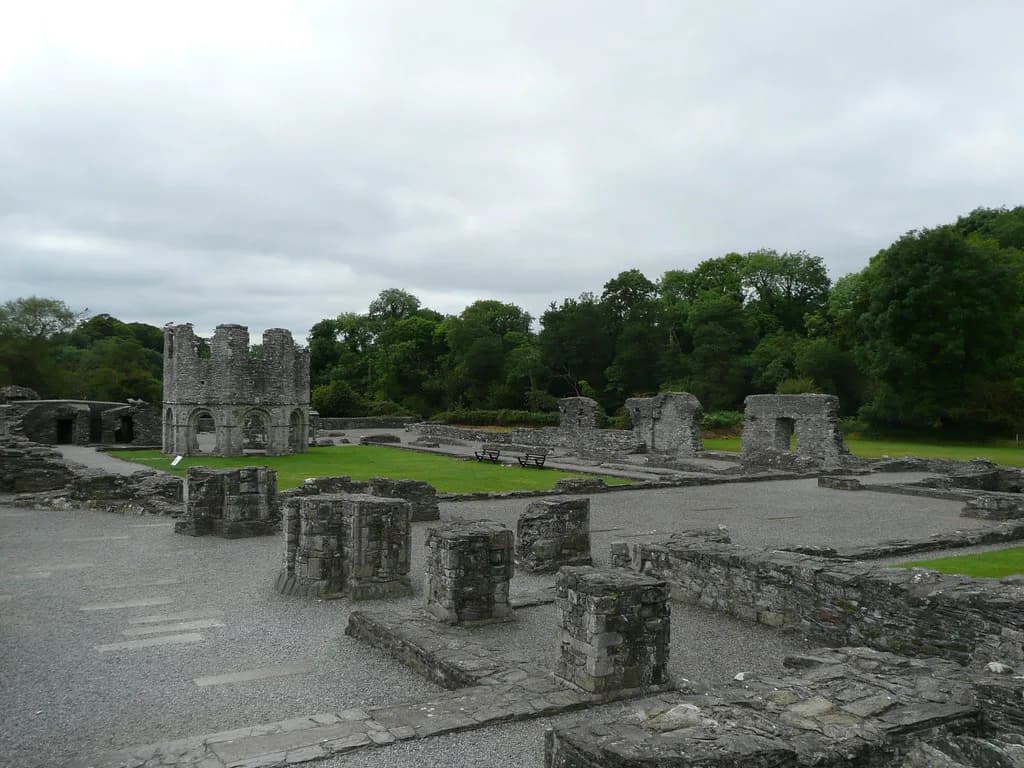
The two-storey octagonal lavabo is the feature to seek out, described by Heritage Ireland as a masterpiece of late Romanesque architecture and the only lavabo built in Ireland. It served as a medieval washroom whose fountain was used for physical and spiritual cleansing, and the highlights page links the name Mellifont, or honey fountain, to that fountain.
Its date is given as circa 1200 by Discover Ireland and circa 1210 by Drogheda's visitor listing, so treat it as a very early thirteenth-century structure rather than pinning it to one year. Standing beside it, note the octagonal plan and two storeys, the details that make it the most legible survivor on site.
Reading the Other Remains
Beyond the lavabo, the chapter house, the gateway and fragmentary church walls are the elements to look for, and Drogheda's listing notes that the other parts of the abbey are gone, with low walls letting you trace the plan. The Boyne Valley page likewise singles out the chapter house, the lavabo and the gateway as the most significant remains.
Heritage Ireland's highlights point to thirteenth-century floor tiles in the chapter house and the calefactory, one of the few rooms where a fire was lit so elderly and sick monks could keep warm. These features explain how the community used its buildings; their description is not a promise of current access.
From Medieval Abbey to Fortified House
Mellifont hosted a critical synod in 1152, according to Heritage Ireland, and remained central to later events even after passing into private hands. The Treaty of Mellifont ending the Nine Years War was signed here in 1603, and William of Orange used the abbey as his headquarters during the Battle of the Boyne.
The Boyne Valley regional page states that the abbey was closed in 1539 and converted into a fortified house, which helps explain why the ruins read as something other than a pure monastic shell. It also notes that Devorgilla is buried beneath the chancel pavement, a detail the sources give without elaboration.
What the Visitor Centre Normally Adds
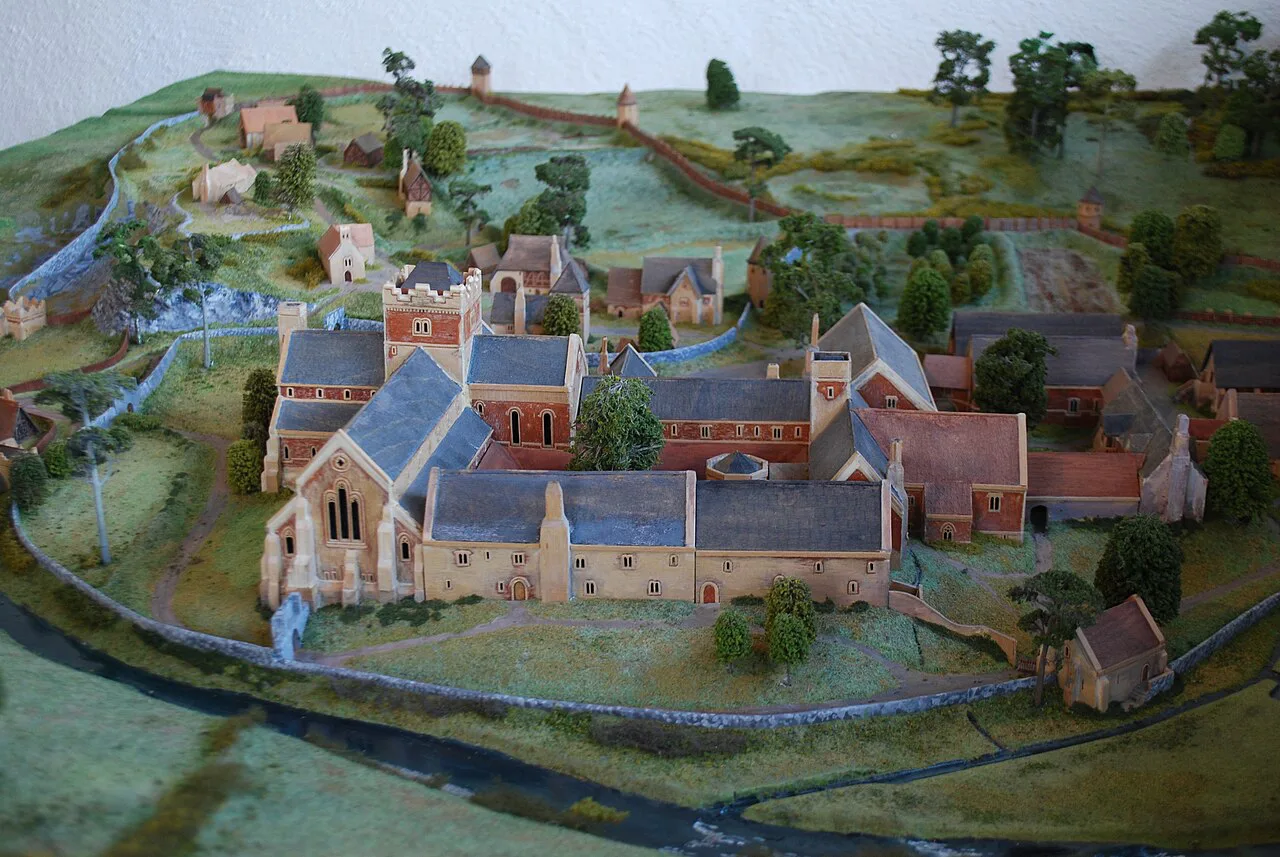
The visitor centre is where interpretation lives: an exhibition on medieval masons with carved stone recovered during excavation, masons' marks, carved heads and a 3D model of the monastery at its height. Discover Ireland and Drogheda both describe this masons' display, but these descriptions do not confirm whether the display is currently accessible.
Somewhere near Mellifont you may also want to compare the wider story of Irish religious houses. Our guide to Monasteries in Ireland sets Mellifont's Cistercian foundation alongside other foundations, which is useful context if the exhibition here is shut.
Access and Terrain Trade-offs
Approach details vary between sources and matter for planning. Drogheda's listing describes access to the ruins by a fourteen-step stone stairway with a single handrail and gravel paths over uneven ground, while Discover Ireland advises shoes suitable for uneven terrain. Heritage Ireland's notice states the site is fully accessible for visitors with disabilities and offers a social guide PDF to prepare — a claim at odds with the stairway and gravel descriptions, so weigh both before relying on step-free access. If such access questions shape your itinerary, the same need to check the operator's current position applies to castles in county galway.
Because these statements are not identical, anyone with mobility concerns should read the social guide and confirm access with the operator before setting out. Sturdy footwear is the practical step that recurs across the descriptions, given the gravel and uneven ground.
Building a Boyne Valley Heritage Day
Heritage Ireland lists the Battle of the Boyne visitor centre about 3.8 km away and Brú na Bóinne about 5.6 km away, but each runs on its own rules. At Brú na Bóinne, all access to Newgrange and Knowth is by guided tour from the visitor centre, tickets are limited, and pre-booking is essential; tickets bought from resale platforms are refused. If you are planning a broader sweep of the region's older monuments alongside these sites, our guide to ancient sites ireland covers tombs, forts and trackways worth a detour.
The Battle of the Boyne site currently routes its visitor experience through the Stable yard while Oldbridge House stays closed, so check that page separately before combining stops. Heritage Ireland lists both as separate nearby sites rather than parts of a Mellifont visit; the distances simply make a linked day practical if each is open on its own terms.
Anyone tracing Ireland's monastic map further afield will find older ecclesiastical landscapes elsewhere, such as the rock of cashel in County Tipperary, where a compact cluster of buildings rewards the same slow reading of stone.
Before You Set Out
The lavabo, chapter house and gateway help explain Old Mellifont Abbey's history. Before making travel plans, check the operator's status page and ask which parts, if any, are open. The conflicting online notices are not sufficient grounds for promising a visit to either the ruins or the exhibition.
If Mellifont's closure leaves time in the Boyne Valley, Brú na Bóinne and the Battle of the Boyne grounds are separately managed sites with their own booking requirements, not extensions of the abbey site. Confirm each separately rather than assuming one ticket or timetable covers them. For related reading, see our wider guide to Monasteries in Ireland.
For separate reading on Irish monastic sites, explore our guides to Glendalough, Clonmacnoise and Corcomroe Abbey. These guides provide context for other places; they do not resolve access at Mellifont.
Explore more Ireland guides
Frequently Asked Questions
Can you visit Old Mellifont Abbey right now?
Current access is uncertain from the published notices. Heritage Ireland displays a closed status alongside grounds-only admission information and visitor-centre opening details. Confirm directly with the operator before travelling; do not assume that the grounds or visitor centre is open.
What is the lavabo at Mellifont Abbey?
It is a two-storey octagonal washhouse, regarded as a masterpiece of late Romanesque architecture and the only lavabo built in Ireland. Its fountain served both physical and spiritual cleansing, and Heritage Ireland links the name Mellifont, meaning honey fountain, to it. Sources date it to the very early thirteenth century, around 1200 to 1210.
Why was Mellifont Abbey founded?
St Malachy of Armagh established it in 1142 with monks sent by St Bernard from Clairvaux, making it Ireland's first Cistercian monastery. The initial monks struggled to settle and returned to France, but the abbey was completed and later consecrated, with the Boyne Valley regional page recording that consecration in 1157.
What survives of Mellifont Abbey today?
The lavabo is the standout survival, alongside the chapter house with its thirteenth-century floor tiles, the calefactory, the gateway and fragmentary church walls that let you trace the layout. Much of the rest has gone, so a visit is about reading the plan and the carved detail rather than touring intact buildings.
Is Old Mellifont Abbey accessible for visitors with disabilities?
Heritage Ireland states the site is fully accessible for visitors with disabilities and offers a social guide to help people prepare. Other listings describe a stone stairway of about fourteen steps to the ruins and gravel paths over uneven ground, so check the guide and confirm access arrangements with the operator if mobility is a concern.
What else can you see near Mellifont Abbey in the Boyne Valley?
Brú na Bóinne, with Newgrange and Knowth, lies roughly 5.6 km away, and the Battle of the Boyne visitor centre about 3.8 km away, but both are separate sites. Access to Newgrange and Knowth is by guided tour from the visitor centre and pre-booking is essential, while the Battle of the Boyne experience currently runs through the Stable yard.
Sources
- Old Mellifont Cistercian Abbey Monastic Site | Heritage Ireland
- Old Mellifont Cistercian Abbey Monastic Site | Heritage Ireland
- Visit Old Mellifont Abbey with Discover Ireland
- Old Mellifont Abbey | Discover Boyne Valley Meath, Ireland
- Old Mellifont Abbey | Drogheda.ie
- Old Mellifont Cistercian Abbey Monastic Site | Heritage Ireland
- Brú na Bóinne Visitor Centre: Newgrange, Knowth and Dowth | Heritage Ireland
- Battle of the Boyne Visitor Centre – Oldbridge Estate | Heritage Ireland
You might also like



Continue reading
More guides you'll find useful




