
Battle of the Boyne Visitor Centre: An Honest Visitor Guide
The Battle of the Boyne Visitor Centre at Oldbridge uses the stable yard while Oldbridge House is closed. Plan for the exhibition, free grounds and walkways.
On this page
The Battle of the Boyne Visitor Centre is part of Oldbridge Estate in County Meath, on the ground where the armies of William III and James II met on 1 July 1690 (Old Style). The key thing to know before arriving is that the visitor experience is currently accessed through the stable yard, because Oldbridge House remains closed. Plan for an exhibition that interprets the battle and the landscape rather than a preserved Georgian interior.
Where the Visitor Centre Is and What It Is
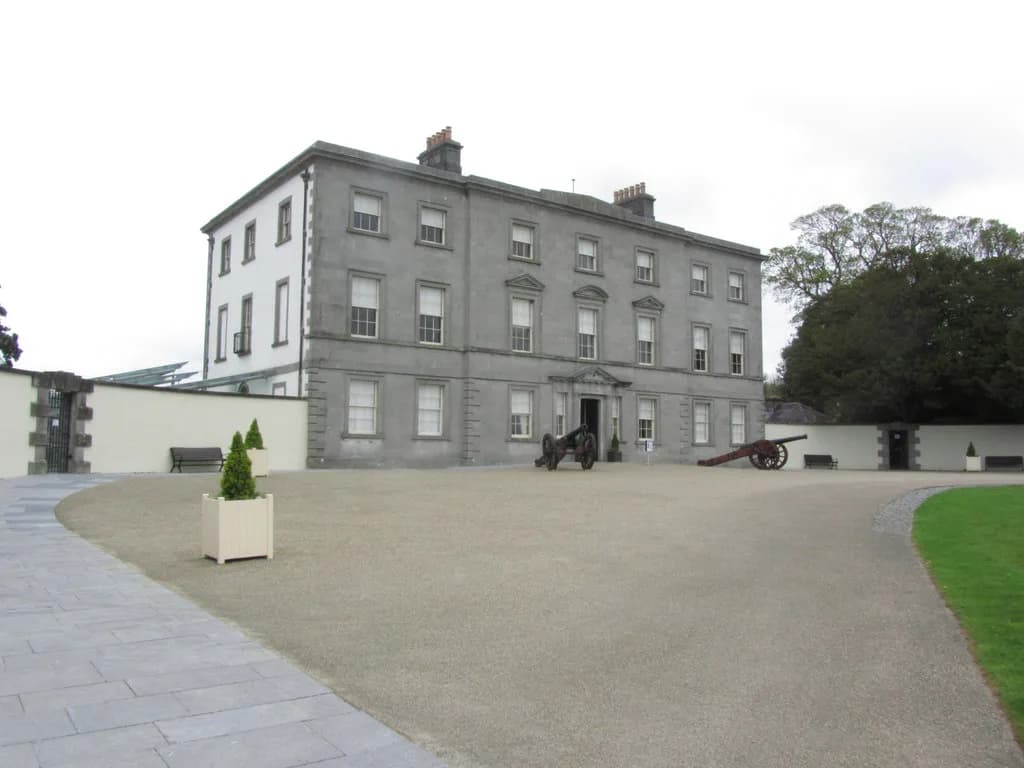
The centre stands at Oldbridge, County Meath, within the estate that contains the battleground itself. The operator, Heritage Ireland, describes the site as centred on a recently restored eighteenth-century house, with the visitor experience now in the adjoining stable yard. The exhibition contains original weapons and a laser model of the battlefield. Arriving with that mental map matters: the exhibition is one part of an estate that also includes parkland, a walled garden and walkways.
Because the site is the battlefield rather than a detached museum, the outdoor ground is not scenery around the attraction; it is the subject. An independent travel page also places the centre at the restored eighteenth-century Oldbridge House on the battlesite and repeats the description of original weapons and a laser battlefield model. It reflects the older framing of the centre inside the house, so treat the operator's current stable-yard access notice as the reliable account.
The Battle in Brief: 1 July 1690
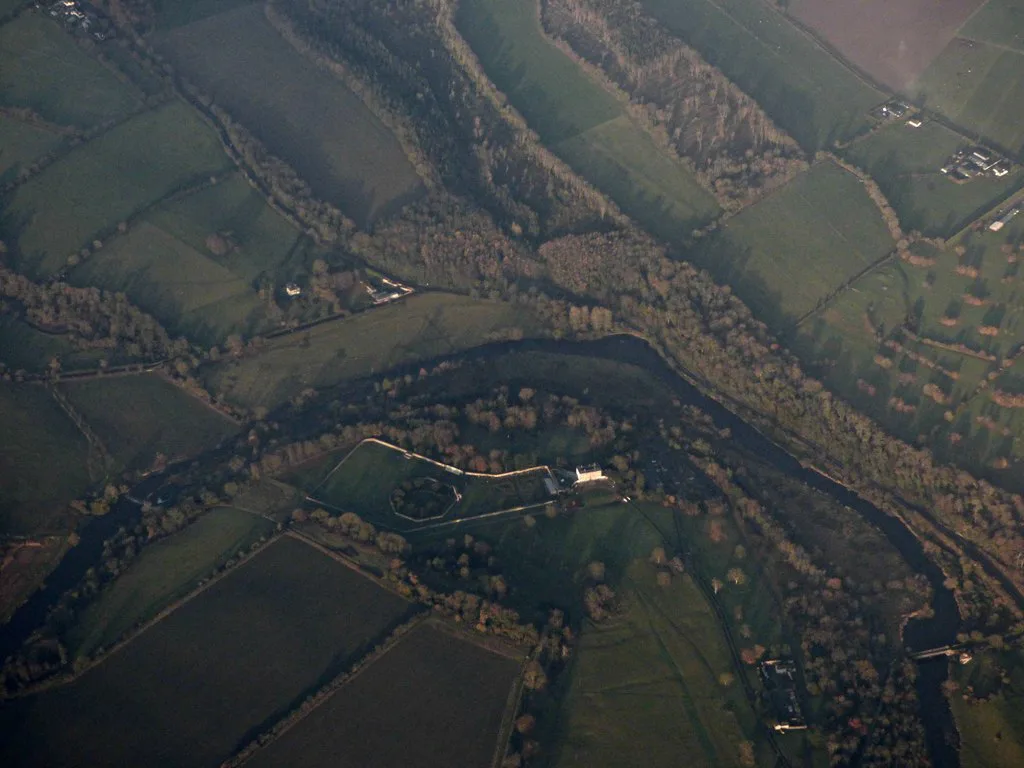
On 1 July 1690 (Old Style), King William III faced his father-in-law King James II at the River Boyne near Oldbridge, and both kings commanded their armies in person. The operator gives 36,000 men on the Williamite side and 25,000 on the Jacobite side, describing it as the largest number of troops ever deployed on an Irish battlefield. William was victorious, and the operator frames the stakes as the British throne, French dominance in Europe and religious power in Ireland.
Treat those figures as the operator's figures, not a starting point for calculating casualties or reconstructing troop movements; the official page does not supply that detail. What the outline gives you is a frame for reading the ground outside: a very large deployment across a river landscape, with a result that the operator says reached well beyond Ireland. The exhibition's laser model of the battlefield is the natural place to connect that narrative to the terrain.
The Building Story: Oldbridge House and the Stable Yard
Oldbridge House is an eighteenth-century house at the heart of the estate, and the operator describes it as recently restored. It is also currently closed, and the Battle of the Boyne experience is in the adjoining stable yard rather than in the house. Do not plan on seeing domestic Georgian rooms here; the visit is built around the exhibition and the estate grounds. For a wider context on the country-house tradition this estate belongs to, see this guide to georgian houses ireland.
That split between a closed house and an active stable-yard exhibition is the key expectation-setter. It also means the building story is best understood from outside and from the interpretation, not from a room-by-room interior visit. Anyone comparing house visits elsewhere should note that Oldbridge is currently an exhibition-and-landscape visit rather than a furnished-house tour. Those weighing standing ruins and fortified remains instead of a stable-yard exhibition will find the castles in county galway a useful point of comparison.
Inside the Exhibition: Weapons and a Laser Battlefield Model
The documented contents of the exhibition are specific: original weapons and a laser model of the battlefield. That is a deliberately narrow description, and it is worth planning around it. Come expecting orientation and context for the ground outside, not an encyclopaedic museum of the campaign or a preserved domestic interior. The model is the obvious first stop if you want to make sense of the walkways before setting out.
The operator lists an average visit length of about 45 minutes for the visitor centre, which suggests the exhibition is compact rather than a half-day indoor experience. Pair it with the self-guided walks rather than treating it as the whole visit. If you are building a house-and-garden itinerary, Bantry House offers a contrasting model of a historic house visit where the house itself is the centre of attention. For a different contrast again, the castles in county galway show how Irish sites pair standing architecture with the landscape around it.
Outdoors at Oldbridge: Walled Garden and Battleground Walkways
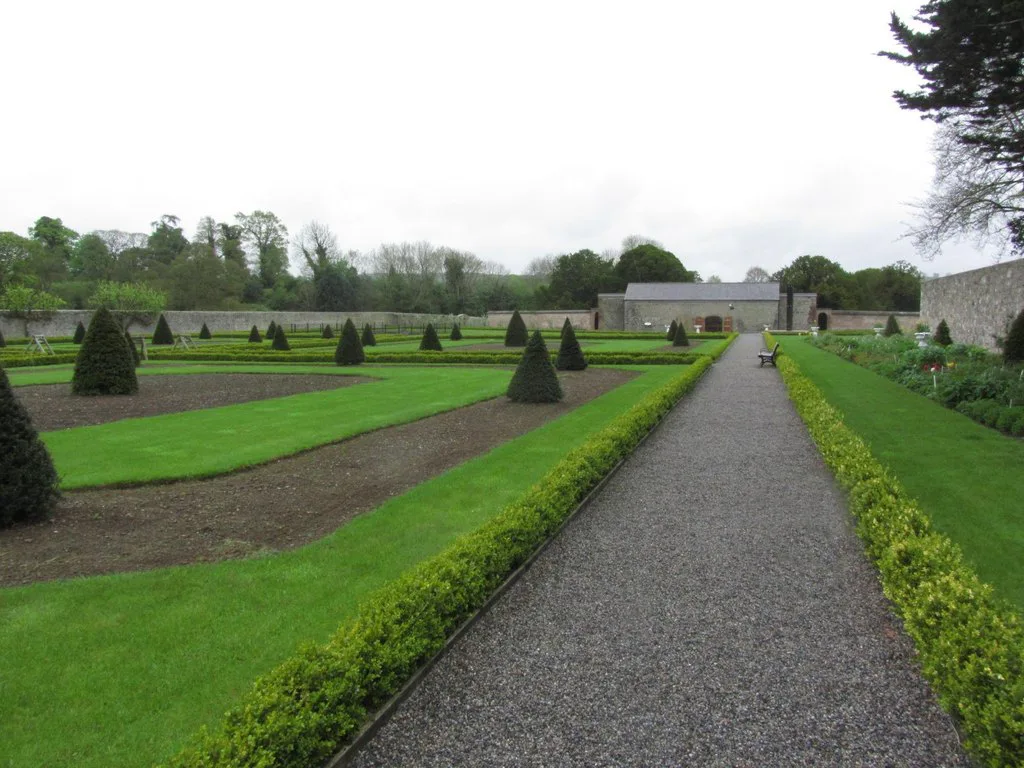
The operator states that admission to the grounds and walled garden, including the battlesite walkways, is free. Self-guided walks are given an average length of about one hour, separate from the roughly 45 minutes suggested for the centre. That makes the estate the flexible part of the day: you can walk the battleground without committing to the exhibition, and the walled garden gives the visit a second, quieter focus.
The grounds come with documented rules: dogs must be kept on leads, cycling on walkways is not allowed, and fires, camping and barbecues are prohibited. The parkland terrain is uneven, so suitable footwear is advised, and there is deep water in the canal and river nearby. Those are practical constraints rather than atmosphere, and they shape how you plan an hour on foot.
Time and Money: What the Operator States
The admission picture is in transition and should not be treated as a firm price. The operator page lists an adult admission figure of €5.00 but also describes free self-guided admission into the exhibition for a limited time only, alongside the free grounds and walled garden. Check the operator's current position before travelling rather than budgeting from either figure alone.
Three timing rules are worth noting. Groups of 10 or more need to book in advance, and last admission is one hour before closing. The roughly 45-minute centre figure and the one-hour walk figure are guidance, not guarantees. If you are fitting Oldbridge into a wider heritage itinerary, another contrast in approach is Derrynane House, where the visit revolves around a different kind of historic property.
Getting There and Current Road Arrangements
TFI Local Link Route 163, running between Athboy and Drogheda, is described by the operator as improving access to the Battle of the Boyne site as well as to Brú na Bóinne. If you plan to combine the two on public transport, allow extra time and check opening arrangements at ancient sites Ireland before you set out. For drivers, the operator notes that a section of Oldbridge Road is closed to vehicles for the Boyne Boardwalk Refurbishment Scheme but remains open to pedestrians. A dated notice also records a single-day restriction on vehicle access to the centre in April 2025 with pedestrian access retained; treat that as a dated event, not a permanent closure.
The practical consequence is that you should confirm current vehicle access before setting out, especially if you are relying on driving to the door. Walking access being retained is different from parking being guaranteed. If your trip is a broader one, this collection of ancient sites Ireland can help you place Oldbridge alongside other landscape-based heritage stops.
Access, Mobility and Weather Cautions
Visitors who need special assistance or have mobility issues are asked to contact the centre in advance on +353 41 980 9950. That advice applies to the estate as a whole, with its uneven parkland and nearby deep water. In winter the visitor centre may not open in adverse weather, and the operator advises phoning before starting your journey for up-to-date information.
These cautions are not reasons to skip the site; they are the terms on which it is currently open. The combination of a compact exhibition, free grounds and weather-dependent opening means a phone call and a flexible plan go further here than a fixed schedule. Comparable estate visits reward the same habit of confirming arrangements before setting out, and that holds equally for ancient sites Ireland where opening and access vary from site to site.
Putting the Visit Together
The strongest shape for a visit is exhibition first, then the ground: roughly 45 minutes in the stable-yard experience to see the weapons and the laser battlefield model, followed by about an hour on the free self-guided walks. Add the walled garden if time allows, and keep the house closure in mind so expectations match what is actually open.
Before travelling, confirm the current admission position, winter opening and vehicle access with the operator, and phone ahead if anyone in the group has mobility needs. If Oldbridge becomes one stop on a longer heritage tour, collections like Lissadell House or Rokeby Hall show how varied Irish historic-house visits can be.
Explore more Ireland guides
Frequently Asked Questions
Is Oldbridge House open to visitors?
The operator states that Oldbridge House remains closed and that the Battle of the Boyne experience is currently accessed through the adjoining stable yard. Plan on the exhibition and estate grounds rather than a tour of the house interior.
What can you see inside the Battle of the Boyne Visitor Centre?
The documented exhibition contains original weapons and a laser model of the battlefield. It is best treated as orientation for the battleground outside rather than a preserved domestic interior or a comprehensive museum of the campaign.
Do you have to pay to visit the battlefield and walled garden?
The operator describes admission to the grounds and walled garden, including the battlesite walkways, as free. The exhibition has a separate admission position, which has included a limited-time free self-guided entry; confirm the current arrangement before travelling.
How long should you allow at the Battle of the Boyne site?
The operator gives about 45 minutes as an average for the visitor centre and about one hour for the self-guided walks. Those are guidance figures rather than guarantees, and combining both makes a comfortable half-day.
Can you reach the visitor centre by bus?
TFI Local Link Route 163, between Athboy and Drogheda, is described by the operator as improving access to the Battle of the Boyne site. Check current timetables with the transport operator, as schedules are outside the centre's control.
Is the site suitable for visitors with mobility difficulties?
The operator asks visitors who need special assistance or have mobility issues to contact the centre in advance on +353 41 980 9950. The parkland terrain is uneven and there is deep water in the canal and river nearby, so advance contact is the sensible step.
Sources
You might also like



Continue reading
More guides you'll find useful





