
Collon House, County Louth: Georgian House and Garden Guide
Collon House in County Louth is a 1740 Georgian house with restored period gardens. Visits are guided house-and-garden tours arranged by appointment for groups.
On this page
Collon House is an early Georgian house standing at the central crossroads of Collon village in County Louth, with restored period gardens behind it. The single most important planning fact is that it is not a walk-in day attraction: the operator arranges guided house-and-garden tours by appointment for groups of between 6 and 55 people. That format suits a garden society, heritage group or family gathering far better than a solo traveler passing through.
The house was built in 1740 for Anthony Foster, Lord Chief Baron of the Exchequer, and was later home to his son John "Speaker" Foster, the last Speaker of the Irish House of Commons. Its interiors retain Georgian furniture, glass, porcelain and pictures, while the gardens have been restored with period planting. This guide covers the access terms first, then the building, the family history, the rooms and the garden sequence, so you can judge whether the group format works for you.
Access and arranging a group visit
Guided tours of the house and garden are available by appointment only, with a minimum group size of 6 people and a maximum of 55, according to the operator. There is no evidence of regular opening hours, a ticket desk or an online booking route, so the practical step is to telephone ahead and agree a date for your group. Contact Collon House at Ardee Street, Collon, County Louth, on +353 87 235 5645 to discuss arrangements and confirm current terms before you plan around it.
The operator lists a house-and-garden tour with tea, coffee and cake at €20 per person. That figure is the stated charge for the guided group tour with refreshments, not a general admission price, and no child, family or senior rates are published. For larger parties, lunch and a more formal five-course evening dinner are described as available on request, so treat them as arrangements to be discussed rather than inclusions.
Because the minimum is six people, a couple or solo traveler cannot simply book a standard tour slot; the workable approach is to join an existing group, such as a gardening club or historical society outing, or to assemble enough friends and family to meet the threshold. The tour covers both the house and the garden, so allow time for the interiors as well as the planting. Anyone with mobility concerns should raise them by phone, as no accessibility provision is published.
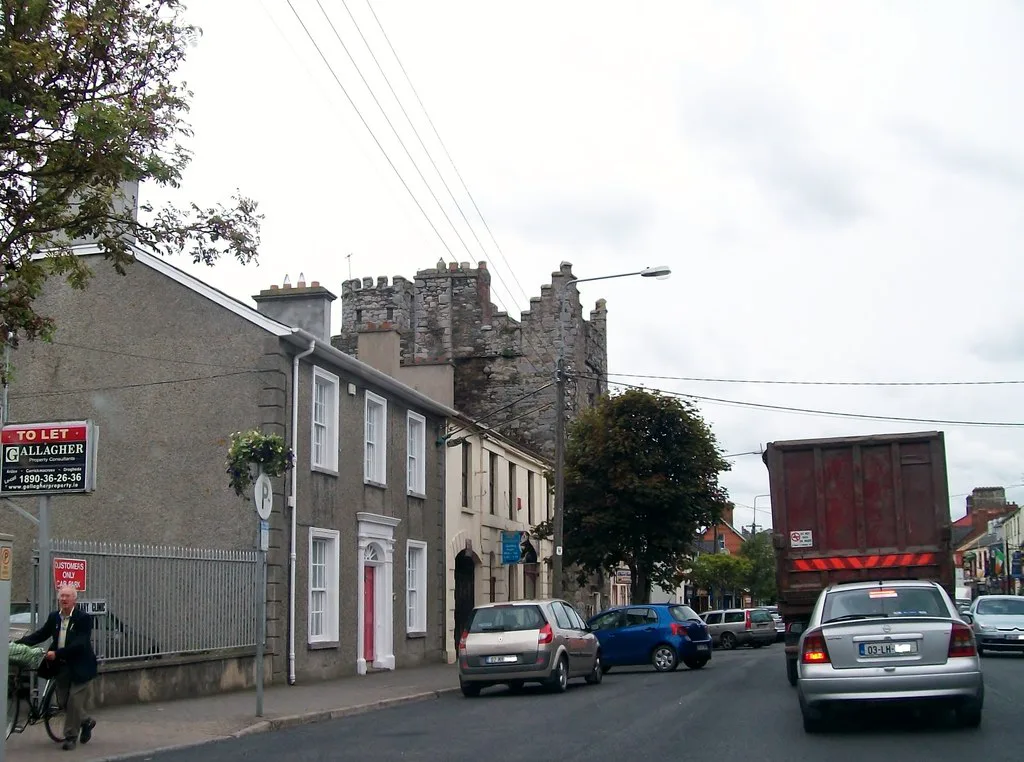
Arriving at the gateway in Collon village
Collon House sits on Ardee Street in the centre of Collon, a market town on the road from Dublin to Derry, set back from the street at the central crossroads. Because the house stands in the village rather than in isolated parkland, arrival is straightforward and the visit begins at the gateway rather than at the end of a long avenue. The operator notes ample on-street parking for cars and buses on the main road immediately at the house gateway, which matters for a group arriving by coach.
The village-centre setting shapes the visit in a useful way: you are looking at a townhouse that grew within a settlement, not a remote estate demesne. The plain exterior fronting the street gives little away, which makes the decorated interiors a deliberate contrast rather than an incidental surprise. Groups should confirm the meeting point and timing by phone when arranging the appointment, since no visitor reception details are published.
The 1740 house and its 1770s extension
Anthony Foster purchased the Collon estate in 1740 and chose to build in the centre of the village, and the house is described as an early Georgian building in the Irish long-house style. The original dwelling is long and low, fronting the street at the crossroads. In the 1770s the house was extended to form a substantial L-shaped dwelling, with the later wing taller and more generous in scale than the first building.
The 1770s addition brought more elaborate interiors and a handsome half-turn stair giving access to the upper floors, features that repay attention during a guided tour. Reading the facade with this sequence in mind helps you distinguish the low original range from the taller later wing as you approach. The sources give no further construction or restoration dates, architects or costs, so the guide should not be pressed for details beyond that outline.
The Foster family and the Speaker's career
John Foster, Anthony's son, was elected member for Louth in 1768 at the age of twenty-one and was briefly Chancellor of the Irish Exchequer before becoming Speaker of the Irish Commons, holding office from 1785 until the Parliament was dissolved under the Act of Union in 1800. He opposed that measure strenuously, and as Speaker pronounced the final words at the closing session, retaining the official mace "for future contingencies". He was later returned to Westminster and received a UK peerage in 1821, becoming Baron Oriel of Ferrard in County Louth until his death in 1828.
That political career explains much about the house's ambition: the family's standing in County Louth and at the Irish Parliament translated into the larger, more elaborately finished wing of the 1770s. Treat the family story as context for the rooms rather than as a standalone biography, and ask your guide to point out where the later work is visible. The mace anecdote is the kind of detail that gives a group tour its narrative thread, and a Dublin heritage guide helps place the Fosters' parliamentary world in the wider city context.
Arthur Young, the estate and the Oriel Temple folly
The agronomist Arthur Young, in A Tour of Ireland published in 1780, remarked that Foster's improvements on the Collon estate "were of a magnitude that I have never heard of before." Those improvements included Oriel Temple, an elaborate classical lakeside folly subsequently enlarged to become the principal family seat. The folly belongs to the family's wider estate history rather than to the house tour itself, so it should be understood as background to the Fosters' ambitions.
Later, Foster's son Thomas married the heiress Harriet Skeffington, and the family moved to Antrim Castle when she succeeded as Viscountess Massereene. That move helps explain why Collon House passed through subsequent alteration rather than remaining a single family's principal seat. For visitors, the point is that the house you tour is a layered building shaped by several generations, not a preserved snapshot of one moment.
Inside the house: Georgian rooms and collections
Collon House has been altered over the centuries but retains many fine Georgian interiors, now enhanced by sympathetic restoration, with furniture, glass, porcelain, pictures and objects on display. The richness of the decoration inside makes a striking contrast with the plain exterior facing the village street. On a guided tour, look for how the later 1770s wing carries the more elaborate plasterwork and room proportions.
The operator describes the rooms as furnished with period antiques and paintings that evoke early Georgian living. That framing is useful for setting expectations: this is a lived-in historic house with a collection assembled and displayed in period style, rather than a museum with interpretive panels in every room. Groups with a special interest in furniture or ceramics should mention it when booking so the guide can weight the tour accordingly.
The gardens: a sequence from parterre to summer house
The gardens at Collon House are surrounded by mature trees and shrubs, with a ten-foot-high laurel hedge giving privacy and a backdrop. The main entrance doorway overlooks a sunken box parterre with topiary laid out in an intricate 18th-century design, so the garden reads as a sequence beginning at the house door. Beyond it, the ornamental garden has box-edged herbaceous borders with white phlox, delphiniums and agapanthus in summer, followed by penstemons, dahlias, asters and rudbeckia later in the season.
A Greek-style summer house at the end of the garden serves as a restful viewpoint back over the borders, old roses, wisteria and clematis, while the enclosed centre courtyard holds a collection of hostas away from the hot sun and pots of hydrangeas in the shade of the tall gabled house. Planning a visit around the summer border gives the most colour, but the later herbaceous planting extends interest into autumn. Ask about the best season for the garden when you arrange the group appointment.
Garden affiliations and the group fit
The operator states that Collon House garden is a member of the Boyne Valley Garden Trail and a partner garden of the Royal Horticultural Society of Ireland. These are affiliations rather than awards, and they are worth knowing if your group follows Irish garden trails or RHSI-linked gardens. Garden societies will find the restored period planting and the parterre-to-summer-house sequence the strongest reason to organize a visit.
The appointment-based format means Collon House rewards groups that plan ahead and suits heritage societies, garden clubs and family gatherings of at least six. A solo traveler or couple should look instead at other historic houses with regular public access, such as Rokeby Hall in County Louth, while a visit to Bantry House shows how a larger demesne near Bantry Bay in County Cork structures an independent day out. Match the format to your party before you set a date.
Comparing a handful of Irish Georgian houses before you commit makes the trade-off clearer: some offer scheduled public opening, others only pre-booked group arrangements. A shortlist built from a wider survey of Georgian houses in Ireland will tell you quickly whether Collon's minimum group size is a barrier or an incentive. For organizers, the larger group is not a drawback, since a full coach makes the appointment worthwhile.
Why Collon: the operator's location context
The operator places Collon House within reach of Boyne Valley heritage, describing it as less than an hour from Dublin city centre, thirty minutes from Dublin Airport and five miles from Slane, with Brú na Bóinne, the Battle of the Boyne Visitor Centre at Oldbridge Estate, Slane Castle, Old Mellifont Abbey and Monasterboice High Crosses all stated as less than twenty minutes' drive away. These are the operator's own location claims, not verified journey times, so use them as context rather than a schedule.
For a group already touring the Boyne Valley, Collon makes a logical stop because the village sits on the Dublin to Derry road and the house has coach parking at its gateway. Treat the nearby sites as separate visits with their own arrangements, and build in realistic driving time rather than relying on the operator's shorthand. A group organizer can combine a pre-booked Collon tour with a visit to one of the nearby monuments on the same day.
Plan Your Group Visit
Collon House is best understood as a pre-arranged group visit rather than a drop-in attraction: guided house-and-garden tours run by appointment for parties of 6 to 55, with tea, coffee and cake included in the operator's stated tour charge. The reward is a layered Georgian house with a politically significant family history and a garden that unfolds from entrance parterre to summer house. Telephone +353 87 235 5645 to discuss dates, group size and catering before you finalize plans.
Confirm the current access terms and contact details directly with the house when you book, since no regular opening hours or online booking route are published. Groups interested in the wider story of Irish Georgian architecture can compare other houses across the country before setting an itinerary.
Explore more Ireland guides
Frequently Asked Questions
Can you visit Collon House without booking?
No. The operator arranges guided tours of the house and garden by appointment for groups, and no walk-in admission or regular opening hours are published. Contact the house by phone to agree a date before traveling.
How many people do you need for a Collon House tour?
The minimum group size is 6 people and the maximum is 55, according to the operator. Smaller parties would need to join an existing group or organize enough people to meet the threshold.
What does the Collon House house-and-garden tour include?
The operator describes a guided tour of the house and garden with tea, coffee and cake, listed at a set charge per person. Lunch for larger parties and a formal evening dinner are available on request, not as standard inclusions.
Where is Collon House and is there parking?
Collon House is on Ardee Street in Collon, County Louth, at the central crossroads of the village. The operator states there is ample on-street parking for cars and buses on the main road immediately at the gateway.
Who was John 'Speaker' Foster of Collon House?
John Foster, son of the house's builder Anthony Foster, was elected member for Louth in 1768, served as Speaker of the Irish Commons from 1785 until 1800, opposed the Act of Union, and later received a UK peerage as Baron Oriel of Ferrard.
What can you see in the gardens at Collon House?
The restored gardens include a sunken box parterre with topiary seen from the entrance, box-edged herbaceous borders, a Greek-style summer house viewpoint, and courtyard hostas and hydrangeas. The garden is a member of the Boyne Valley Garden Trail and an RHSI partner garden.
Sources
You might also like



Continue reading
More guides you'll find useful





