
Bantry House: A Lived-In Stately Home and Terraced Garden
Bantry House in County Cork is a lived-in family estate above Bantry Bay, with a private art collection, seven-terrace garden and woodland walks.
On this page
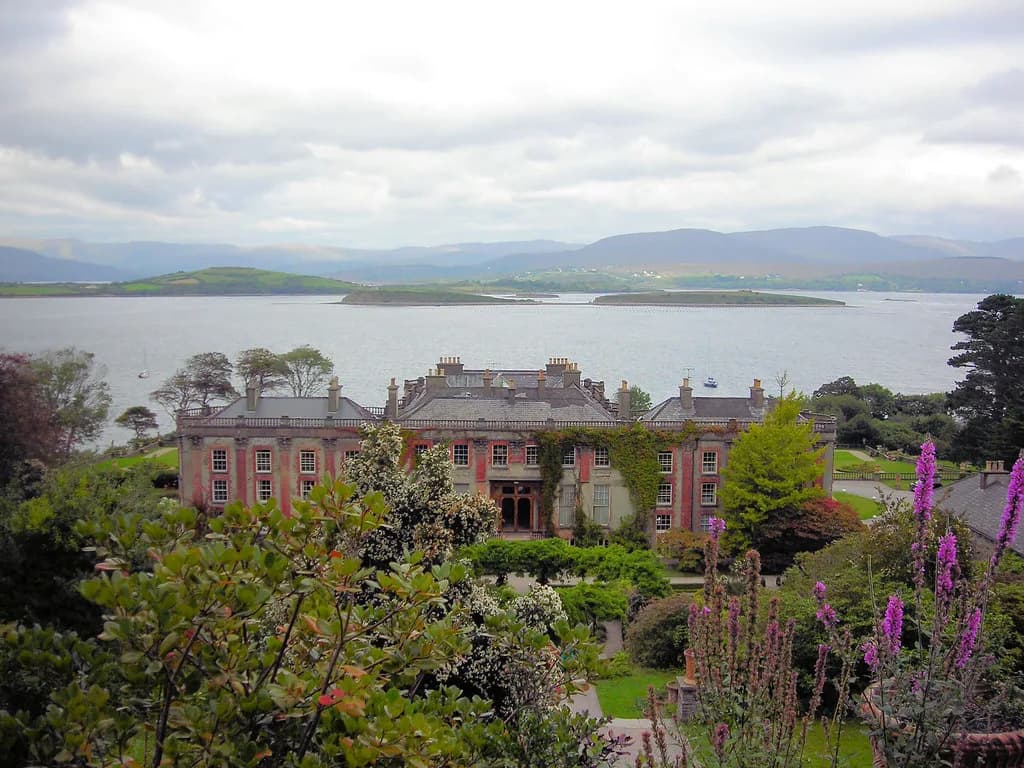
Bantry House is a stately home overlooking Bantry Bay in south-west Ireland, and it is still lived in and managed by the White family rather than presented as a museum. That single fact shapes everything about a visit: rooms hold a working family collection, the garden is a restoration site as much as a designed landscape, and weddings or private events can interrupt the normal pattern. This guide sets out what the family publishes about the house, the terraces and the practical details, so you can decide how long to allow and what to check before travelling.
What Bantry House Is
The house stands above Bantry Bay in County Cork, and the family describes it as a stately home rather than a heritage centre. Because the Whites still live in and run the estate, a visit has the character of a working property: there are tearoom and accommodation operations alongside the house and garden open to the public, and the operator offers guided tours. Treat published opening times as a general pattern that private bookings can override.
For travellers building an itinerary around Irish country houses, Bantry House is a useful contrast to properties run wholly as visitor attractions. If you are mapping a wider route through similar buildings, this georgian houses ireland overview is a sensible starting point before fixing dates. The key difference here is that public access and family life share the same estate, so the experience is closer to a lived-in home than a curated display.
Family Continuity Since 1739
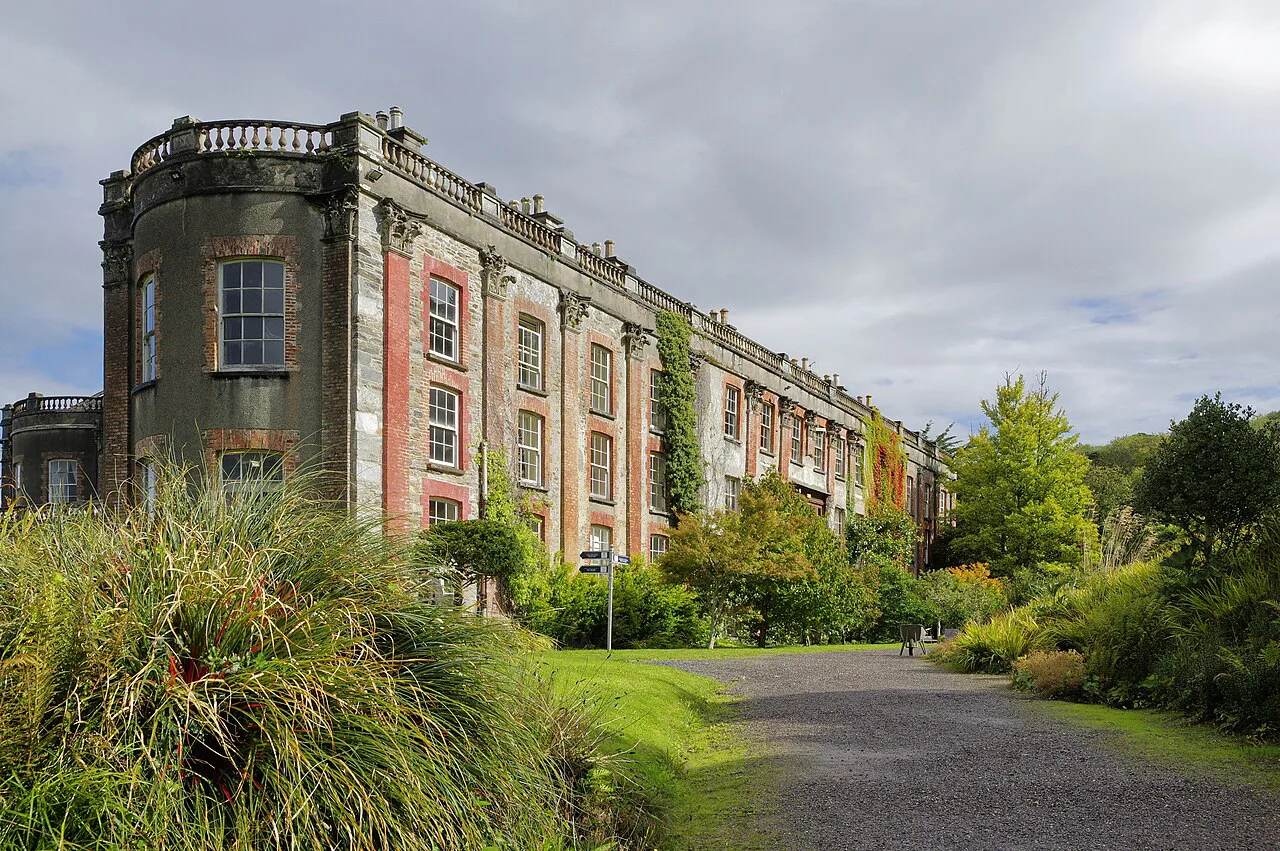
According to the family's own account, the house has been in the White family since 1739 and opened to the public in 1946. Those two dates explain the tone of the place: it is a long-held private home that became a visitor destination in the mid-twentieth century, not a state-owned museum assembled from dispersed collections. For the opposite end of that spectrum, our guide to Museums in Cork: City and County Collections shows how public collections are presented in the city and county. The family presents this history directly, so read it as the house's own account rather than independent scholarship.
That continuity of ownership matters when you walk through the rooms, because furnishings and art are described as a private collection rather than an acquisition programme. Visits do not need to be booked in advance, although groups of eight or more are advised to book for efficiency of service. Dogs are not permitted on the estate at any time.
The Layered Building
The building is best understood in two layers: an eighteenth-century house with substantial nineteenth-century additions. The family attributes the enlargement to Richard White, 2nd Earl of Bantry, who lived from 1800 to 1865 and is described as having enlarged the house to accommodate the art collection he formed on his travels. No precise construction date or architect is given, so avoid treating any single date as the house's foundation.
Reading the house this way helps you notice how the nineteenth-century work serves the collection and the view, with the bay as the intended backdrop. The gardens were laid out on seven terraces to complement that outlook, which reinforces how closely the building and its setting were planned together. Allow time to look back at the facade from the garden, where the relationship between house and water becomes clearest.
Inside the House: A Private Collection
Inside, the family describes an important private collection of furniture and objects of art, held in a house that is still occupied. That distinction changes how you should read the rooms: expect a family's accumulated holdings rather than interpretative panels explaining every object. Because the family lives in the East Wing and the estate also operates as a bed and breakfast and events venue, some areas may be in private use during your visit. Plan your expectations around the rooms that are open rather than a full-house circuit.
The collection's origins connect to travel, since Richard White is said to have formed it on his journeys and then enlarged the house to hold it. Writing about what you see in the rooms, keep the family's own wording in mind: they call it an important private collection of furniture and objects of art, and they do not publish a room-by-room catalogue, so there is no authoritative list of individual pieces to work from.
The Seven-Terrace Garden
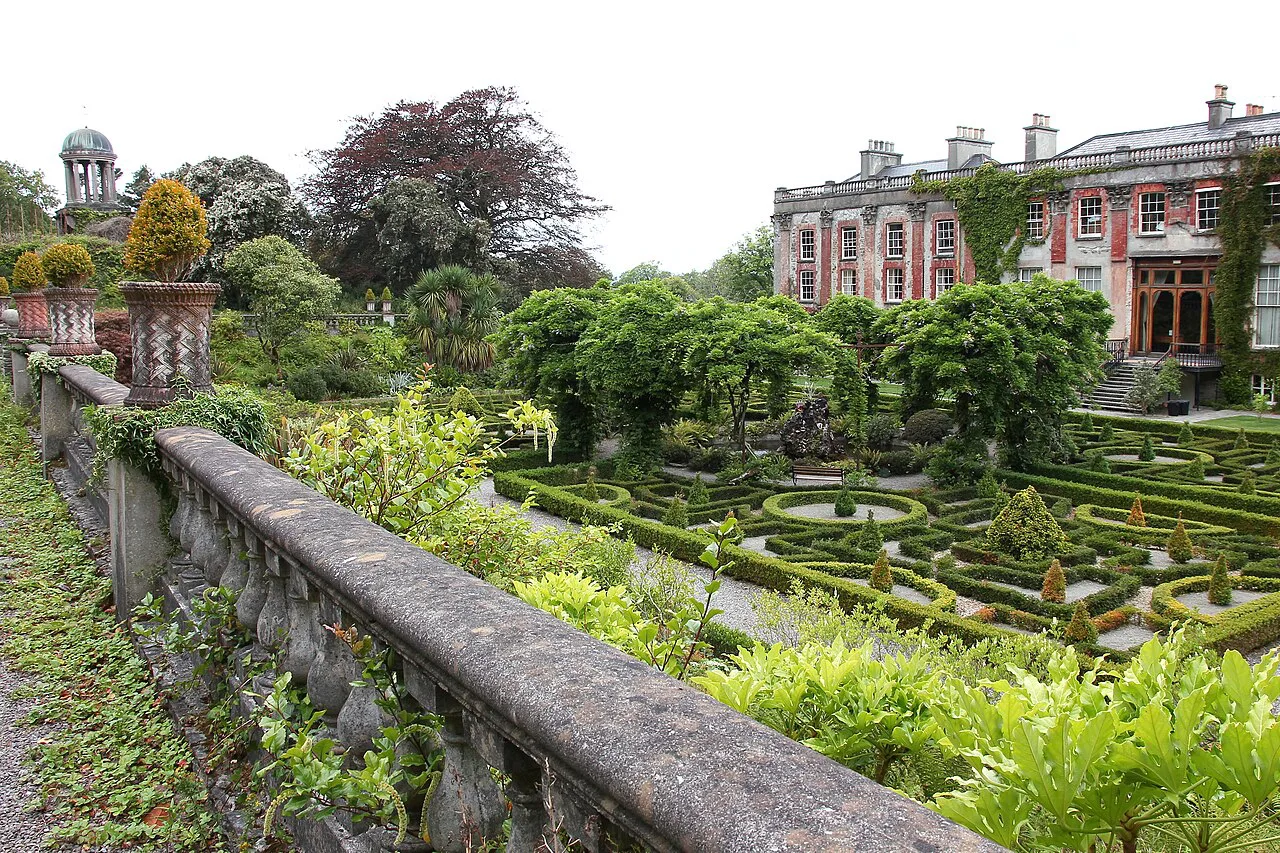
The garden is the strongest reason to give Bantry House more than a quick stop. Richard White designed seven terraces to complement the bay, with a fountain in the parterre surrounded by wisteria dominating the southern aspect of the house. The north terraces hold fourteen round beds flanked by statues and pots that he brought back from his travels.
A long flight known as the Hundred Steps leads up towards the woodland, and the statue of Diana the Huntress faces east to greet visitors. Among the sculpture, the family identifies copies after Antonio Canova and other classical works, plus a rare nineteenth-century Coade Stone copy of the Warwick vase set in the middle of the first terrace. These identifications come from the house itself, so treat them as the family's descriptions rather than independent cataloguing.
Guns, Statues and the Family's Own Labels
Four guns overlook the bay, and the garden page gives each one a foundry and date as the family records them. Two smaller six-pounders are attributed to Carrion Works in Falkirk in 1780, while a larger twelve-pounder is dated 1796 and linked to Clyde Iron Works near Glasgow. A further gun stamped A4RP is described as French, made at the Ruelle Foundry and dated 1795, and possibly captured from the Surveillante at the time of the failed French invasion.
These labels are worth reading closely because they mix naval, industrial and local history in a very small space. They also illustrate the guidance for this property: the identifications are the family's, not the result of published independent research, so enjoy them as the house's account. Visitors interested in how military sites are interpreted for the public may find the battle of the boyne visitor centre a useful comparison for presentation style, though the subject matter is entirely different.
Decline and Restoration
The garden's present appearance is the product of decline followed by long, ongoing recovery. The family records that the terraces were planted with rhododendrons around 1900, obscuring Richard White's original plan, and that the garden suffered neglect from the 1930s to the 1970s. Restoration began in 1997, and clearing of the first terrace started in March 2016; the work is described only as hopes and plans, so do not expect a finished scheme.
The west stables, originally built for carriages, horses and possibly outdoor staff, fell into disrepair in the early 1900s and work supported by a Heritage Council grant began in 2011. The family's stated aim is to reinstate balustrades and replant the terraces while keeping new planting low enough not to hide the house again. Knowing this makes visible work read as part of a plan rather than neglect.
Woodland Walks and the Walled Garden
Two woodland walks are described: the Old Ladies Walk, which leads to the top of the Hundred Steps, and a stream walk that continues up to the walled garden. The walled garden itself is awaiting restoration, with remnants of greenhouses, the ruin of a potting shed, two defunct gravity-fed ponds and a walled orchard. Trees planted in the early 1900s, including two large Ginkgo biloba, stand to the left of the orchard gate.
This is the part of the estate where expectations matter most. The walled garden is not a finished visitor feature, so go for atmosphere and ruins rather than manicured beds, and wear footwear suited to uneven ground. For a sense of how another Irish historic demesne handles public access on a managed estate, the Battle of the Boyne Visitor Centre at Oldbridge Estate offers a contrasting model.
Practical Visiting: Hours, Booking and Closures
The estate is generally open for visits from 10am to 5pm daily, with last admission at 4:30pm and the car park closing at 5:30pm. Ordinary visits do not require advance booking, but groups of eight or more are advised to book, and dogs are not permitted anywhere on the estate. The operator publishes closure dates on its opening-hours section, and those notices should be re-checked shortly before travelling.
The most important caveat is that the estate or parts of it can close for weddings, private events and music events. The operator directs visitors to the opening-hours section of the website for updates, so check it in the days before you travel rather than relying on the general timetable alone. This is the trade-off of a working estate: the published hours are a pattern, not a guarantee.
How Long to Allow and What to Prioritise
A sensible plan gives the house interior a focused look, then spends the larger share of time on the terraces and the walk up towards the woodland. The fountain parterre and the north terraces with their round beds are the most legible parts of Richard White's design, while the walled garden rewards those willing to accept unfinished ground. If time is short, choose either the Hundred Steps walk or the stream route rather than attempting both.
Visitors who enjoy comparing estate layouts may also appreciate Drishane House, another privately held West Cork property, as a counterpoint on a separate day. Build your day around the garden and the bay view rather than treating the house as a rain-proof indoor stop, because the setting is what makes the visit distinctive.
Plan Your Visit
Bantry House rewards travellers who treat it as a lived-in estate with a serious garden rather than a museum with a car park. Check the operator's opening-hours section shortly before you go, since private events can close all or part of the property, and arrive well before the 4:30pm last admission. Give the terraces and woodland the bulk of your time, and read the statues and guns as the family's own identifications.
If your wider trip circles other historic houses, comparing how each balances private life with public access will sharpen what you notice here. Reading up on georgian houses ireland is a useful place to start, and Castletownshend's Drishane House makes an obvious companion stop in West Cork. Leave room for a slower look back at the facade from the garden, where the bay explains the whole design.
Explore more Ireland guides
Frequently Asked Questions
What is Bantry House known for?
It is known as a White family home overlooking Bantry Bay, open to the public since 1946, with a private collection of furniture and art and a seven-terrace garden. The gardens were laid out by Richard White, 2nd Earl of Bantry, and have been under restoration since 1997.
Can you visit Bantry House without booking?
Yes. Ordinary visits do not need advance booking, though groups of eight or more are advised to book. Check the operator's opening-hours section before travelling, because weddings and private events can close all or part of the estate.
How much of Bantry House is open to visitors?
The family publishes the house, garden and tearoom as the public elements, alongside bed and breakfast in the East Wing. Some areas may be in private use during your visit, and specific rooms open on a given day are not listed in advance, so ask on arrival.
What is there to see in the garden at Bantry House?
Highlights include the parterre fountain with wisteria, the north terraces with fourteen round beds, the Diana the Huntress statue, copies after Canova, a Coade Stone copy of the Warwick vase and four guns overlooking the bay. The Hundred Steps lead up towards the woodland.
Is the walled garden at Bantry House restored?
No. The family describes the walled garden as awaiting restoration, with remnants of greenhouses, a ruined potting shed, defunct ponds and a walled orchard. Visit it for ruins and atmosphere rather than finished beds, and wear suitable footwear.
Why might Bantry House be closed on a day it normally opens?
The estate hosts weddings, private events and music events, so the whole property or parts of it can close. The operator points visitors to the opening-hours section for updates, which is why checking shortly before a visit matters more than relying on the usual daily hours.
Sources
You might also like



Continue reading
More guides you'll find useful




