
Tintern Abbey Ireland: Visiting the Wexford Cistercian Ruin
Tintern Abbey in County Wexford is Ireland's Cistercian ruin, not the Welsh abbey. See its story, standing remains and what to check before visiting.
On this page
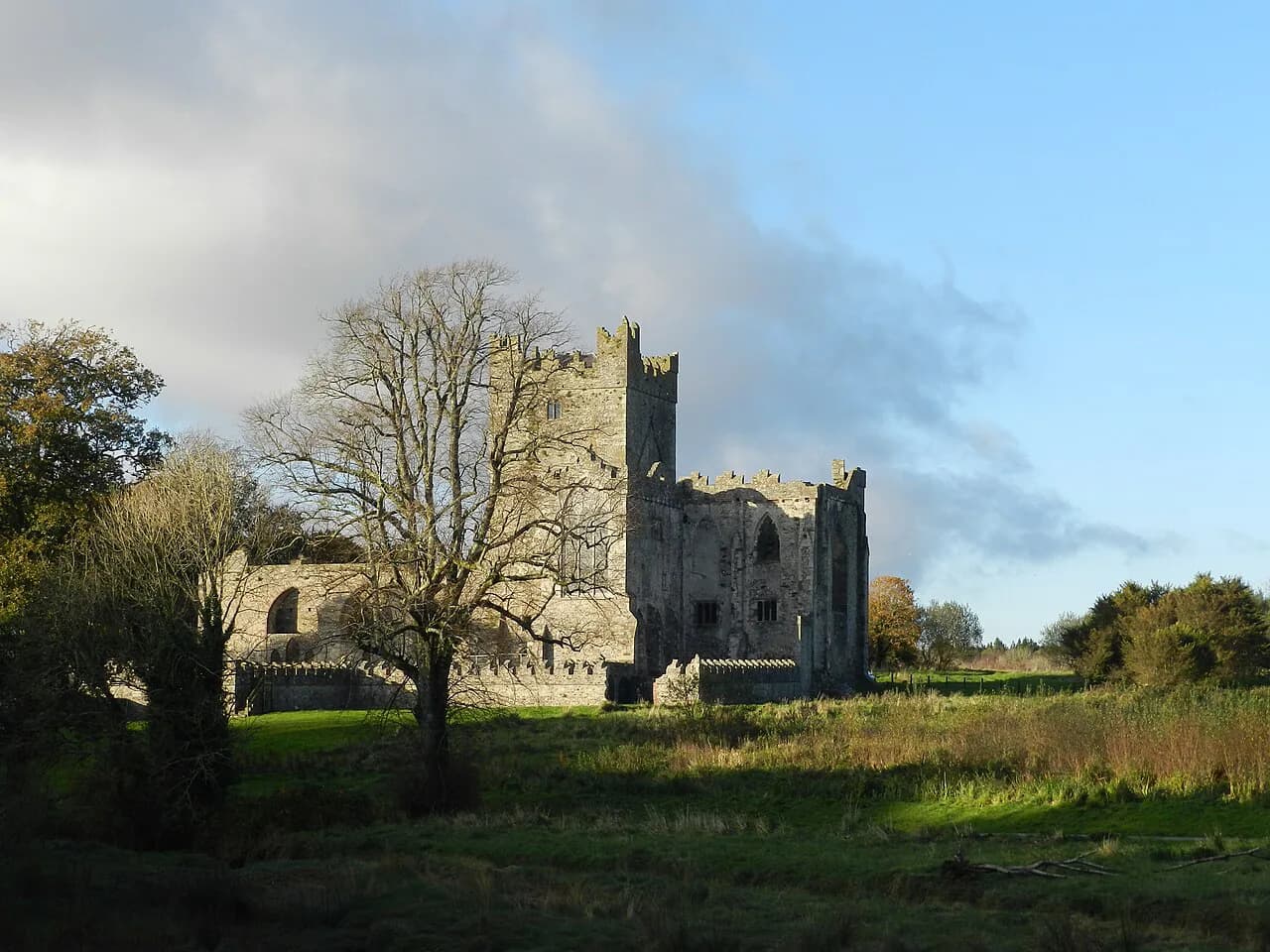
Tintern Abbey in Ireland is a Cistercian ruin near Saltmills in County Wexford, set on the west shore of Bannow Bay. It is a different place from the celebrated Tintern Abbey in Monmouthshire, Wales, and the shared name is a family relationship rather than a coincidence. The published 2026 visitor season has already finished, so treat any trip as a future plan and confirm the site's status before travelling.
The Irish house was founded around 1200 as a daughter-house of Tintern Major in Wales, and it is often called Tintern de Voto, Tintern of the Vow. What stands today is a layered building: a medieval Cistercian church adapted over centuries by the Colclough family into something closer to a fortified dwelling. Reading those layers is the reward of a visit, more than any single set-piece room.
Where Tintern Abbey Stands
The abbey sits off the R734 about 16 km south of New Ross, or roughly 29 km from Wexford via the R733 toward Ballyhack, according to the operator's directions. The approach runs through the wooded former demesne, and the published account of the drive describes how eighteenth-century planting frames a first glimpse of the abbey from the entrance.
For public transport, the local guide defers to Bus Éireann rather than listing a service, so confirm any route and stop directly with the operator before relying on it. Arriving by car is the most straightforward option described in the published directions, and the car park is among the facilities the operator lists for the site.
Irish Tintern and Welsh Tintern
The Welsh abbey in Monmouthshire was the mother house; the Wexford foundation was colonised by monks from there and is described by Heritage Ireland as a daughter-house of Tintern Major. William Marshal, who founded the Irish house, was also a patron of the Welsh abbey, which explains the naming.
For a visitor planning a monastic itinerary, that distinction matters practically: the Wexford site is a compact ruin with a walled garden and woodland walks, not the roofless Welsh nave made famous by Romantic poetry. If you want to place Tintern alongside other Irish monastic sites, compare access and surviving fabric before assuming a shared visitor experience; our guide to monasteries in ireland sets out the wider landscape of houses and their settings.
The Foundation and the Storm Vow
Tradition holds that William Marshal, sailing for Ireland on his first visit as Lord of Leinster, was caught in a storm and vowed to found a monastery where he landed safely; he came ashore at Bannow Bay and the abbey followed. The foundation is dated to about 1200 on lands held through his marriage to the Irish heiress Isabella de Clare. Present the story as origin tradition rather than documented detail.
That vow narrative is why the house is known as Tintern de Voto, and it gives the site its distinctive place among Irish Cistercian foundations. The order itself was founded in France in 1098 and was known for austerity and self-sufficiency, values visible in the plainness of Cistercian churches.
What Survives of the Cistercian Church
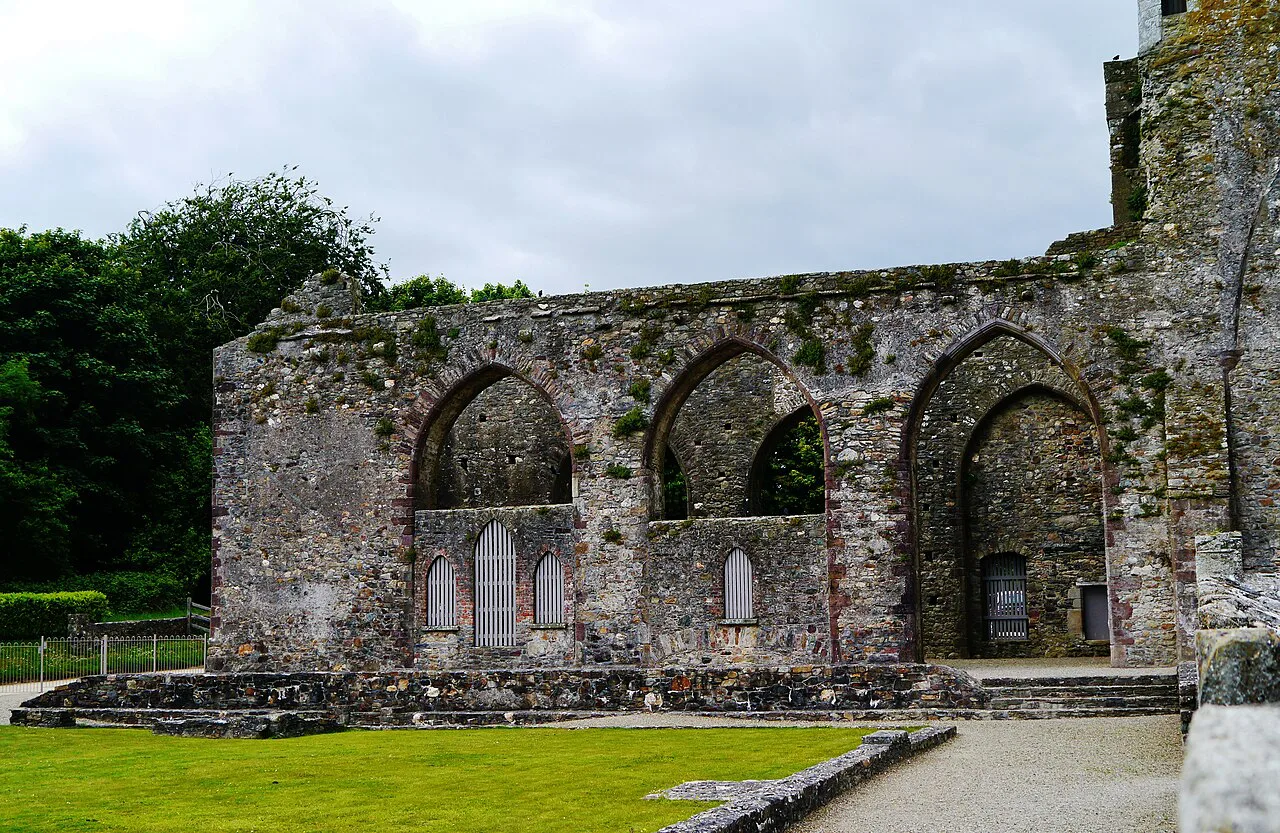
The nave, chancel, tower, chapel and cloister still stand, and these are the elements to look for as you walk the site. The correspondence between the standing walls and the monastic plan is what makes the ruin legible, even after the later residential remodelling.
The Lady Chapel is a three-bay structure with ribbed and groined ceiling features, and the display includes video footage of early state conservation works. Treat the exhibition as an interpretive aid rather than a guarantee of what will be running on any given day.
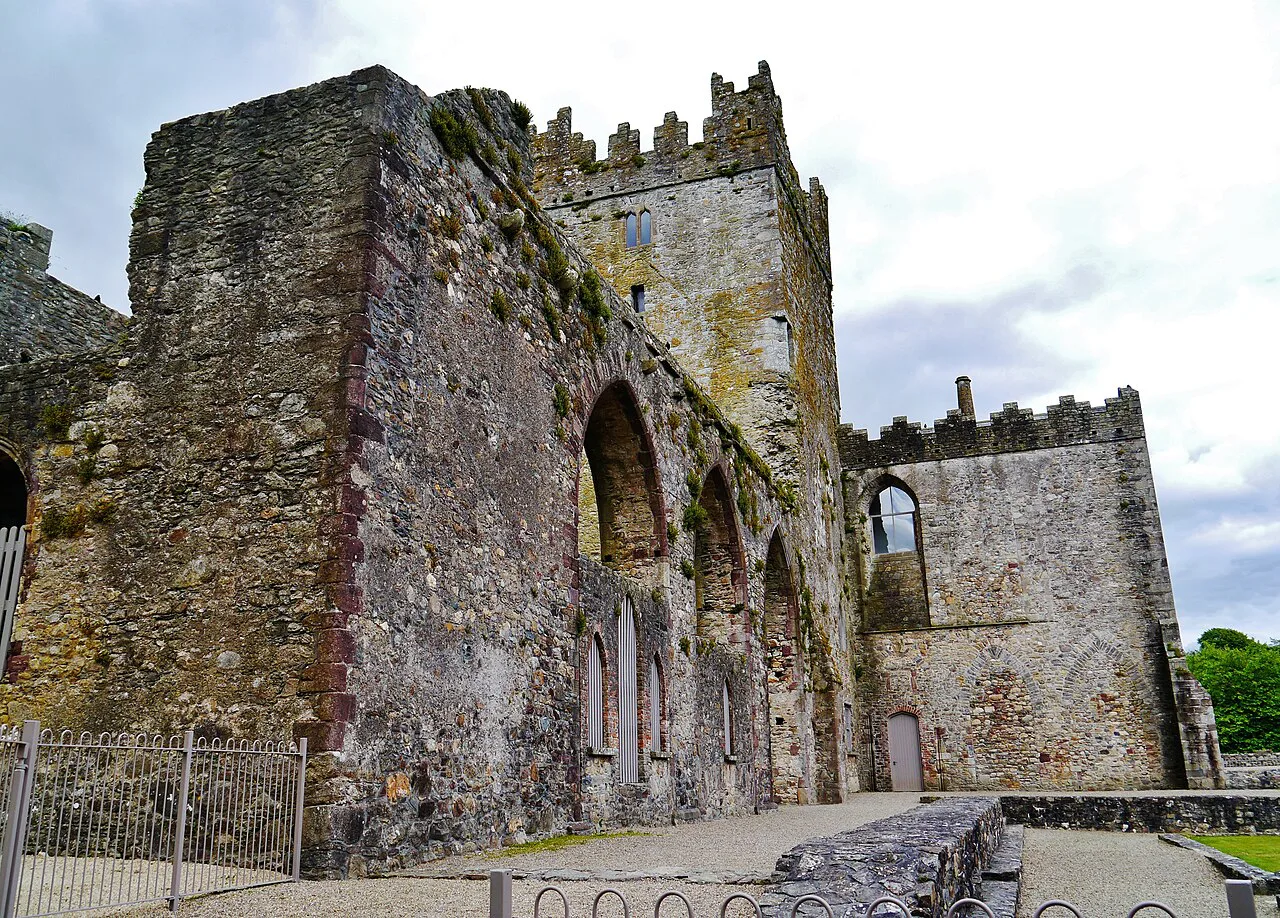
Walk slowly around the exterior before entering: the tower and battlemented profiles reveal how the church was progressively enclosed and fortified. If you have visited other Cistercian houses, the contrast in completeness and later reuse is the interesting comparison rather than the plan alone; at Corcomroe abbey and Jerpoint abbey you can see how differently Irish Cistercian fabric has survived.
Dissolution and the Colclough Transformation
The monastery was suppressed in 1536 during the Dissolution, and the abbey and its lands passed to Anthony Colclough, an officer in Henry VIII's army. The family then occupied the site from the sixteenth century into the mid-twentieth, converting the church partly into living quarters and adapting it repeatedly.
The precise year of the grant varies between accounts, so avoid anchoring a visit to one date; the sequence of suppression followed by Colclough possession is the reliable thread. In the 1790s John Colclough converted part of the abbey into a residence and built a flour mill close to the bridge; the mill was later accidentally burned in the late 1800s, though its walls survive.
The Colclough story includes sieges, duels and disputed inheritances, and some of the best-known anecdotes come from family tradition. The origin of the "Yellow Bellies" nickname for Wexford people is told as a hurling match before royalty; it should be read as local legend, not settled history.
The Demesne, Woodland and Walled Garden
John Colclough's landscaping created the wide lawn and belts of woodland that frame the approach to the abbey, and the walled garden had been laid out by the early nineteenth century. The garden's restoration is managed by Hook Tourism, while the woodlands are managed on behalf of the people of Ireland by Coillte.
Heritage Ireland notes that a combined ticket covering the abbey and the Colclough Walled Garden can be purchased at reception, which suits visitors who want both the ruin and the restored garden in one stop. No price is published in the material here, so check the current charge at reception before you budget, and remember that the abbey is only enterable while its published season is running.
Walking trails run through the surrounding woodland, and the published restrictions warn of uneven walkways and ask for appropriate footwear. That is practical advice for a site whose appeal is partly outdoors: the paths, garden and abbey fabric reward shoes you do not mind getting dirty.
From Family Home to State Care
Lucy Marie Biddulph Colclough left Tintern in 1959, after which the abbey was taken into government care and conservation works in the early 1980s exposed many features of the original Cistercian building. That handover marks the point where a private residence became a national monument.
Conservation has included measures to protect local bat colonies, and the abbey lies within a Special Area of Conservation surrounded by woodland. Visitors should expect a working heritage landscape rather than a sealed museum, and should respect closures or roped-off areas that protect wildlife and fabric.
Practical Visit: Hours, Season and Restrictions
The 2026 season ran from early March to early November 2026, and that season has now ended; the operator's notices give a closing time of 12.00 on the final day, which does not fully match the date block, so do not plan around a precise final day. Check the current opening status on Heritage Ireland before travelling, and do not assume a reopening date.
Within the published season, hours were daily 10:00 to 17:00 from March to the end of May and from September to early November, extending to 17:30 in June, July and August. Last admission was 45 minutes before closing, a rule that matters if you are combining the abbey with the walled garden or a long drive, and these times apply only while the seasonal blocks are in force.
The operator lists a car park, coach parking, toilets including a wheelchair-accessible toilet, an exhibition, guided tours, a picnic area, walking trails and bicycle parking. Restrictions include assistance dogs only, no climbing, no mobile devices and uneven walkways; these are published lists, not a promise that every facility or tour operates on your chosen day.
How to Read the Legends on Site
The Colclough era supplies most of the vivid stories attached to Tintern, from political exile in revolutionary France to the suspicion surrounding one owner's death. The walled garden's own history page records these as the family's remarkable legacy, but several episodes rest on family or local accounts rather than independent verification.
Label the storm vow, the Yellow Bellies origin and the more dramatic inheritance disputes as tradition when you retell them. That habit keeps a good story good without turning a family memoir into a historical fact, and it lets you enjoy the abbey's afterlife as much as its medieval core.
Pairing Tintern with Other Irish Monastic Sites
Tintern works well as one stop on a broader monastic trail, but it should not be confused with the larger set-piece sites. The Rock of Cashel in County Tipperary, for instance, is a different kind of monument with a very different visitor experience, and comparing the two helps frame what is distinctive about a small Cistercian house adapted into a residence. For a comparable single-monument decision beyond the monastic trail, our Castles in Kilkenny: A Practical Guide to Kilkenny Castle covers the same trade-off between compact heritage and set-piece expectations.
If you are assembling a route, use the surviving fabric as your filter: sites such as Kells Priory, Co. Kilkenny or Cong Abbey, Co. Mayo offer different balances of ruin, setting and access. Check each one's own published details, since opening arrangements vary and should not be assumed to match Tintern's.
Plan Your Visit
Tintern Abbey rewards visitors who come for the layered building rather than a single highlight: a Cistercian church, a Colclough residence, a walled garden and woodland walks in one compact place. Go with appropriate footwear, allow time for the exterior and the trails, and check the current season and hours on Heritage Ireland before setting out.
The most useful preparation is to separate what is documented from what is tradition. Treat the foundation vow and the family legends as stories told about the site, and treat the standing fabric, the published hours and the conservation notices as the practical facts that should shape your trip.
Explore more Ireland guides
Frequently Asked Questions
Is Tintern Abbey in Ireland the same as Tintern Abbey in Wales?
No. The County Wexford house, usually called Tintern de Voto, is a separate foundation. It was established around 1200 as a daughter-house of Tintern Major in Monmouthshire, Wales, and William Marshal was a patron of both. The shared name records that family link rather than a single site, so plan a visit to the Irish abbey on Bannow Bay separately from any Welsh itinerary.
Who founded Tintern Abbey in County Wexford?
William Marshal founded the house around 1200, on lands he held through his marriage to the Irish heiress Isabella de Clare. Tradition connects the foundation to a vow he made during a storm at sea, which is why the abbey is also known as Tintern de Voto. The vow is an origin story told about the site rather than a documented detail of the founding.
Can you visit Tintern Abbey now?
The published 2026 season finished in early November 2026, and the operator has not indicated a reopening date, so do not assume the site is open. Check the current opening status on Heritage Ireland before making the journey. Within each published seasonal block the abbey opens daily, with a last-admission rule 45 minutes before closing, so arrive well before the end of the day.
What survives of the original Cistercian abbey?
The nave, chancel, tower, chapel and cloister remain standing, and the Lady Chapel keeps ribbed and groined ceiling features. The church was later adapted for the Colclough family, who occupied the site from the sixteenth century to the mid-twentieth, so what you see combines medieval Cistercian fabric with residential and defensive changes.
What is the best way to reach Tintern Abbey without a car?
The published directions describe road approaches rather than a fixed service, and the local guide points readers to Bus Éireann instead of listing a route. Confirm any bus service and stop directly with Bus Éireann before relying on it. Arriving by car is the most straightforward option in the published material, and the operator lists a car park at the site.
Do I need to allow time for the walled garden and woodland?
A combined ticket for the abbey and the Colclough Walled Garden can be purchased at reception, so many visitors pair the two during the open season. Woodland trails surround the site, and the operator warns of uneven walkways and asks for appropriate footwear. If you plan to walk the trails as well as see the ruin, allow more than a quick stop and check the closing time first.
Sources
You might also like



Continue reading
More guides you'll find useful





